
Breaking the Chain of Child Violence Requires Collaboration and Strengthened Protection Systems
The handling of child violence cases in Indonesia has reached a critical point that demands serious attention from all elements of the nation. Based on data from the Online Information System for the Protection of Women and Children (SIMFONI PPA), there has been a very significant spike in cases, from 11,952 in 2021 to 19,628 in 2024. This figure is not merely a statistic, but a reflection of an emergency situation that requires concrete and collaborative action.
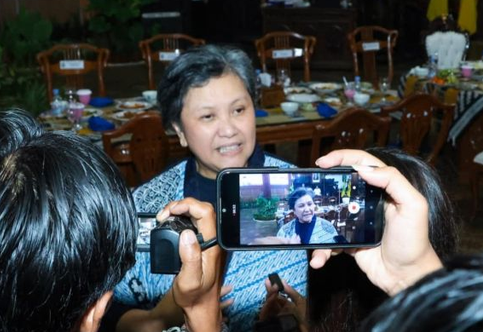
Deputy Speaker of the People’s Consultative Assembly (MPR), Lestari Moerdijat, stressed that the Ministry of Women’s Empowerment and Child Protection (PPPA) cannot work alone in solving the complexity of this problem. “Handling cases of child violence, every year, is impossible for the PPPA Ministry to solve alone without active involvement in a multi-party ecosystem,” Lestari said during an online discussion held by the Denpasar 12 Forum themed “Breaking the Chain of Violence Against Children: Strengthening Protection, Parenting, and Psychosocial Service Systems”, on Wednesday (8/7).
Lestari Moerdijat, who is familiarly called Rerie, highlighted that the roots of child violence often begin at home. The accumulation of economic stress experienced by parents and the inheritance of repressive parenting patterns from previous generations are the main triggers that are difficult to break without appropriate intervention.
In addition, Rerie, who is also a member of Commission X of the House of Representatives (DPR), criticised the disparity in access to rehabilitation services. So far, case resolution has tended to ignore the mental recovery of victims because the quality of psychosocial rehabilitation services is still concentrated in big cities. In fact, child protection has been strictly mandated by the 1945 Constitution.
Assistant Operations Sub-Directorate Officer of the Directorate of Women and Children and General Crime at the Criminal Investigation Agency of the Indonesian National Police, AKB Ema Rahmawati, revealed that children are a vulnerable group that must receive special protection. However, the legal process often encounters obstacles because the perpetrators are usually those closest to the child who have a power relationship over the victim. Ema emphasised several main challenges in law enforcement.
Consultant for the Lentera Anak Foundation, Reza Indragiri Amriel, explained the concept of the “triangle of death” that often triggers violence against children, namely: divorce, custody battles, and the blocking of parental access to the child. This condition is exacerbated if the legal process is handled by parties who do not deeply understand aspects of child protection.
From a psychological perspective, Shinta Sari Shaleh, a Psychologist and Holistic Health Consultant, explained that the greatest wound for victims is not physical, but in how the child views themselves. Deep trauma often causes victims to delay reporting. Therefore, mental health recovery must be carried out thoroughly and comprehensively by involving the family as the main support unit.
Senior journalist Usman Kansong provided an important perspective on the chain of violence. Data shows that perpetrators of violence are often past victims of violence. Without serious counselling and recovery, this vicious circle will continue. Usman also reminded of the existence of structural violence, namely violence caused by a system that fails to fulfil children’s rights. An example is a system that prevents children from obtaining their right to education, the right to play, and other basic rights. “We should also pay attention to this structural violence, in addition to physical and verbal violence,” he stressed.
Deputy Chairperson of the Indonesian Child Protection Commission (KPAI), Jasra Putra, reminded that with children making up one-third of Indonesia’s population, strengthening the protection system must start early. Ahead of National Children’s Day on 23 July, he stressed that the implementation of regulations must be carried out collectively. “Don’t wait for tomorrow, let alone wait for 2045,” Jasra concluded.
Breaking the chain of violence against children requires holistic collaboration.