
Breaking News: US-Iran Deal in Sight, Hormuz Strait to Open—Ceasefire Extended
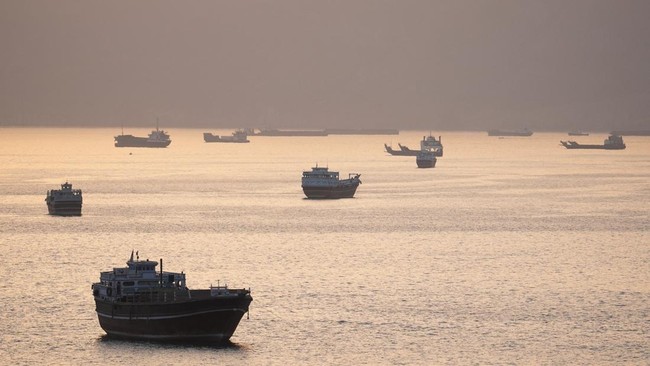
Jakarta, CNBC Indonesia – The United States and Iran are reported to be drawing closer to reaching a major agreement with the potential to ease war-related tensions in the Middle East. One of the main points in the draft agreement is the extension of a ceasefire for 60 days, the reopening of the Strait of Hormuz, and the loosening of sanctions that would allow Iran to resume selling its oil freely to the global market.
The report was first disclosed by Axios, citing a US official familiar with the negotiations. If achieved, the agreement would represent the most significant diplomatic development since the conflict between the US, Israel, and Iran erupted last February.
In the draft agreement, the Strait of Hormuz, which for months has been a centre of global tension, is said to be fully reopened for international shipping traffic without additional fees.
During the 60-day period, Iran is also reported to agree to clear mines previously laid in the Strait of Hormuz waters so that ships can transit safely once again.
“During the 60-day period, the Strait of Hormuz will be opened without fees and Iran will agree to clear the mines they laid in the strait so that ships can transit freely,” according to Axios’s report, published on Sunday (24 May 2026).
In return, the US government is reported to halt its blockade of Iranian ports and provide a number of sanctions exemptions allowing Tehran to resume selling oil freely to the international market.
This agreement is viewed as critical for Iran, whose economy has been severely damaged by war and energy export restrictions over recent months. On the other hand, Washington is also facing domestic pressure from surging global energy prices triggered by the Strait of Hormuz closure.
Beyond energy and shipping lanes, the draft agreement also covers Iran’s nuclear programme, which has long been the primary source of conflict with the West.
According to the report, Iran will commit to never pursuing nuclear weapons. Additionally, Tehran is reported to be willing to open negotiations regarding halting its uranium enrichment programme and eliminating its stockpiles of highly enriched uranium.
“The draft agreement also includes a commitment from Iran never to pursue nuclear weapons and to negotiate regarding the cessation of its uranium enrichment programme and the elimination of its highly enriched uranium stockpiles,” Axios reported.
Two sources familiar with the negotiation process said Iran has even provided verbal commitments to the US through mediators regarding the extent of concessions Tehran is willing to make on uranium enrichment and its nuclear material.
“Iran provided verbal commitments to the US through mediators regarding the scope of concessions they are willing to make related to stopping uranium enrichment and surrendering nuclear material,” the two sources told Axios.
In the proposal, the US is also reported to be willing to open further talks regarding the lifting of economic sanctions and the release of frozen Iranian funds held abroad.
“The US will also agree to negotiate regarding the lifting of sanctions and the unfreezing of Iranian funds during the 60-day period,” the report stated.
However, the White House has yet to provide official comment on the report. Reuters reported that the White House did not immediately respond to requests for comment on the terms of the agreement being negotiated.
If truly achieved, the agreement has the potential to alter the course of the Middle East conflict, which for months has shaken global energy markets and sparked concerns of a wider regional war.
The Strait of Hormuz is a vital global shipping route previously traversed by approximately one-fifth of global oil and gas supply. Iran’s closure of this route since the outbreak of war has triggered international energy price volatility and economic pressure across various countries.