
Breaking New Rules on Rice, Cooking Oil and Eggs Could Carry a Seven-Year Prison Sentence
Jakarta, CNBC Indonesia — The National Food Agency (Bapanas) has tightened its monitoring of food prices in the market. Businesses that breach the government’s maximum retail price (HET), government purchase price (HPP) or the price of rice under the Food Supply and Price Stabilisation (SPHP) programme face strict penalties, ranging from administrative fines to a maximum prison sentence of seven years.
The provisions are set out in National Food Agency Chief’s Circular Letter No. 456 of 2026 on sanctions for breaches of HPP, HET and SPHP rice prices for a number of food commodities. The circular was issued in Jakarta on Tuesday, 10 November 2026.
In the regulation, Bapanas chief and Agriculture Minister Amran Sulaiman said all businesses must comply with prices set by the government.
“All businesses must comply with the Government Purchase Price (HPP), the Maximum Retail Price (HET) and the price of SPHP rice. Those who violate the rules will face administrative sanctions, written warnings, fines, recommendations to revoke business permits, revocation of business permits, and the withdrawal of staple foods from circulation if they do not comply with regulations,” Amran told reporters in Jakarta on Tuesday, 10 November 2026.
Bapanas has set out tougher consequences for businesses that repeatedly defy the rules. Administrative sanctions may be imposed by the head of Bapanas, governors or regents and mayors, according to their respective authority.
These sanctions include written warnings, fines, recommendations to revoke business licences, revocation of business licences, and the withdrawal of staple foods from circulation by producers in accordance with the applicable laws and regulations.
Violations that contain elements of a criminal offence will also be dealt with through legal proceedings.
The circular states that if monitoring finds preliminary evidence of a criminal offence in the food sector, inspectors must report it to the authorised investigators.
The criminal penalties specified include a prison sentence of up to seven years and a maximum fine of Rp1.5 billion.
To strengthen monitoring, Bapanas is involving government officials and security forces. Those appointed to oversee compliance include the head of Bapanas, governors, regents and mayors, provincial police chiefs, regional military commanders, district police chiefs and district military commanders.
The inspectors are required to report any violations they find to law enforcement authorities for follow-up under the applicable regulations.
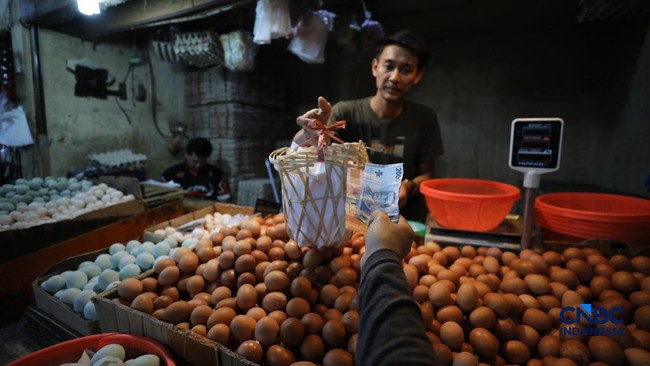
The regulated commodities include rice, cooking oil, chicken eggs, chicken meat, maize, granulated sugar and a number of other staple foods.
Source: jawawa.id (https://jawawa.id/newsitem/breaking-new-rules-on-rice-cooking-oil-and-eggs-could-carry-a-seven-year-prison-sentence-1794322229)
Originally published by CNBC Indonesia (https://www.cnbcindonesia.com/news/20261110201021-4-784056/langgar-aturan-baru-harga-beras-minyak-telur-bisa-dipenjara-7-tahun), translated from Indonesian