
Breaking: Lula Wins Brazil’s Presidential Election, Defeating Former President’s Son
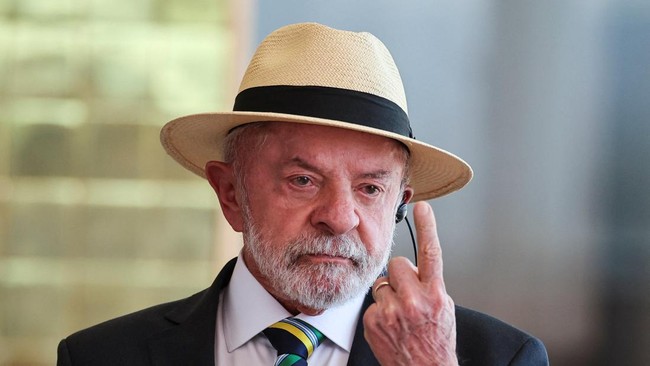
Jakarta, CNBC Indonesia – Brazil’s left-wing President Luiz Inácio Lula da Silva overturned an initial-round deficit to win the election on Sunday (25 October 2026), defeating right-wing senator Flávio Bolsonaro, son of former president Jair Bolsonaro, who had previously led in the first round.
The victory is a historic achievement for Lula, who turns 81 on Tuesday. He has secured a fourth term as leader of Latin America’s largest economy, defying numerous pre-election forecasts.
Official results, as reported by AFP, showed Lula winning 51.75% of the vote, while Flávio Bolsonaro received 48.25%. Bolsonaro entered election day with high confidence after leading in several opinion polls.
Lula’s victory also halts the rightward political shift seen in recent years in several Latin American countries, including Argentina, Chile, Colombia and Peru. The trend has also received support from US President Donald Trump.
The path to victory was marked by controversy and attacks between the candidates. The situation became more chaotic after Brazil’s Supreme Court ruled at the last minute to extend voting by two hours.
Lula sought the extension, arguing that buses in several cities were not operating, preventing voters from reaching polling stations. Flávio Bolsonaro also requested extra time in some areas because of heavy rain, but his campaign criticised the decision to extend voting nationwide.
“Either we win. Or we win. Consider yourselves warned,” Nikolas Ferreira, a pro-Bolsonaro lawmaker, wrote on X as the vote count began to be announced.
The close contest again exposed the depth of political divisions in Brazil, a country of more than 200 million people.
Lula has been one of the most influential figures in Brazilian politics over the past four decades. However, his defeat of Bolsonaro in the first round had been a setback for the veteran politician.
The left subsequently staged large demonstrations under the slogan “Never Bolsonaro Again”. Lula’s supporters used the rallies to remind the public of what they called the chaotic handling of the Covid-19 pandemic under Jair Bolsonaro, damage to the Amazon rainforest and cuts to public programmes.
Lula also changed his social media campaign strategy. He began regularly making selfie videos and even bought his first mobile phone. Meanwhile, his supporters worked to persuade family, friends and neighbours to change their minds and vote, particularly after high levels of abstention.
The latest victory marks another political comeback for Lula, who grew up in extreme poverty in north-eastern Brazil, in a farming family whose members could neither read nor write.
He is widely known for social welfare programmes that helped millions of people escape poverty. Lula returned to the presidency after winning the 2022 election, having previously been caught up in a corruption scandal that led to him spending more than 18 months in prison.
Although the charges against him were later annulled on procedural grounds, the case continued to shadow his political career.
During his third term, Lula managed to curb inflation and unemployment and helped millions of people escape hunger. However, some voters continued to complain about the high cost of living and a lack of security.
Social policy was also a key issue in this campaign, particularly after Lula expanded welfare assistance programmes.
But winning the election does not mean Lula’s fourth term will be straightforward. Brazil remains politically divided, with nearly half of voters backing his rival because they wanted change.
Lula is among the world’s oldest leaders. By the end of his new term in 2030, he will be 85.
If he completes the term, he will have spent a total of 16 years leading Brazil, having previously served as president from 2003 to 2010.
Alongside a divided public, Lula will have to contend with a Congress dominated by right-wing groups. This could constrain his ability to pursue his government’s agenda.
The economy presents another challenge. Brazil’s growth is expected to slow, leaving the government to find ways to protect people’s purchasing power while sustaining social programmes.
Lula also faces pressure to tackle worsening security problems. Brazil has long been troubled by criminal groups that spread fear, particularly in working-class neighbourhoods.
During his campaign, Lula frequently raised the issue of national sovereignty amid trade and diplomatic pressure from the Trump administration in the US.
He urged voters to decide the future of a country that, he said, could defend its dignity and independence.
Voters had to “choose a country whose flag is respected”, Lula said. His voice had grown increasingly hoarse after an exhausting campaign schedule.
He also accused his rival of wanting to “govern under the American flag”. The remarks underscored national sovereignty as one of the central themes of his campaign.
Source: jawawa.id (https://jawawa.id/newsitem/breaking-lula-wins-brazils-presidential-election-defeating-former-presidents-son-1792979431)
Originally published by CNBC Indonesia (https://www.cnbcindonesia.com/news/20261026075358-4-779318/breaking-lula-menang-pilpres-brasil-kalahkan-anak-mantan-presiden), translated from Indonesian