
Breaking Free from Petrochemical Imports: Three Opportunities Indonesia Must Not Waste
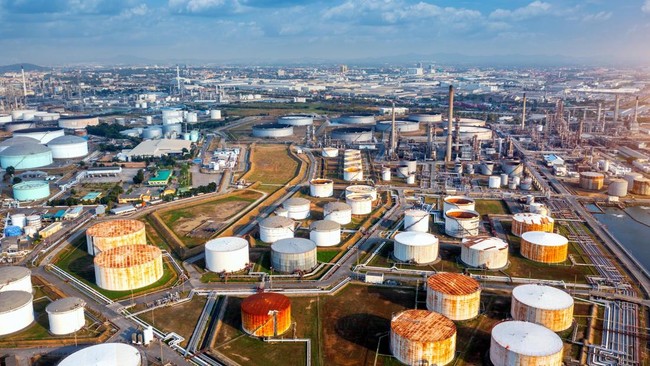
Imagine Indonesia no longer importing millions of tonnes of petrochemical products every year. Imagine the funds that have been flowing abroad could circulate domestically, creating jobs, building new factories, and increasing the added value of our own natural resources. This is not a utopian scenario, but a real possibility if Indonesia can capitalise on the massive opportunities currently unfolding.
Geopolitical conflicts between the United States and Iran, which trigger disruptions in the Strait of Hormuz—a route used by approximately 20 per cent of global oil trade—have recently provided a bitter yet valuable lesson. Plastic raw material prices surged by up to 100 per cent. Delivery times, which were originally 15 days, ballooned to 50 days. Logistics costs soared. The impact rippled everywhere: food packaging prices rose, production costs for small industries were dragged up, and even the prices of daily necessities were affected.
The national petrochemical industry has entered survival mode. The Indonesian Plastics Industry Association (INAPLAS) noted that around 70 per cent of the supply of naphtha, the primary raw material for plastic, comes from the Middle East. This dependency makes the domestic industry extremely vulnerable to any shocks occurring in that region.
The question to be asked is no longer “can we break free from imports?”, but rather “will we allow this vulnerability to repeat every time a global crisis occurs?”
The answer is certainly no. So, how can we achieve this? Indonesia has at least three major opportunities that, if utilised with the right strategy, could end this chronic dependency.
First Opportunity: The Global Energy Transition
The first opportunity comes from an unexpected direction: the global energy transition. The world is currently undergoing a massive transformation. New and renewable energy (NRE) is slowly replacing oil and gas as the primary energy source. Solar panels, wind turbines, and electric vehicles—all these technologies are becoming increasingly dominant in the global energy mix.
Many parties fear that the national oil and gas industry will be marginalised in this scenario. However, such fears are unfounded. On the contrary, this shift opens a golden opportunity for the Indonesian petrochemical industry. Why is this so? Because the oil and gas that have traditionally been burned for power plants and vehicle fuel will gradually become available in larger quantities to be repurposed as raw materials for the petrochemical industry. The economic added value is much higher.
One barrel of oil processed into plastic or resin can generate three to five times more value than if it were simply burned as fuel. The construction of new refineries is always integrated with the petrochemical industry, so if necessary, oil refineries can shift towards petrochemical production.
The global market also provides a positive signal. The global petrochemical industry is projected to grow from USD 616 billion in 2022 to USD 1,041 billion by 2032, with an average annual growth of 6 per cent. The Asian region dominates this market share, with major hubs in China and India. Indonesia, with its strategic geographical position, has the opportunity to take a significant share of this growth.
Second Opportunity: The Bioplastics Revolution
The second opportunity lies in the fundamental shift in global consumer preferences. Global awareness of the dangers of conventional plastic waste has never been higher. Fossil-based plastics require hundreds of years to decompose naturally, and pressure on the conventional plastics industry continues to intensify from various directions.
Regulations banning single-use plastics are being implemented in various countries, followed by increasing consumer awareness and massive social movements rejecting the use of single-use plastics.
Consequently, a massive shift from conventional plastics to bioplastics is projected to occur. Bioplastics are plastics made from plant-based raw materials (cassava, corn, sugarcane, or palm oil) and are biodegradable, meaning they can decompose naturally within a relatively short period.
As an agrarian country with abundant biodiversity, Indonesia possesses an extraordinary comparative advantage in this field. Raw materials are available in large quantities, supported by vast agricultural land, an abundant workforce, and a large domestic market with a population of over 280 million people. The government itself is encouraging diversification strategies to replace oil-based plastic raw materials with local materials such as seaweed and cassava. Some domestic companies have begun moving towards bioplastics, but their operational scale remains limited.
This current crisis momentum should serve as an accelerator. With the surging prices of imported raw materials from the Middle East, local bio-based alternatives are becoming increasingly economically competitive because their prices are relatively stable and their supplies are not disrupted by geopolitical volatility.
Third Opportunity: The Chain Effect from Downstream to Upstream
The third opportunity is more structural and requires a change in the approach to industrial development. One of the greatest weaknesses of the Indonesian petrochemical industry so far has been the non-integrated approach to project development. Petrochemical projects are often built based on the availability of raw materials or foreign technology offers, without being based on in-depth market demand studies.
If the downstream petrochemical industry—finished products ready for use by other industries—is seriously developed domestically, a positive chain effect will emerge. A large downstream industry will require a steady supply of raw materials that…
Source: jawawa.id (https://jawawa.id/newsitem/breaking-free-from-petrochemical-imports-three-opportunities-indonesia-must-not-waste-1781499122)
Originally published by CNBC Indonesia (https://www.cnbcindonesia.com/opini/20260615110351-14-742859/lepas-dari-impor-petrokimia-tiga-peluang-yang-tak-boleh-disia-siakan), translated from Indonesian