
Brazilian Right-Wing Strengthens as Presidential Race Heads to Second Round
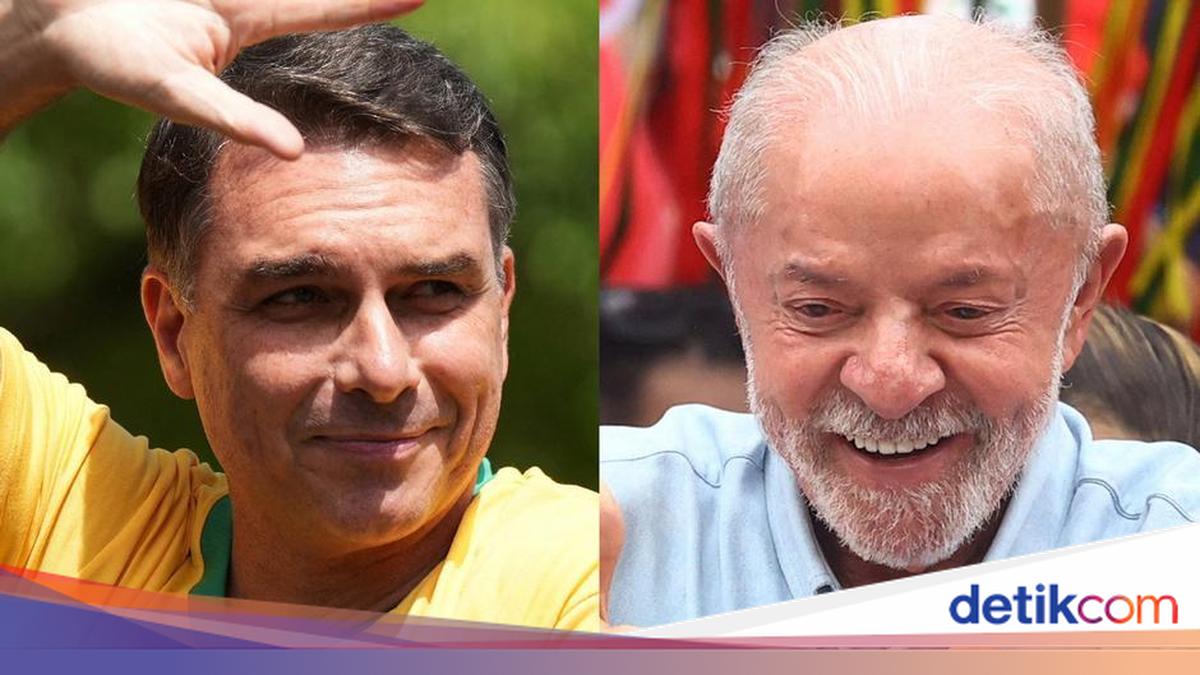
Populist Senator Flavio Bolsonaro of the Liberal Party secured the highest number of votes in the Brazilian presidential election on Sunday (04/10), outpacing left-wing incumbent President Luiz Inácio Lula da Silva. Bolsonaro aims to continue the right-wing populist movement established by his father, Jair Bolsonaro, while Lula seeks a fourth presidential term.
With over 9lar 99% of votes counted, Bolsonaro achieved 47.2%, while Lula obtained 45%. However, as no candidate secured enough votes to win in a single round, the Brazilian Electoral Court has decreed that both will face off again in a second round on 25 October 2026.
Based on reported data, Bolsonaro garnered approximately 56 million votes, whereas Lula reached 53.7 million. So far, the counted votes have reached 99.99%. The elected president is scheduled to take office on 5 January 2027 and lead Brazil, the largest economy in Latin America with a population of approximately 214 million.
Responding to the results, Lula admitted the vote outcome was “unexpected” as he believed he would “win in the first round.”
“Tomorrow we will begin a new campaign,” said the 80-year-old Lula. “I am very resilient in the knockout stages.”
Meanwhile, Bolsonaro stated he was “very happy with the very real possibility that, three weeks from now, Brazil will provide a definitive answer by choosing a modern government.”
Bolsonaro monitored the vote count from Brasília, the Brazilian capital, while Lula followed the election progress from São Paulo.
Is the right-wing strengthening in Brazil?
Fabio de Sa e Silva, a professor of Brazilian studies at the University of Oklahoma, told DW that the strengthening of the right-wing in Brazil makes Lula’s efforts to turn the tide in the second round increasingly difficult.
“He still has a chance, based on the numbers, but the current momentum is on the side of the right-wing,” said de Sa e Lund.
“The big news tomorrow is not that there will be a second round… but rather the takeover of power occurring in the Congress by the far-right,” the researcher added.
According to de Sa e Silva, Lula will also face significant challenges in governing with the new composition of the Brazilian Congress, even if he ultimately manages to win his next term.
Lula intends to defeat the far-right group.
Lula and Bolsonaro concluded their campaigns on Saturday (03/10) in the state of São Paulo, a region that serves as Brazil’s economic hub.
Lula closed his campaign by touring the city of São Paulo, promising to “defeat the far-right.”
Organisers stated that approximately 150,000 Lula supporters attended the campaign rally in Brazil’s largest city.
In his campaign, Lula promised to continue the left-wing Workers’ Party agenda, including social welfare programmes, state-funded development, and income redistribution.
“The people must choose between strengthening the democratic regime and barbarism… between progress and backwardness,” he said while casting his vote on Sunday (04/10).
Bolsonaro echoes ‘change’.
Flavio Bolsonaro, 45, has served as a senator for the Liberal Party representing Rio de Janeiro since 2019. On Saturday (03/10), he led a motorcycle procession through Santa Barbara d’Oeste and Americana, two cities in the state of São Paulo.
During the procession, Bolsonaro also raised a portrait of his father in front of a crowd of supporters shouting “mito,” which in Portuguese means “legend” and has become a nickname for Jair Bolsonaro among his supporters.
In his campaign, the right-wing Bolsonaro championed hardline security policies and tax cuts. He also highlighted the high cost of living under the Lula administration, which he described as “incompetent.”
“Brazil needs change,” the former president’s son said while casting his vote. “Brazil can no longer endure suffering, such as high taxes and so many women being killed.”
Between the incumbent and the return of the right-wing.
Responding to the election results, Alvaro Senra (65), a history professor and Lula supporter in Rio de Janeiro, admitted feeling “calm, but very sad.” He followed the vote count with friends in a bar.
“I believe this is the result of conservative efforts working quietly, including through neo-Pentecostal churches. However, I am confident Lula can still win,” he said.
Additionally, Maria Ribeiro, a 50-year-old mobile phone vendor from Brasília, said she chose Bolsonaro’s eldest son because she wanted the freedom to express her evangelical beliefs. She hopes Bolsonaro will follow in his father’s footsteps.
“I chose his father and I do not regret it,” she said.
However, Bolsonaro’s closeness to his father caused concern for Lorena Zschaber, a 40-year-old photographer. She followed the results from an LGBTQ+ friendly bar in central Rio de Janeiro. In her view, during Jair Bolsonaro’s presidency, “people felt more free to discriminate.”
“I am an LGBTQ+ woman; I cannot imagine anything worse than Flavio Bolsonaro being elected,” she added.
Meanwhile, Rosngela Resende da Rocha, a 69-year-old former housewife, said she supports Lula’s social policies that help “the less fortunate,” as well as his bold stance against Trump.
“That madman wants to come here to buy our country, so that our country will become like theirs. He will not succeed if Lula wins,” she said at a polling station in Brasília.
Replaying the 2022 Brazilian Election.
Jair Bolsonaro is currently serving a 27-year prison sentence for attempting a coup to overturn his defeat to Lula in the 2022 Presidential Election. Flavio Bolsonaro has promised to pardon his father if elected.
Source: jawawa.id (https://jawawa.id/newsitem/brazilian-right-wing-strengthens-as-presidential-race-heads-to-second-round-1791201754)
Originally published by detikcom (https://news.detik.com/dw/d-8693480/sayap-kanan-brasil-menguat-pertarungan-pilpres-lanjut-ke-putaran-kedua), translated from Indonesian