
Brazil vs Morocco: A Duel of Food Giant and Fertiliser King
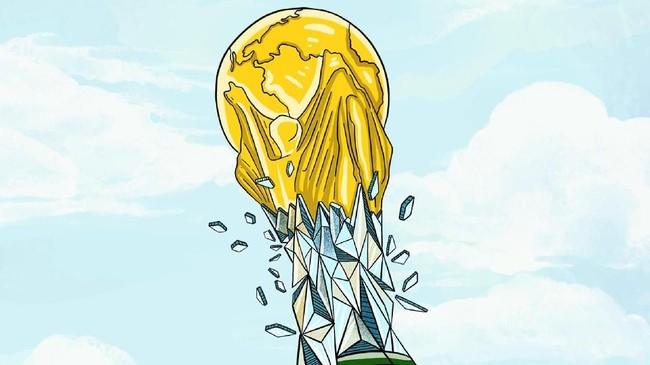
Ahead of the 2026 World Cup clash between Brazil and Morocco, the two nations present a fascinating comparison beyond the football pitch. Outside the stadium, both Brazil and Morocco possess significant influence in the global commodity markets.
Brazil is widely recognised as a footballing powerhouse, having produced legends such as Pelé, Ronaldo, Ronaldinho, Neymar, and Vinícius Júnior. However, Brazil also serves as a global agricultural giant, acting as one of the world’s primary producers and exporters of soybeans, sugar, and coffee.
Meanwhile, Morocco brings a different kind of strength. The North African nation is not only known for its rising footballing profile but also for its pivotal role in the global fertiliser supply chain, particularly regarding phosphate-based fertilisers. The USDA Economic Research Service notes that phosphate fertilisers include diammonium phosphate (DAP), monoammonium phosphate (MAP), phosphate rock, phosphoric acid, and triple superphosphate.
While the upcoming match in Group C of the 2026 World Cup is highly anticipated, the economic duel between these two nations is equally significant. Brazil remains a dominant force in global agriculture. According to recent data from the USDA Foreign Agricultural Service, Brazil remains exceptionally strong in three key commodities: soybeans, sugar, and coffee.
For soybeans, the USDA FAS estimates Brazil’s production for the 2026/2027 period will reach 184 million metric tonnes, a record high up from the previous estimate of 178 million metric tonnes. This growth is driven by expanded planting areas, improved cultivation practices, and enhanced agricultural technology. In terms of exports, Brazil’s dominance is evident; soybean exports for 2026/2027 are projected to reach 117.5 million metric tonnes, a 3.9% increase from previous estimates. In 2025, Brazil hit a record export of 108.1 million metric tonnes, with 78.9% of that volume destined for China.
Brazil’s strength is also evident in sugar. The USDA identifies Brazil as the world’s largest producer of sugarcane and sugar. Sugarcane production for 2026/2027 is expected to reach 675 million metric tonnes. However, sugar production itself is projected to decline slightly to 42.5 million metric tonnes, as more sugarcane is diverted to ethanol production. Despite this, Brazil remains the world’s largest sugar exporter, holding approximately 59% of the global market share as of 2025, far ahead of Thailand (10%) and India (7%).
In the coffee sector, Brazil remains a key player. The USDA Coffee Annual 2026 report estimates Brazilian coffee production for 2026/2027 will reach 71.9 million 60kg bags, a 14% increase from previous estimates. This rise is supported by improving Arabica harvest prospects following several years of weather-related disruptions. Coffee exports are also expected to surge to 49.07 million bags, up from 37.87 million bags in the previous period.
If Brazil is strong in agriculture, Morocco holds a vital role in the upstream agricultural sector: fertilisers. Specifically, Morocco is a major global player in phosphate-based fertilisers. Phosphate is essential for fertilisers as it contains phosphorus, a primary nutrient required by plants. Phosphate fertilisers are produced from phosphate rock processed with sulphuric acid to create phosphoric acid, which is then used to produce fertilisers like MAP and DAP.
Morocco’s position is exceptionally strong due to its possession of the world’s largest phosphate rock reserves. USGS 2026 data estimates Morocco’s phosphate rock production in 2025 will reach 36 million metric tonnes, up from 35.3 million tonnes in 2024. Morocco’s phosphate reserves are immense, reaching 50 billion tonnes, significantly higher than any other nation. For comparison, total global phosphate reserves are estimated at approximately 73 billion tonnes.
In the global market, Morocco is a critical component of the phosphate fertiliser trade. The USDA FAS notes that the global phosphate fertiliser export market is highly concentrated, with five countries or regions, including Morocco, controlling over 75% of global exports. Morocco’s role is increasingly vital as phosphate fertiliser is a key component in global food production. Without phosphorus, crop productivity could be severely compromised, meaning that any rise in fertiliser prices or supply disruptions can directly impact global food production costs.
Source: jawawa.id (https://jawawa.id/newsitem/brazil-vs-morocco-a-duel-of-food-giant-and-fertiliser-king-1781355054)
Originally published by CNBC Indonesia (https://www.cnbcindonesia.com/research/20260613102003-128-742550/brasil-vs-maroko-duel-raksasa-pangan-dan-raja-pupuk-dunia), translated from Indonesian