
Brazil Succeeds, Indonesia Yet To: Not Impossible, But Consistency Is Needed
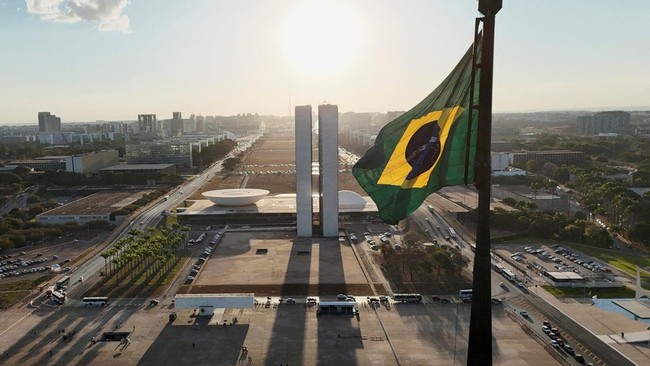
If you want an example of successful bioethanol development, just look at Brazil. The South American nation has consistently produced bioethanol for over 30 years, and the results are indisputable. In 2023, Brazil produced 32 billion litres of bioethanol from sugarcane and 6 billion litres from maize, totalling 38 billion litres in a single year. This figure is the fruit of consistent policy, continuously updated technology, and solid integration between agriculture, the sugar industry, and bioethanol plants.
What about Indonesia? Sugarcane grows here too, land is available, and Indonesia was once one of the world’s largest sugar producers. Yet national bioethanol production has only reached 40 million litres per year. In other words, Brazil produces 950 times as much as Indonesia.
The main difference between Brazil and Indonesia is consistency. Brazil began its bioethanol programme in 1975 and has never stopped, changed course, or reduced its commitment since. Through every presidential change and government transition, the programme has continued. In Indonesia, the situation is different. Energy policy often changes with each new minister or cabinet. Whenever a new administration arrives, old programmes are frequently abandoned and replaced with new ones that start from scratch, without any sustaining continuity.
Three key factors behind Brazil’s success are worth noting. First, the Brazilian government guarantees the purchase of bioethanol through Petrobras, the state-owned enterprise. Producers do not need to worry about the market; they know that whatever they produce will be bought. Second, the bioethanol industry receives low-interest loans from development banks. Third, the government sets the price of petrol and ethanol sold in the market, creating certainty for both consumers and producers.
Indonesia has actually begun to follow this path with the Bioethanol Market Index Price set by the Ministry of Energy and Mineral Resources. However, one policy without the other two pillars is insufficient, because the purchase guarantee remains uncertain, while low-interest loans for the bioethanol industry are not yet widely available. Indonesia does not need to copy Brazil blindly, as our geographical conditions, industrial structure, and political culture differ. Yet the basic principles can certainly be adapted: market certainty, access to cheap financing, and a fair pricing mechanism. What has been most lacking thus far is market certainty.
In 1975, the productivity of sugarcane land in Brazil was only 2,029 litres of bioethanol per hectare. By 2004, it had increased to 5,917 litres per hectare, and by 2023 it reached 8,000 to 9,000 litres per hectare. This development was driven by biotechnology advances producing more than 500 sugarcane varieties more resistant to pests, diseases, and climate change. In Indonesia, sugarcane land productivity remains far below that level. Indonesia needs to promptly establish a national sugarcane research institute focused on developing superior varieties suited to the Indonesian climate and soil. Existing universities and research bodies, such as the Indonesian Sugar Plantation Research Centre in Pasuruan, should be involved, given adequate budgets and clear targets.
Another important aspect is building a specific financing scheme for farmers and cooperatives wanting to switch to sugarcane for bioethanol, because farmers should not bear the risk alone. The government can mediate with profit-sharing schemes or low-interest soft loans, and state-owned banks such as BRI and Mandiri can be engaged to provide financing with farmer-friendly terms. The next crucial step is to start with a single pilot region. Choose a district in East Java or Lampung that already has a sugar factory and significant sugarcane potential, and make this area a model to prove that a bioethanol programme can work in Indonesia. Once successful, replicate it gradually to other regions. Furthermore, sugarcane plantations need to be developed in an integrated manner with the sugar industry, bioethanol, and biomass power plants, involving collaboration between state-owned enterprises, the private sector, and local communities.
Brazil’s success did not come overnight. It took three decades of consistency. The question is: when will Indonesia start? Will we continue to be spectators marvelling at other countries’ success, or will we finally join the game and win?