
Brazil Rejects the Far Right
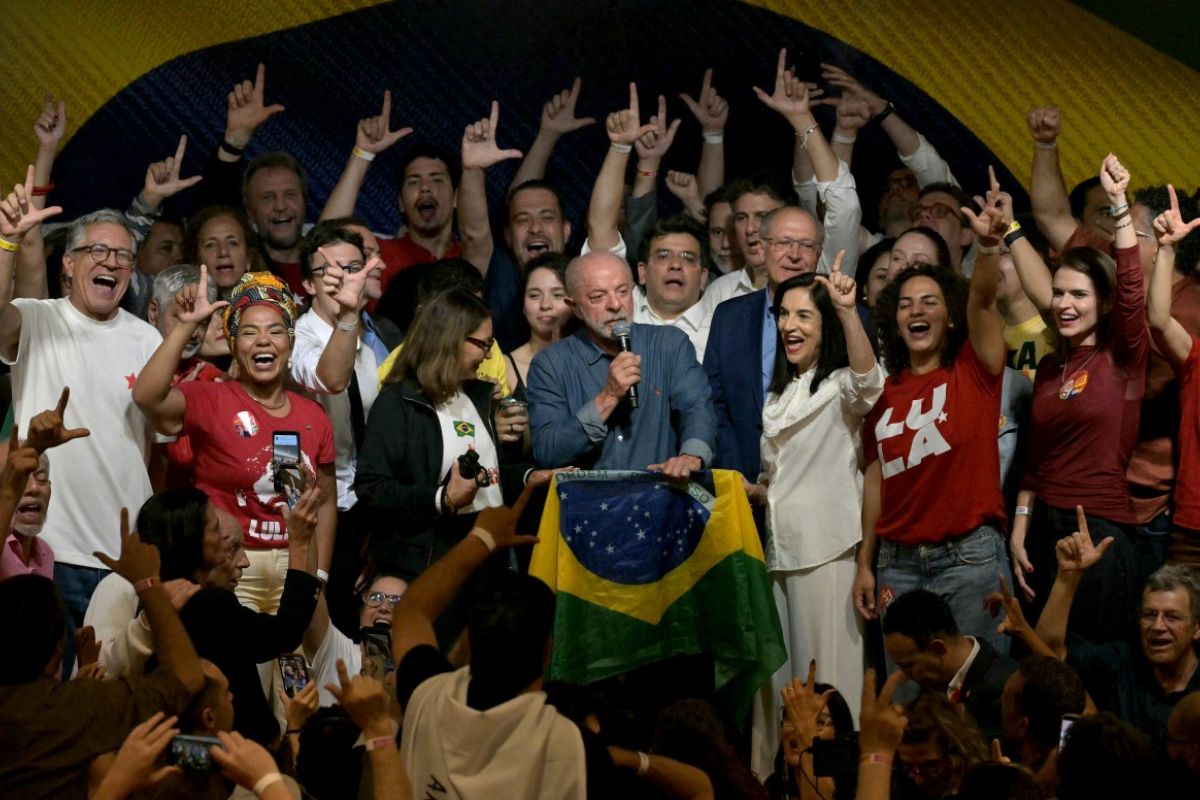
The victory sent a message to the world that Brazil remains a bulwark against the resurgence of the far right in various parts of the world.
Jakarta (ANTARA) — Before Luiz Inácio Lula da Silva of the Workers’ Party (PT) was declared the winner of Brazil’s election on 25 October, the world’s attention had already turned to the South American country.
That attention centred above all on the question: “Would Brazil, too, fall into the arms of the far right, as has recently happened in the Americas and Europe?”
The question arose because, since 2024, country after country has seen far-right politicians and parties come to power.
The far right is the political position at the extreme right end of the left–right political spectrum. Its opposite is the far left.
If the “right” believes the government’s role should be limited, the “left” wants the government to play a major part in people’s lives. If the “right” supports the idea of concentrated power, the “left” embraces the idea of sharing political power. The right is described as conservative, while the left is described as liberal.
The “right” tends to lower taxes for the wealthy, ease business regulations and believe that private-sector competition will improve public services. By contrast, the “left” tends to raise taxes on the wealthy to fund social welfare and impose tighter government regulation on businesses.
That is, broadly speaking, what “right” and “left” mean on the political spectrum.
Many people believe the world is moving towards the far right, pointing to political developments in the Americas and Europe over nearly the past two years, during which far-right parties and politicians have succeeded in winning elections.
In less than a year, from April 2025 to June 2026, five countries in the Americas — Ecuador, Bolivia, Honduras, Chile and Colombia — shifted to the right. Countries already aligned with the right, such as Peru, Argentina and El Salvador, moved further in that direction.
The situation in Europe is little different. The far right is also gaining strength there, most notably with the Alternative for Germany (AfD) party’s victory in local elections in the state of Saxony-Anhalt.
However, some far-right governments have also fallen. One example is Viktor Orbán of the far-right Fidesz–KDNP coalition, who lost the Hungarian premiership after being defeated by the Tisza Party, which is also on the right.
Source: jawawa.id (https://jawawa.id/newsitem/brazil-rejects-the-far-right-1793058640)
Originally published by Antara (Indonesian) (https://www.antaranews.com/berita/5813571/brasil-menolak-kanan-jauh), translated from Indonesian