
Brayakan Tradition and the Spirit of Sharing in Surabaya
What must be preserved is the memory that joy does not have to be enjoyed alone; that religiosity can foster social concern, and that urban development will be stronger if it possesses citizens accustomed to sharing.
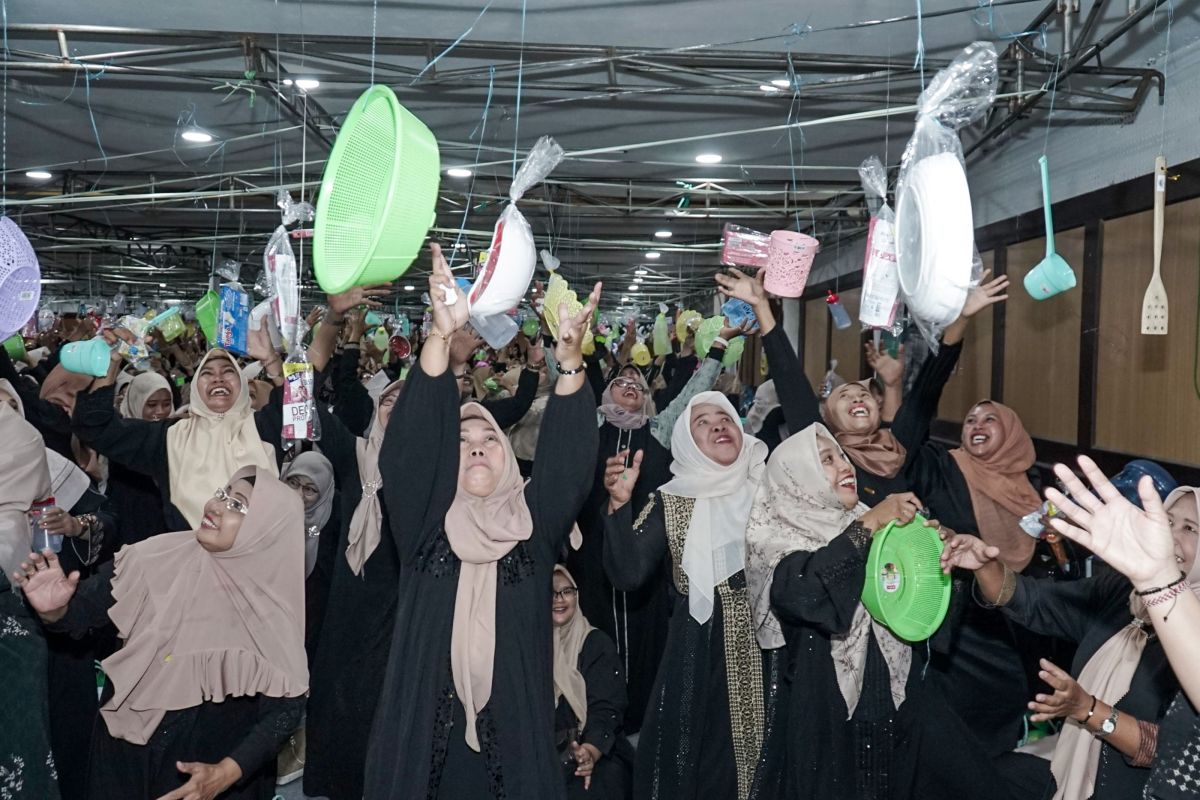
Surabaya (ANTARA) - There are simple items hanging above heads, waiting for hands to reach out and take them. There are household utensils, snacks, soap, and various daily necessities. Moments later, the atmosphere turns boisterous. People scramble, laugh, and then head home carrying something.
This is one facet of the Brayakan tradition during the Prophet’s Birthday commemoration in Surabaya. This seemingly simple tradition returned during the commemoration of the Prophet Muhammad’s Birthday 1448 Hijriah at the Surabaya Convention Hall on Wednesday (2/9/2026), where approximately 1,400 members and families of the Family Welfare Empowerment and Empowerment Team (TP PKK) gathered.
A total of 2,233 items were distributed during the event. This number is not merely a figure to demonstrate the event’s festivity. Behind the distributed items lies a social message older than the event’s stage: sharing, giving, and celebrating happiness together.
The Surabaya City Government noted the Brayakan tradition as part of the Mawlid celebrations, which were also held in 2025 with around 1,400 participants. During that implementation, the items distributed included household equipment and simple necessities as part of the celebration.
This is where Brayakan becomes interesting to examine further. It is not a tradition that exists in a vacuum. The tradition evolves with the times, moving from village yards and mosque environments to more organised activity spaces, without entirely losing the element of sharing that serves as its core spirit.
Several Mawlid traditions in East Java indeed show a similar pattern. Religious celebrations take place not only through sermons and the recitation of salawat but also through the distribution of food, gifts, parades, and communal activities. Brayakan is a unique form in Surabaya because it brings together elements of worship, joy, and direct giving.
This change in form is not inherently a problem. Culture can actually survive because it is capable of adapting. What needs to be maintained is the substance. When the packaging of a tradition changes, the values it contains must not disappear.
The problem arises if Brayakan is maintained only as an annual spectacle. Festivity can easily become the goal, while the meaning of sharing becomes merely a backdrop. A tradition that originally grew from community participation risks transforming into a ceremonial activity that depends entirely on the organisers.
Therefore, preserving Brayakan requires more than just holding it every year. The tradition needs to be explained, documented, and passed down so that the next generation understands not only how to perform it, but why the tradition was born and what values are intended to be preserved.
Capital of Togetherness
Brayakan demonstrates a form of capital that is often overlooked when discussing urban development: social capital. A city is not only built with roads, drainage, service buildings, or digital systems. A city is also built by the ability of its citizens to trust one another, help one another, and work together.
In the context of Surabaya, this idea holds strong relevance. In 2026, the city government has once again positioned the ‘Kampung Pancasila’ as an important programme based on community involvement.
Source: jawawa.id (https://jawawa.id/newsitem/brayakan-tradition-and-the-spirit-of-sharing-in-surabaya-1788397080)
Originally published by Antara (Indonesian) (https://www.antaranews.com/berita/5723595/brayakan-maulid-dan-wajah-surabaya-berbagi), translated from Indonesian