
BRAN Races to Establish Its Institutional Structure and Accelerate Agrarian Reform
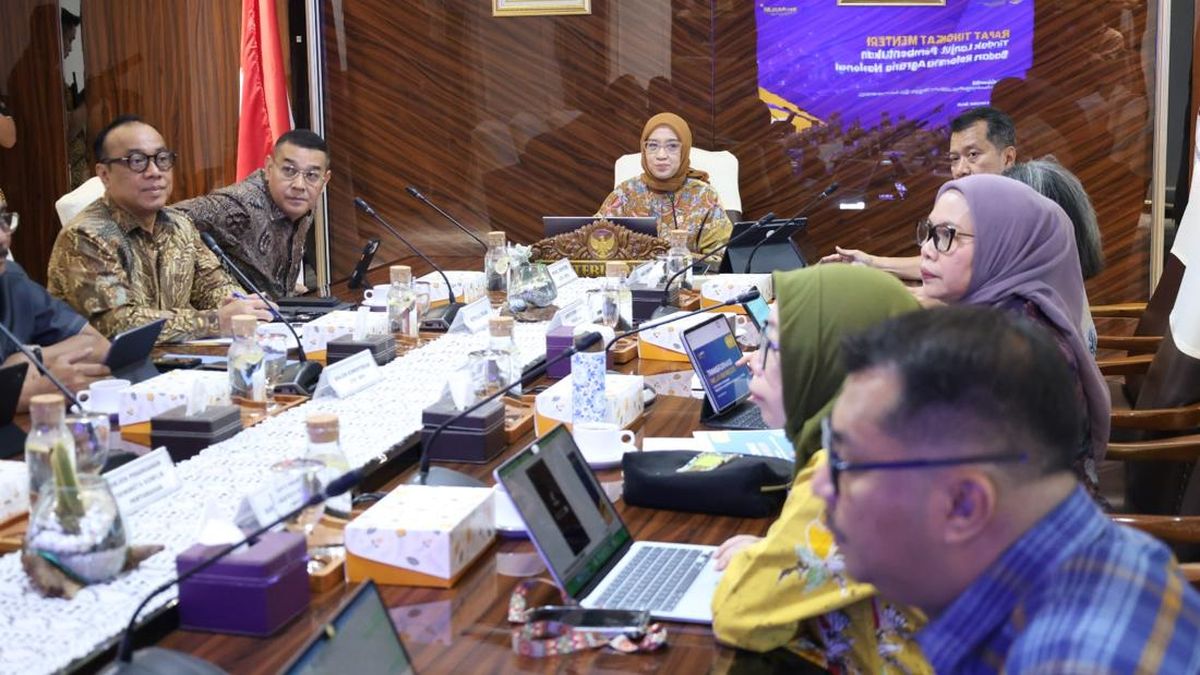
National Agrarian Reform Agency (BRAN) head Dedi Prasetyo met Administrative and Bureaucratic Reform Minister Rini Widyantini and Deputy Agrarian Affairs and Spatial Planning/National Land Agency (ATR/BPN) Minister Ossy Dermawan to speed up institutional restructuring. Discussions covered the preparation of BRAN’s organisational structure and working procedures (SOTK), as well as clarifying the division of functions, duties and powers with ATR/BPN. The meeting was held at the Ministry of Administrative and Bureaucratic Reform in Jakarta on Friday (9 October).
In a written statement from BRAN, Dedi said the steps were important to ensure that the national agrarian reform agenda was implemented effectively, in a coordinated manner and in line with President Prabowo Subianto’s policy direction.
He said the meeting focused on expediting the preparation of BRAN’s SOTK, aligning the positions of ministries and agencies, and defining the limits of their respective powers so that agrarian reform would have a clear institutional basis and avoid overlapping responsibilities.
Dedi said institutional restructuring was a fundamental step in enabling BRAN to carry out its mandate in a focused way and strengthen cross-sector coordination.
“Accelerating BRAN’s institutional restructuring is a priority so that President Prabowo’s agrarian reform agenda can be implemented with a clear organisational structure, an appropriate division of powers and measurable working mechanisms. We want this process to move quickly, but also carefully and in accordance with the laws and regulations,” Dedi said.
Clear functions and powers for BRAN and ATR/BPN are essential to ensure that each institution works within its mandate. This would strengthen the implementation of agrarian reform without creating overlapping duties or prolonging bureaucratic processes.
He stressed that BRAN had not been established to take over the existing powers of ministries and agencies.
“We want to build synergy, clarify roles and bring our efforts together. Land administration will continue to be carried out within ATR/BPN’s remit, while BRAN will strengthen coordination of cross-sector agrarian reform, particularly on agrarian issues that require an integrated response,” Dedi said.
Dedi emphasised that the success of agrarian reform could not be measured simply by the drafting of regulations or the establishment of an organisation. What mattered most was the state’s ability to provide solutions that deliver legal certainty and tangible benefits for the public.
“People should not have to bear the burden of complicated divisions of authority between agencies,” he said.
For that reason, Dedi said, an integrated, data-based and results-oriented working system needed to be established from the outset.
Integrating land data
Alongside the organisational structure, integrating land data is a key consideration in building BRAN’s operational foundations. Consolidated data is needed to map agrarian issues, set priorities, align programmes and objectively monitor the results of agrarian reform.
“Accurate data is an important basis for setting priorities. We need to understand the issues, map the subjects and objects of agrarian reform, and then work with the relevant ministries and agencies to develop solutions. A data-based approach will make responses more measurable and accountable,” Dedi said.
Following the meeting, the institutional framework and a matrix setting out the division of powers will be refined through technical coordination among ministries and agencies. Further discussions will also be needed to align the supporting regulatory requirements and ensure that every stage of BRAN’s establishment complies with the law.
Accelerating the preparation of the SOTK is a key step for BRAN in building an organisation with a clear mandate, effective coordination mechanisms and measurable performance indicators. These foundations are expected to support the sustainable implementation of the national agrarian reform agenda.
Dedi said the main purpose of establishing BRAN was to ensure that agrarian reform policy did not stop at institutional restructuring, but led to practical work that people could feel.
“Our measure of success is not merely whether the organisation has been established, but the extent to which agrarian reform can deliver justice, legal certainty and improved public welfare. BRAN will prioritise cross-sector collaboration so that programmes are implemented more effectively and their benefits are genuinely felt,” he concluded.
Source: jawawa.id (https://jawawa.id/newsitem/bran-races-to-establish-its-institutional-structure-and-accelerate-agrarian-reform-1791557538)
Originally published by CNN Indonesia (https://www.cnnindonesia.com/nasional/20261009205527-20-1413746/bran-kebut-penataan-kelembagaan-percepat-agenda-reforma-agraria), translated from Indonesian