
Brake condition must be checked before Eid holiday travel
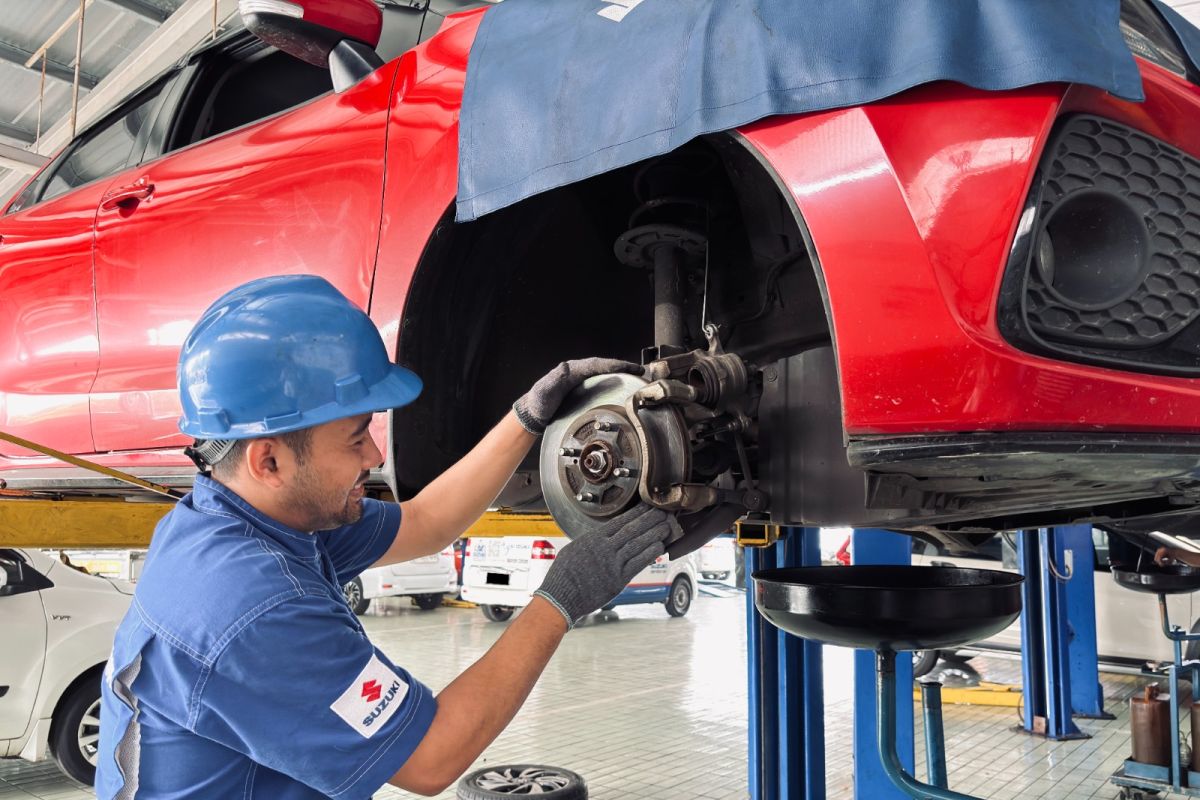
Jakarta – The brake system is a critical component that must be inspected before Eid holiday travel, as driver and passenger safety depends significantly on the brakes and overall vehicle condition.
Hariadi, Assistant Head of After-Sales Service for PT Suzuki Indomobil Sales (SIS), stated in an official statement in Jakarta on Tuesday that optimal brake performance is especially essential when a vehicle carries a full load. He urged vehicle owners to conduct comprehensive inspections to ensure responsive braking across various road conditions.
Inspecting brake pad components
To ensure adequate braking during Eid holiday travel, vehicle owners must check the condition of brake pads to maintain optimal grip performance. If brake pad thickness falls below the minimum threshold, replacement should be undertaken immediately to prevent damage to other components. Attention should also be paid to the condition of the disc brake surface to ensure it remains flat and shows no signs of warping, which can cause steering vibration during braking.
In addition to the front brakes, inspection of the drum brakes on the rear wheels should not be overlooked to maintain balanced stopping power. Readjust the brake shoe clearance to ensure the handbrake performance remains effective when the vehicle must stop on steep inclines.
Also ensure that the piston in the brake caliper can move freely without obstruction by applying special lubrication to the caliper pins.
Brake fluid plays a significant role in the vehicle’s braking system as it transmits pressure from the pedal to all wheels accurately. Because it is hygroscopic, brake fluid can absorb water vapour, which lowers its boiling point and risks triggering internal corrosion.
Hariadi urged the use of brake fluid that matches the vehicle’s specifications to prevent damage to the brake seals.
The presence of air in the hydraulic brake system can cause the brake pedal to feel weak. To prevent this, perform the brake bleeding process correctly so that all trapped air in the system is eliminated, maintaining the integrity of the brake booster and master brake.
Also check for signs of flexible hoses that are swollen or cracked, as minor damage to this component can cause pressure leaks.
Once all components have been thoroughly inspected, drivers must also pay attention to road conditions
When travelling through mountainous terrain with steep ascents and descents, the risk of brake fade or reduced braking power due to extreme heat often occurs. This condition can be worsened by vapour lock, which is the evaporation of brake fluid that causes the brakes to lose all stopping pressure.
To prevent this, combine brake use with engine braking techniques to help reduce the mechanical workload on the discs and brake pads. For modern vehicles equipped with Anti-lock Braking System (ABS), ensure that all wheel speed sensors are clean.
In addition to ABS, the presence of electronic brake distribution (EBD) and brake assist features on modern vehicles greatly assist in electronically distributing braking force, especially when the vehicle is fully loaded with passengers and luggage.
If the brake warning light or ABS symbol on the dashboard illuminates, Hariadi recommends immediately taking the vehicle to an authorised workshop so that technicians can ensure the computerised system is functioning properly.