
BPS Warns Rice Production for January-July 2026 Could Plummet, Here Are the Causes
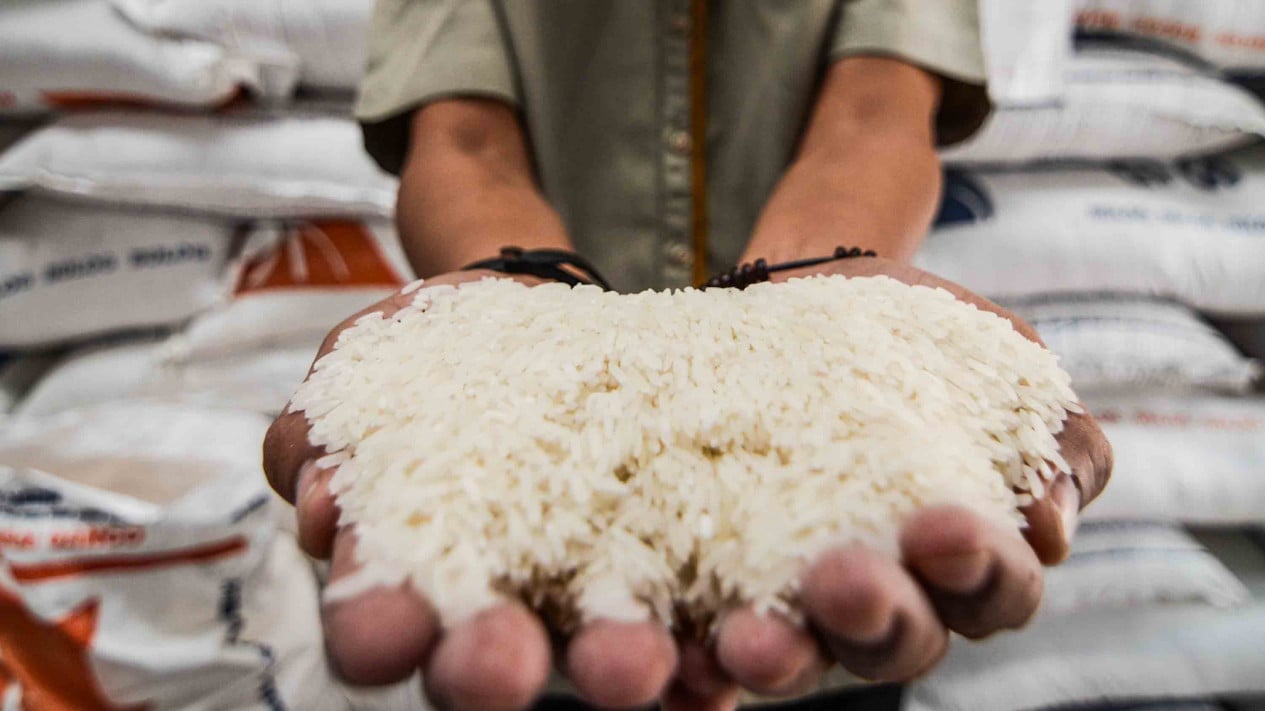
The Indonesian Central Statistics Agency (BPS), through the Deputy for Methodology and Statistical Information, Pudji Ismartini, estimates that national rice production for the January-July 2026 period will only reach 21.95 million tonnes. With the total harvested paddy area expected to reach 7.20 million hectares during this period, national rice production is predicted to decrease by 0.08 million tonnes, or approximately 0.35 per cent year-on-year.
Although the harvested area is expected to see a slight increase of 0.001 million hectares, or 0.02 per cent year-on-year, Pudji admitted that the paddy production projections for that period remain subject to change. This volatility could be influenced by the condition of rice cultivation between May and July 2026, specifically regarding the potential for pest attacks, floods, droughts, and the timing of harvests.
“Rice production for January-July 2026 is estimated to reach 21.95 million tonnes, a decrease of 0.08 million tonnes or 0.35 per cent compared to the same period in 2025,” Pudji stated during a press teleconference on Tuesday, 2 June 2026.
She detailed that total paddy production in April 2026 stood at 7.63 million tonnes of milled dry grain (GKG). This production figure represents a 16.03 per cent decrease compared to the April 2023 figure of 9.09 million tonnes GKG. Furthermore, the projected paddy production for the May-July 2026 period is expected to reach 13.75 million tonnes GKG, a decline of 0.16 million tonnes GKG or 1.14 per cent compared to the previous year.
“Meanwhile, rice-equivalent production for public food consumption in April 2026 is 4.40 million tonnes, a 16 per cent drop compared to April 2025, which was 5.23 million tonnes,” Pudji added.
Regarding the regional distribution of potential harvests, Pudji reported that the majority will be concentrated on Java, including West Java, Central Java, East Java, and Banten. Other significant areas include Sumatra, covering Lampung, South Sumatra, North Sumatra, West Sumatra, and Aceh; Sulawesi, specifically South Sulawesi; Kalimantan, specifically South Kalimantan; and the Nusa Tenggara islands, including West Nusa Tenggara (NTB) and East Nusa Tenggara (NTT).
“Nevertheless, these potential harvest area figures are still subject to change based on current field observations, such as pest attacks, flooding, droughts, and the actual timing of farmers’ harvests,” she concluded.