
BPS to Utilise 2026 Economic Census for National Socio-Economic Single Data
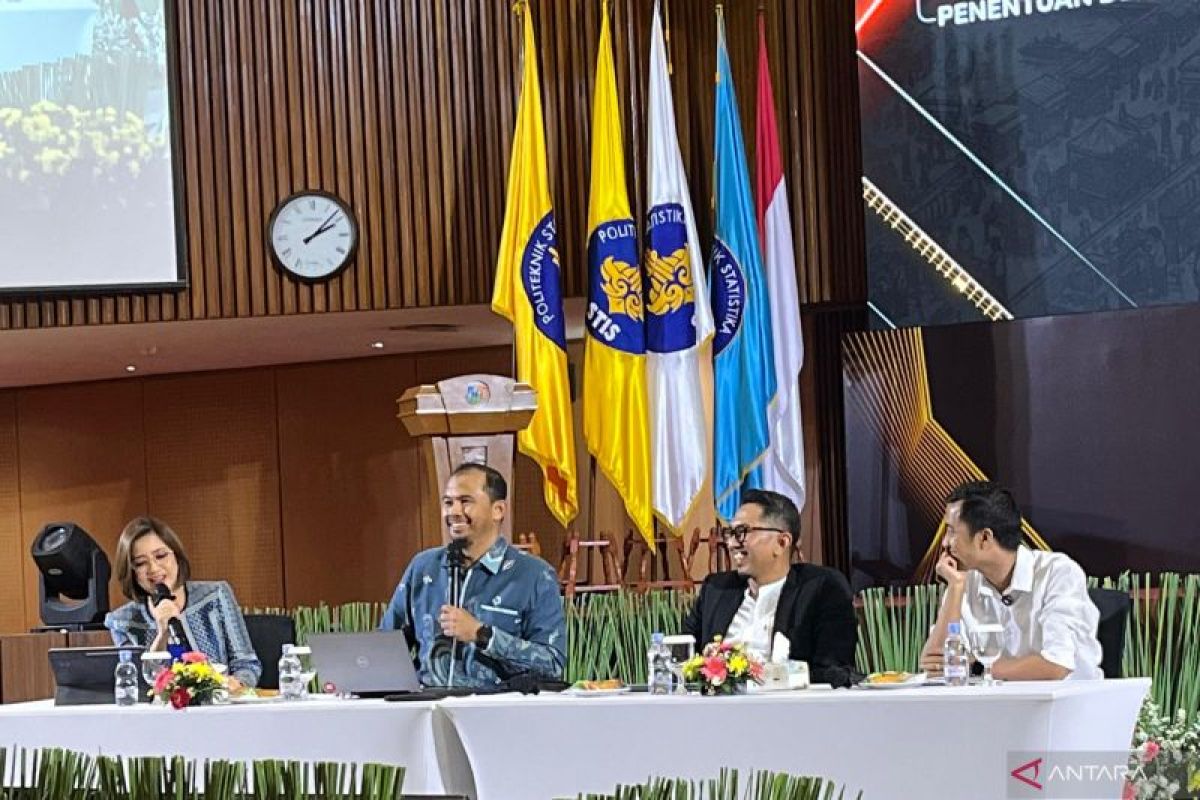
The Indonesian Central Statistics Agency (BPS) has announced plans to utilise various data sources, including the results of the 2026 Economic Census, for the National Socio-Economic Single Data (DTSEN) to enhance the accuracy of the population’s socio-economic data.
Speaking after a methodology discussion in Jakarta on Friday, BPS Director of Methodology and Data Science, Setia Pramana, stated that updates are being conducted continuously through several channels, involving both BPS and the Ministry of Social Affairs (Kemensos), alongside the strengthening of data processing methodologies.
He explained that BPS is also continuously improving the quality of the Proxy Means Test (PMT) modelling method to strengthen the precision of socio-economic grouping within the DTSEN.
According to Pramana, one of the key data sources to be utilised in this update process is the 2026 Economic Census. This data is considered capable of providing a more comprehensive overview of community economic activities as well as their socio-economic conditions.
“One of the data sources we may use is the 2026 Economic Census. Therefore, we request your cooperation regarding the quality of the Economic Census, as your participation is a vital part of a census that can capture not only economic activities in society but also their socio-economic conditions,” he said.
Setia emphasised that DTSEN is dynamic data, as the socio-economic conditions of the community are constantly changing. Consequently, updates are necessary to ensure the data reflects the current state of the population so that decile classifications align with actual circumstances.
He provided an example where individuals previously classified in the low-income group may experience economic improvements, or vice versa. With continuously updated data, the government is expected to implement more targeted policies.
Meanwhile, Social Affairs Ministry expert Andi Kurniawan stated that the government continues to create space for improvements to the DTSEN, including responding to various field-based feedback.
He noted that the use of DTSEN has helped expand the coverage of social assistance (bansos) recipients, with approximately 4.3 million new beneficiary families (KPM) being identified who previously did not receive aid.
“The government is open to refining its models. From the Ministry of Social Affairs, I have also shared how to utilise DTSEN for social assistance; previously, many could not access social aid, but now there are 4.3 million new beneficiaries because we are using DTSEN,” said Andi.
He added that moving forward, the government will develop a Dynamic Social Registry so that changes in the socio-economic status of the community can be continuously recorded within the data system.
He also mentioned that the government is currently pushing for the digitalisation of social assistance, which is planned for implementation in early 2027.
Andi added that the public can act as social protection agents to assist citizens who struggle to register for social assistance independently, such as the elderly or those without access to digital devices.
“Anyone can become a social protection agent,” he concluded.