
BPS to Use AI to Accelerate 2026 Economic Census Data Processing
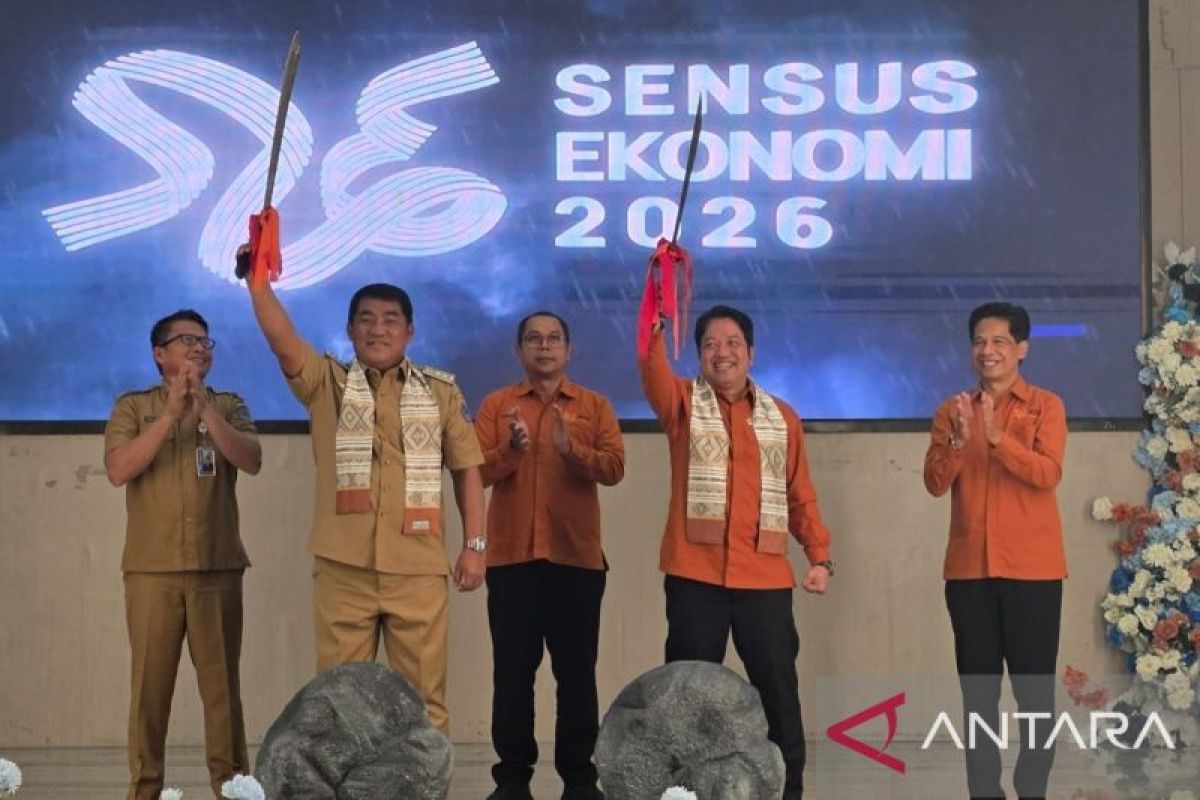
Manado (ANTARA) - Deputy Head of Statistics Indonesia (BPS) Sonny Harry Budiutomo Harmadi has stated that the agency will utilise artificial intelligence (AI) technology to accelerate data processing and improve efficiency for the 2026 Economic Census, which is currently being conducted simultaneously across Indonesia. “The 2026 Economic Census presents considerable challenges, from the vast census areas to the millions of business actors involved. AI will significantly aid data processing, making it faster and more accurate, a task that usually takes a long time. AI can also significantly help with data accuracy and is capable of detecting anomalies, duplications, and input errors,” Sonny said during the launch of the 2026 Economic Census for North Sulawesi at the governor’s office in Manado on Tuesday. He assured that the confidentiality and security of respondent data would be strictly maintained, as all data verification will still be carried out in stages by organic BPS staff. Furthermore, the network and servers are fully owned by BPS. The 2026 Economic Census will take place over two and a half months, from 15 June to 31 August 2026. Sonny explained that the economic census is a routine national agenda conducted every ten years, as significant changes in a country’s development occur within each decade. The Economic Census has been held regularly since 1986, in accordance with the mandate of Law Number 16 of 1997 on Statistics. “The census is like a medical check-up. We might feel healthy, or we might feel something is not quite right with our body. And we can only find out the cause of the discomfort after the check-up,” he said. He stressed that the ‘medical check-up’ data will not be shared with other parties, ensuring that the collected 2026 Economic Census data is used solely for statistical purposes, with the aggregate data serving development interests across all regions in Indonesia. Sonny also praised North Sulawesi’s performance, noting that the province, known as the Land of Waving Coconuts, holds extraordinary economic wealth and potential. He said the governor would receive a comprehensive picture of the province’s economy, from marine to land-based sectors. Based on data, North Sulawesi’s economic growth has surpassed the national average, accompanied by a consistently declining poverty rate, which reached 6.62 percent. In 2025, the province’s economic growth hit 5.66 percent. Statistically, North Sulawesi is also the best-performing province in the Sulawesi region in terms of poverty reduction and accelerating stunting reduction, demonstrating that economic growth is aligned with improved public welfare. Consequently, the provincial, district, and municipal governments are providing full support for the 2026 Economic Census in this northernmost province. The census is expected to proceed smoothly without obstacles in the field. North Sulawesi, which has 382 islands including three island regencies, will be covered by 2,401 field officers. The Governor expressed hope that BPS would complete the data collection quickly so it could serve as a standard for local government programmes in 2027.