
BPS to Map Digital and Green Economies through the 2026 Economic Census
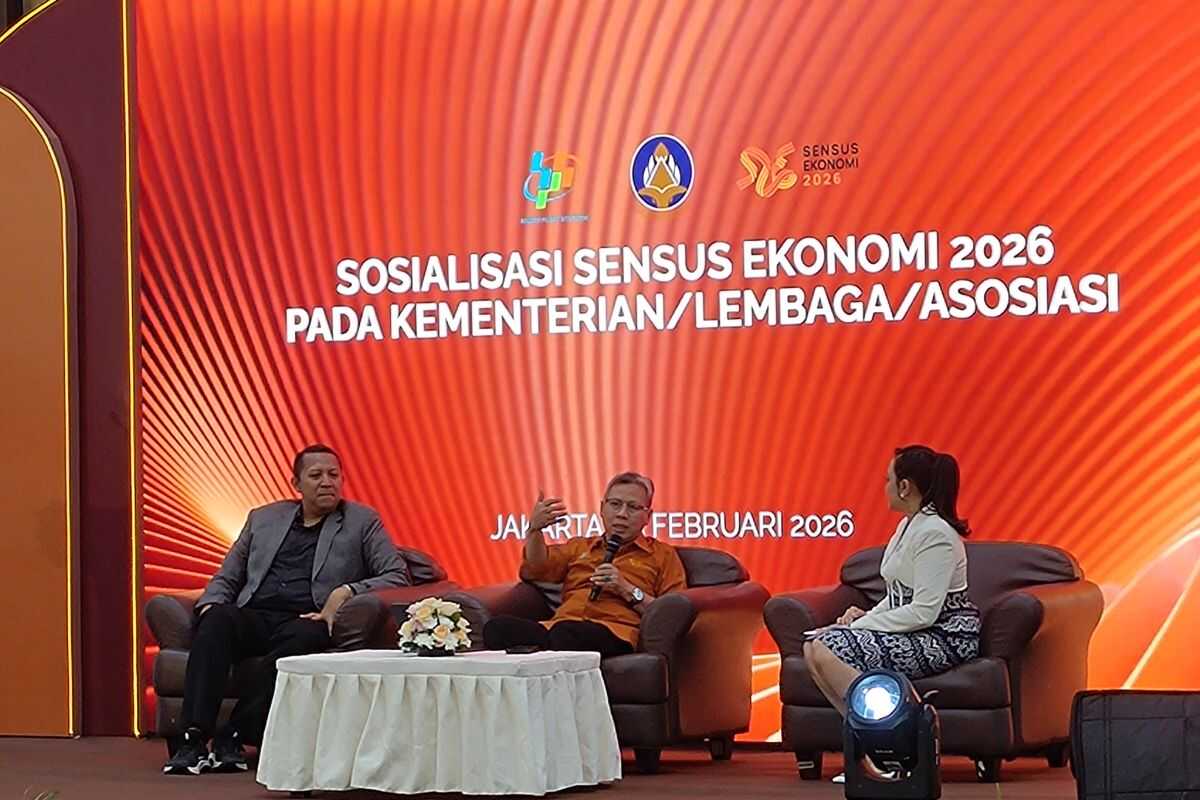
Jakarta (ANTARA) - The Central Bureau of Statistics (BPS) will map the development of the digital and green economies through the implementation of the 2026 Economic Census (SE2026) in order to capture changes in the national business structure, which is increasingly based on technology and sustainability.
The Deputy for Distribution and Services Statistics at BPS, Ateng Hartono, said that the 2026 Economic Census would be designed to answer the dynamics of business activities that are constantly changing based on the increasing use of digital technology in various economic sectors.
“How business actors optimise the use of the internet, whether to receive orders, distribute goods, produce, or purchase raw materials, all of that will be asked in the economic census,” said Ateng during a discussion session at the Socialisation of the 2026 Economic Census event in Jakarta, Wednesday.
He explained that this census would not only capture the number and scale of businesses, but also how business actors carry out their economic activities in the production, distribution, and marketing chain.
According to his presentation, the approach to collecting data on the digital economy will be carried out directly with business actors across various business fields, not just through the information technology sector, so that digital activities in the national economy can be mapped more completely.
“We will also capture how economic actors utilise technologies such as artificial intelligence (AI), the Internet of Things, blockchain, and cloud computing,” he said.
In addition to the digital economy, Ateng said that the 2026 Economic Census would also pay great attention to the green economy as part of the sustainable development agenda and improving national competitiveness.
According to him, BPS will record and examine data related to how business actors produce environmentally friendly goods and services, including the use of renewable energy such as solar panels and biogas.
He explained that the collection of data on the green economy would not only cover the results of production, but also the inputs used by business actors in maintaining environmental aspects.
“This includes business expenses for waste management, air pollution control, and economic activities based on recycling,” he said.
The 2026 Economic Census will cover all economic activities in Indonesia, except for the agricultural sector, government administration, and household activities for self-consumption.
The data collection will be carried out in 38 provinces and 514 districts/cities using two methods, namely Computer Assisted Web Interviewing (CAWI) and Computer Assisted Personal Interview (CAPI).
The CAWI method is scheduled to take place from 1 to 30 May 2026 for large businesses that have an email address, while the CAPI method will be carried out from 16 May to 31 July 2026 for micro, small, and medium enterprises, as well as large enterprises that do not yet have an email.
Through the mapping of the digital and green economies, BPS targets that the results of the 2026 Economic Census can be the basis for formulating economic policies that are more adaptive, competitive, and sustainable in supporting the vision of a Golden Indonesia 2045.