
BPS states bird's eye chilli prices exceed price guidance in various regions
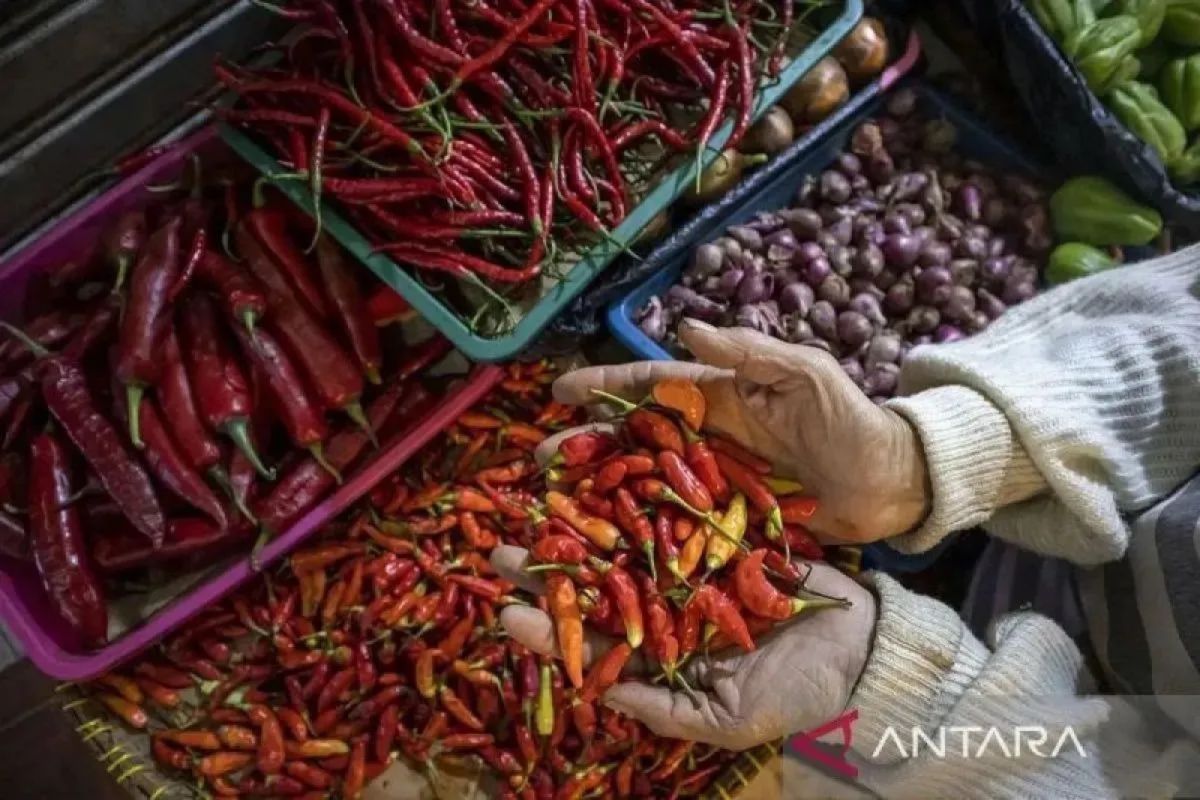
Jakarta – The Statistics Bureau (BPS) stated that the national average price of bird’s eye chilli during the second week of March 2026 remained significantly above the reference price guidance (HAP), triggering increases in price development indices (IPH) across various regions.
Ateng Hartono, Deputy Head of BPS’s Distribution and Services Statistics Division, stated that the reference price guidance for bird’s eye chilli was set at Rp57,000 per kilogram.
However, based on monitoring results, the average price of bird’s eye chilli in the second week of March 2026 had reached Rp72,897 per kilogram.
“Indeed, 199 districts and municipalities experienced increases in the price development index for bird’s eye chilli,” said Ateng during a Regional Inflation Control Meeting in Jakarta on Monday.
Ateng noted that the highest chilli prices were recorded in Nduga District at Rp200,000 per kilogram, followed by Pegunungan Bintang District and Intan Jaya District at Rp150,000.
Additionally, bird’s eye chilli price increases also occurred in Cirebon District, reaching Rp120,000 per kilogram or 110.53 per cent above the upper limit of the reference price guidance.
Boven Digoel District recorded a significantly high price development index increase of 27.87 per cent. Bird’s eye chilli prices in Boven Digoel District reached Rp110,000 per kilogram or 92.98 per cent above the upper limit of the reference price guidance.
Several districts and municipalities with chilli prices below the reference price guidance included Manokwari District at Rp40,000 per kilogram, Soppeng District at Rp44,833, South Buton District at Rp47,000, Demak District at Rp49,533, and Luwu and Sinjai districts at Rp52,000.
Ateng stated that the rise in bird’s eye chilli prices was one of the major factors driving food price pressures across various regions during March 2026.
Local governments are expected to continue monitoring price developments and ensure smooth distribution of food commodities to control inflationary pressures.