
BPS Reveals Widening Spending Gap Between Rich and Poor in Indonesia
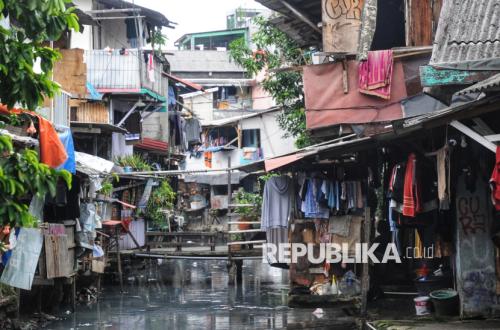
Spending inequality among the Indonesian population increased in March 2026, according to data from the Statistics Agency (BPS) on poverty and inequality profiles for the period. BPS noted that while the poverty rate in Indonesia as of March 2026 had declined, the level of inequality had actually risen.
“The level of spending inequality among the Indonesian population, measured using the Gini Ratio in March 2026, was recorded at 0.368. This figure rose by 0.005 points compared to September 2025, which was 0.363,” said BPS Deputy for Balance Sheets and Statistical Analysis M. Edy Mahmud during a press conference at the BPS Building in Jakarta on Wednesday (5/8/2026).
For context, the Gini ratio has a value between 0 and 1, where a figure closer to 0 indicates more equal distribution and a figure closer to 1 reflects a higher level of inequality. “By region, the level of inequality in urban areas was recorded as higher than in rural areas. In March 2026, the Gini ratio in urban areas was 0.387, while in rural areas it was 0.296. Compared to September 2025, the level of inequality in both urban and rural areas has increased,” he explained.
In terms of poverty alleviation performance, BPS recorded that the poverty rate in Indonesia had indeed declined. As of March 2026, the number of poor people fell to 22.93 million, lower than the September 2025 figure of 23.36 million. “The poverty rate in March 2026 was recorded at 8.07 percent, down from 8.25 percent in September 2025. Previously, BPS reported the number of poor people in September 2025 reached 23.36 million, decreasing by around 430,000 people to 22.93 million in March 2026,” Edy said.
Edy explained that the national poverty line was recorded at Rp 669,235 per capita per month in March 2026. This figure rose by 4.33 percent compared to September 2025, which was Rp 641,443 per capita per month. He explained that the poverty line needs to be translated into a household context, as expenses such as house rent, electricity, and rice consumption are generally shared within a single household. In March 2026, the average poor household in Indonesia had 4.62 members, making the national household poverty line reach Rp 3,091,866. This figure varies between provinces, depending on price levels, community consumption patterns, and the average number of poor household members in each province.
Thus, BPS data illustrates an increase in the spending gap among the public despite a decline in poverty. A picture of inequality was also previously conveyed by the Chairman of the Board of Commissioners of the Indonesia Deposit Insurance Corporation (LPS), Anggito Abimanyu. For context, Anggito at that time explained the phenomenon of public savings continuing to grow across all nominal groups up to the period of June 2026. This growth occurred in savings with nominal values below Rp 100 million up to savings valued above Rp 5 billion.
In the assessment of the Financial System Stability Committee (KSSK), LPS reported that savings below Rp 100 million, which are mostly owned by individuals or households, grew by 5.16 percent year-on-year. Meanwhile, savings below Rp 5 million increased by 7.36 percent, higher than the previous quarter’s growth of around 2.02 percent. At the same time, the savings of wealthy individuals or customers with savings above Rp 5 billion managed to grow by up to 15.4 percent. “I am conveying in aggregate, savings up to Rp 100 million grew 5.16 percent. Those below 5 million grew 7.36 percent. All also grew, as I said earlier, even those above Rp 5 billion also grew 15.4 percent,” Anggito stated.