
BPS Records Indonesia's Trade Balance Surplus Continues for 72 Consecutive Months
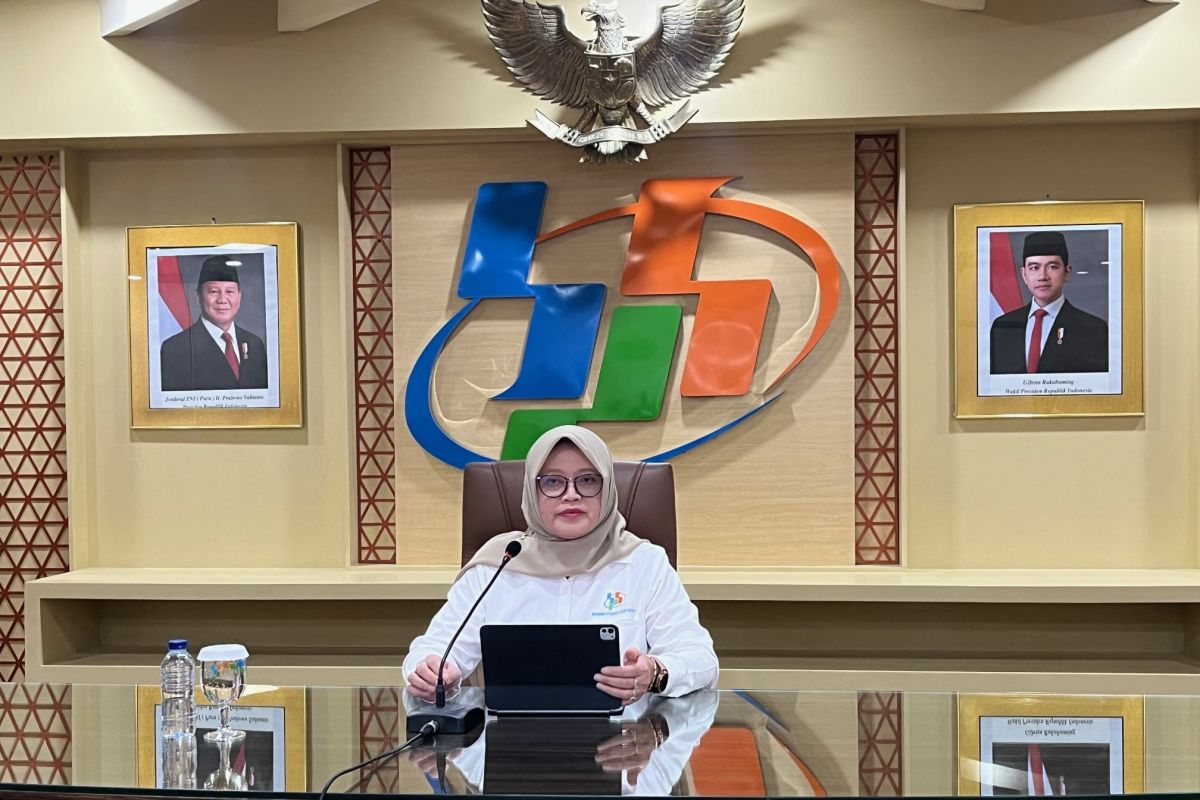
The Indonesian Central Statistics Agency (BPS) has recorded that Indonesia has maintained its trade balance surplus trend for 72 consecutive months, spanning from May 2020 to April 2026.
During a press conference in Jakarta on Tuesday, the Deputy for Methodology and Statistical Information at BPS, Pudji Ismartini, explained that Indonesia’s cumulative trade balance for the period of January–April 2026 recorded a surplus of US$5.64 billion. “With this achievement, Indonesia’s goods trade balance has experienced a surplus for 72 consecutive months,” she stated.
She noted that the surplus during the January–April 2026 period was supported by a non-oil and gas commodity surplus of US$14.16 billion, while oil and gas commodities experienced a deficit of US$8.52 billion. Furthermore, national export value during this period reached US$92.15 billion, representing a 5.48 per cent growth compared to the same period the previous year. This export growth was primarily driven by the manufacturing sector, which recorded a 9.78 per cent increase to US$75.57 billion.
China remains the largest export destination, with a value of US$22.76 billion, contributing 25.93 per cent to total non-oil and gas exports. This was followed by the United States with US$10.17 billion and India with US$6.14 billion. Non-oil and gas exports to China were dominated by iron and steel, nickel and its derivatives, and mineral fuels. Meanwhile, exports to the United States were largely supported by machinery and electrical equipment, footwear, and apparel and accessories.
On the other hand, Indonesia’s import value from January to April 2026 reached US$86.51 billion, an increase of 13.40 per cent compared to the same period last year. Non-oil and gas imports were recorded at US$73.58 billion, up 12.70 per cent, while oil and gas imports reached US$12.93 billion, an increase of 17.58 per cent. In terms of usage, imports of raw materials and auxiliary goods continued to dominate at US$61.82 billion, growing by 11.67 per cent, while capital goods imports reached US$17.11 billion (up 19.02 per cent) and consumer goods imports stood at US$7.58 billion.
Finally, the surplus in Indonesia’s non-oil and gas trade for the January–April 2026 period was primarily supported by five main commodities: animal and vegetable fats and oils with a surplus of US$11.71 billion, mineral fuels at US$8.34 billion, iron and steel at US$5.71 billion, nickel and its derivatives at US$4.26 billion, and footwear at US$2.14 billion.