
BPS records 28,000 drop in South Sumatra's poor population
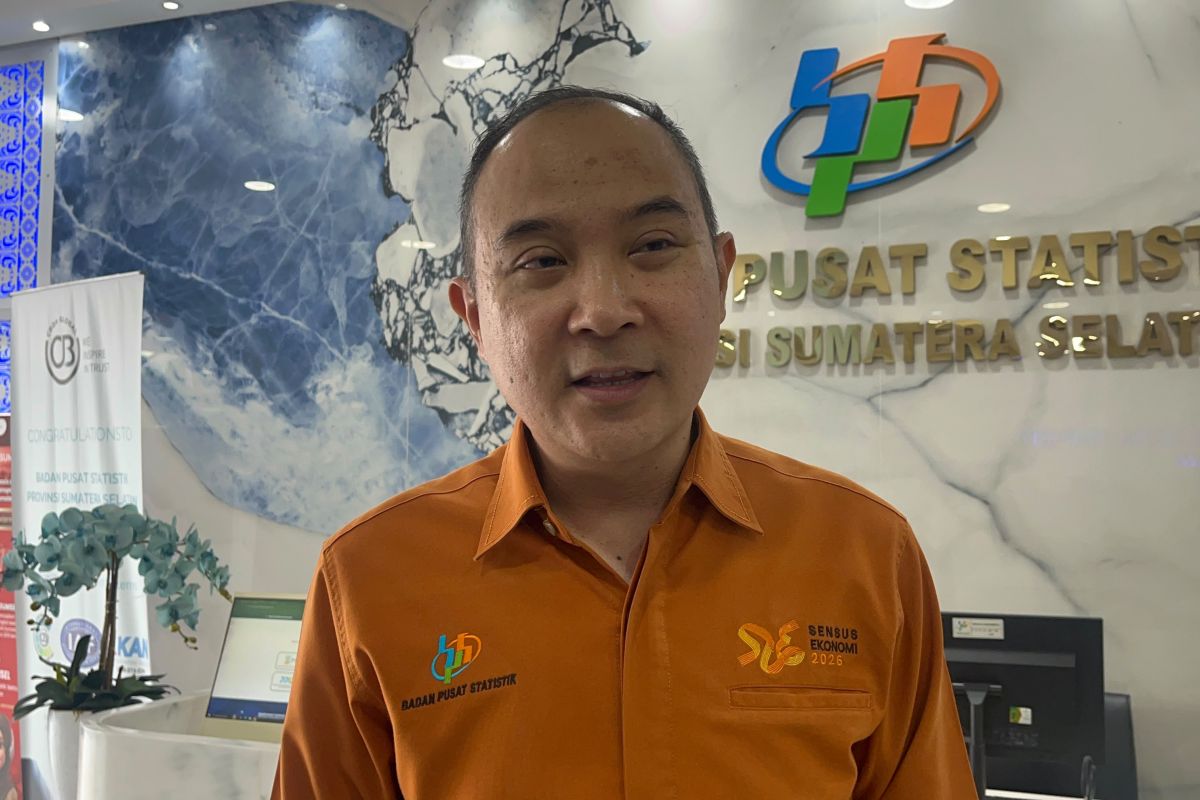
Palembang (ANTARA) - The Central Statistics Agency (BPS) recorded that the number of people living in poverty in South Sumatra reached 869,870 in March 2026, a decrease of 28,300 compared to September 2025, when the figure stood at 898,270.
Head of BPS South Sumatra, Moh. Wahyu Yulianto, stated in Palembang on Wednesday that the decline in the poverty rate was driven by strong economic growth in the province during the first quarter of 2026.
“In the first quarter, our economic growth was quite high, reaching 5.34 per cent. Agriculture performed well with a bountiful harvest and an increase in the government purchase price (HPP), coupled with accumulated household income and consumption during Ramadan, Idul Fitri, and the disbursement of the 13th-month salary for civil servants,” he explained.
Wahyu noted that the reduction in poverty figures between September 2025 and March 2026 occurred in both urban and rural areas. In urban areas, the number of poor people fell from 310,560 in September 2025 to 297,240 in March 2026, a reduction of 13,300 individuals. The urban poverty rate also decreased from 8.91 per cent to 8.48 per cent.
Meanwhile, the number of poor people in rural areas decreased by 14,900, from 587,680 to 572,730. The rural poverty rate dropped from 10.43 per cent to 10.13 per cent.
He added that the Poverty Line (GK) in South Sumatra as of March 2026 was set at IDR 622,000 per capita per month. With an average household size of four to five members, the minimum expenditure threshold to meet basic needs ranges from IDR 2.9 million to IDR 3 million per month.
Wahyu explained that an increase in people’s income is a crucial factor in reducing poverty. Therefore, he urged businesses to pay workers according to the Provincial Minimum Wage (UMP) regulations.
“We must ensure that our workers are not paid below the UMP. This is something we need to pay attention to so that households do not fall into the poor category,” he said.
In calculating the poverty line, BPS monitors 52 food commodities and 51 non-food commodities that form the basis of household expenditure. The monitoring results show that rice and clove cigarettes remain the two largest components of expenditure for poor households.
Consequently, the local government needs to maintain the stability of rice prices, as this commodity significantly affects the purchasing power of low-income communities.
“That is why the price of rice must be carefully managed; it cannot be allowed to rise sharply because it greatly influences spending. If the price of rice goes up, people’s purchasing power goes down,” he clarified.
In addition, he also highlighted the large expenditure of poor households on cigarettes. According to him, this expenditure provides no nutritional benefit and should ideally be redirected towards purchasing food.
“Spending on cigarettes is large but provides no calories. This expenditure should be shifted to buying caloric food items, but because it has become a cultural norm, cigarettes seem to be a mandatory expense,” Wahyu said.