
BPS: Monthly Inflation Reaches 0.21 Per Cent in August 2026
Jakarta (ANTARA) - The Indonesian Central Statistics Agency (BPS) recorded that Indonesia experienced a monthly inflation rate of 0.21 per cent (month-to-month/mtm) in August 2026.
Ateng Hartono, Deputy for Distribution and Services Statistics at BPS, stated in Jakarta on Tuesday that the Consumer Price Index (CPI) rose from 111.73 in July 2026 to 111.97 in August 2026.
“The expenditure group that drove the largest monthly inflation was primarily food, beverages, and tobacco, with inflation at 0.57 per cent. This group contributed 0.17 per cent to inflation,” said Atumn.
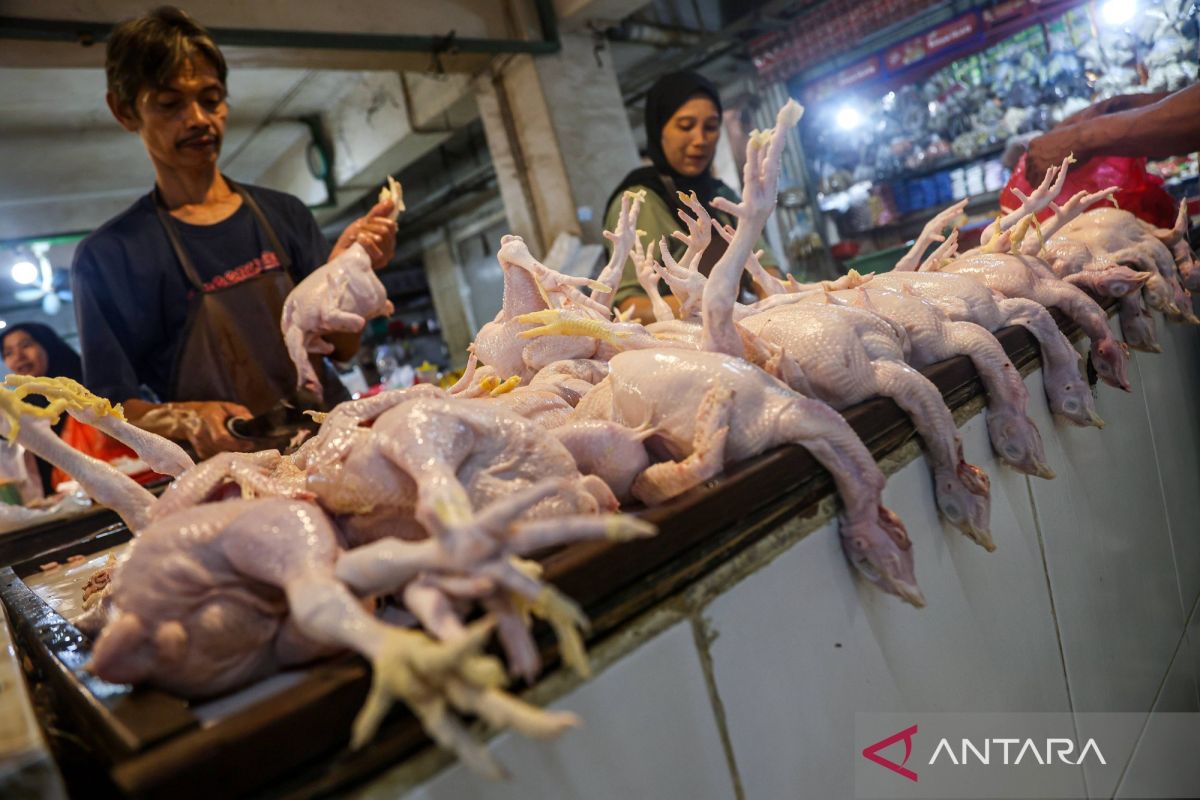
Commodities that dominated the inflation within the food, beverages, and tobacco group were mainly broiler chicken, which contributed 0.17 per cent to inflation. This was followed by bird’s eye chilli, fresh fish, and rice, each contributing 0.02 per cent.
Additionally, long beans, green beans, sweet corn, cucumber, watermelon, machine-rolled clove cigarettes (SKM), and machine-rolled white cigarettes (SPM) each contributed 0.01 per cent to inflation.
Aside from the food, beverages, and tobacco group, the personal care and other services group also contributed 0.03 per cent to inflation, with an inflation rate of 0.37 per cent.
This group was primarily driven by a 0.75 per cent increase in the price of gold jewellery, which contributed 0.02 per cent to inflation.
In August 2026, the transportation group experienced deflation of 0.50 per cent, contributing a deflationary impact of 0.06 per cent.
The dominant commodities driving deflation in the transportation group were primarily airfares, contributing 0.06 per cent to deflation. Petrol also contributed 0.03 per cent to deflation.
In terms of components, core inflation and volatile food prices experienced inflation, while government-administered prices experienced deflation.
Dominant commodities contributing to inflation in the volatile food component included broiler chicken, bird’s eye chilli, and rice.
Meanwhile, the core component experienced inflation of 0.21 per cent, contributing 0.13 per cent. The dominant commodities contributing to core inflation were primarily gold jewellery, lubricants or engine oil, mobile phones, and academy or university tuition fees.
Furthermore, government-administered prices experienced deflation of 0.33 per cent, with a deflationary contribution of 0.07 per cent. The dominant commodities contributing to deflation in the government-administered price component were airfares and petrol.
Regionally, 27 provinces experienced inflation, while 11 provinces experienced deflation.
The highest inflation occurred in Bangka Belitung Islands and Maluku, both at 0.81 per cent. Meanwhile, the deepest deflation occurred in Highland Papua at 1.27 per cent.