
BPS Launches 2026 Economic Census in Yogyakarta to Measure Education Sector's Economic Impact
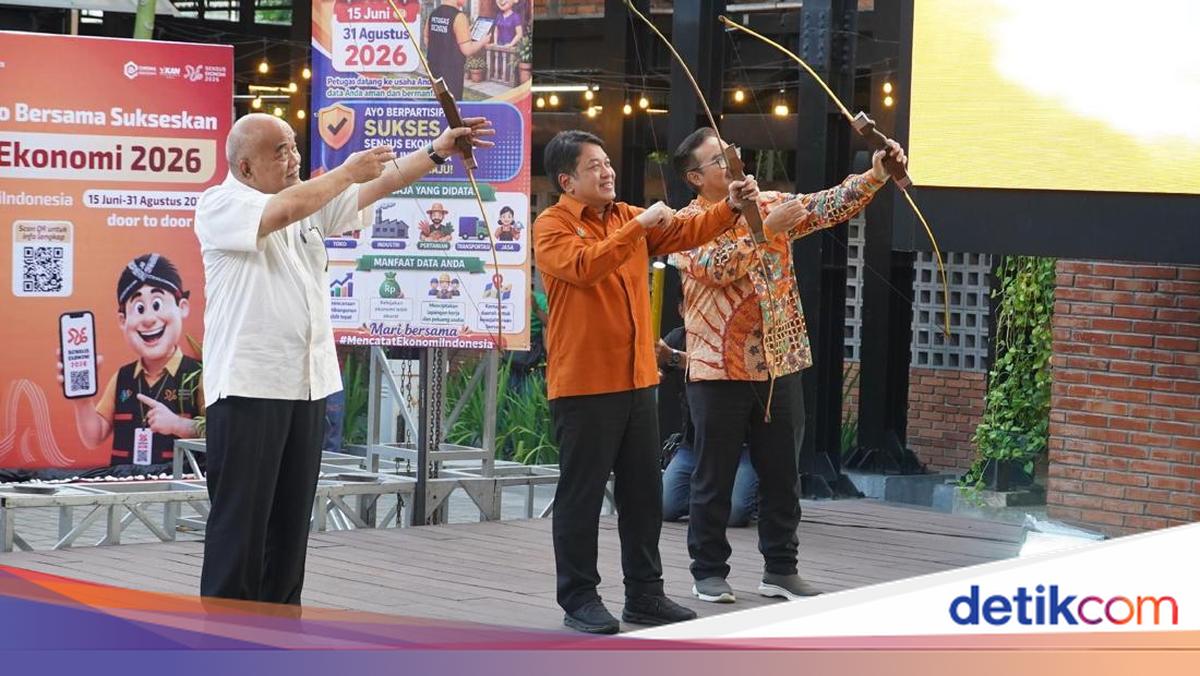
Deputy Head of Statistics Indonesia (BPS), Sonny Harry Budiarmo Harmadi, officially launched the 2026 Economic Census (SE2026) in the Special Region of Yogyakarta (DIY). Sonny stated that the census results will be able to more accurately measure the contribution of the education sector to the region’s economy. DIY has long been known not only for its excellence in education and culture, but also for its relatively strong economic resilience. This condition is a key reason for BPS to conduct a more comprehensive mapping of the region’s economic structure through SE2026. Through this census, BPS aims to capture economic changes and dynamics more thoroughly, including the role of strategic sectors that have been supporting economic growth in DIY. “If we look at it, education plays an extraordinary role in building the nation, both in building human resources and the economy. So once the census is complete, we will be able to calculate the contribution of the education sector to the economy in DIY,” Sonny said in a statement on Tuesday (23/6/2026). He made the remarks while launching SE2026 at Teras Malioboro 1, Yogyakarta, on Thursday (18/6). The launch of SE2026 in Yogyakarta also highlighted local cultural values through the release of jemparing, a traditional bow and arrow, which is one of Indonesia’s intangible cultural heritages. DIY is also known as the City of Students, a destination for students from all over Indonesia. The presence of various universities and educational institutions not only produces quality human resources but also creates various economic activities that support community life. This advantage is reflected in DIY’s Human Development Index (IPM), which ranks second highest in Indonesia, demonstrating that education is one of the main foundations of regional development. Through SE2026, BPS will obtain a more complete picture of the linkages between the education sector and various economic activities, ranging from trade, services, housing, and transportation to other supporting sectors. Besides being known as a student city, DIY is also a cultural centre with a wealth of noble cultural heritage. In 2024, DIY recorded the highest Cultural Development Index (IPK) in Indonesia with a score of 71.04. Amid various global economic challenges, DIY managed to record economic growth of 5.49 percent throughout 2025, the highest on Java Island. This achievement demonstrates the region’s economic resilience, supported by various sectors including education, tourism, culture, trade, and MSMEs. For SE2026, BPS will present complete, up-to-date, and integrated economic data as a basis for more targeted economic development planning. To support the census implementation in DIY, BPS deployed 4,082 enumerators who will record approximately 606 thousand business actors. The launch of SE2026 in DIY was held at Teras Malioboro 1, chosen because the area is a centre for MSMEs, shopping tourism, and modern culinary activities, symbolising the economic dynamics of Yogyakarta’s community. During the event, MSME players were also involved through the distribution of shopping vouchers to participants. SE2026 introduces several innovations compared to previous economic censuses. Data collection will be conducted door-to-door to families and business actors, resulting in a more comprehensive economic picture. BPS is also utilising digital technology and Artificial Intelligence (AI) to support the data collection process, helping enumerators improve data quality while minimising input errors. Sonny emphasised that SE2026 relies heavily on the active participation of the public and business actors. He encouraged the public to remember the simple slogan ‘TIR’, which stands for Terima petugas SE2026 (Accept SE2026 enumerators), Isi data dengan benar (Fill in data correctly), and Rahasia terjaga (Confidentiality is maintained). He also reminded all enumerators to ensure no families or businesses are missed and to maintain the quality of the collected data. Meanwhile, Deputy Governor of DIY, Kanjeng Gusti Pangeran Adipati Aryo Paku Alam X (KGPAA Paku Alam X), invited the entire Yogyakarta community to participate actively and provide accurate data. He stressed that the SE2026 results will serve as an important foundation for formulating regional economic development policies, particularly in boosting MSMEs, investment, and public welfare. “We need a complete portrait of our business dynamics. This data will be the basis for increasing MSMEs, investment, and ensuring the benefits are felt more widely by all the people,” he explained. The regional government is one of the parties that will benefit greatly from the SE2026 results. The data will help the government formulate evidence-based policies without having to spend its own budget on independent data collection, provided there is full support during the census implementation. With its characteristics as a student city, a national cultural centre, and the region with the highest economic growth on Java Island, DIY is a strategic area for the 2026 Economic Census. The results are expected to provide a complete picture of the region’s economic strengths and serve as an important foundation for more inclusive and sustainable development.