
BPS Explains Why World Bank Poverty Data for Indonesia Surged by 64%
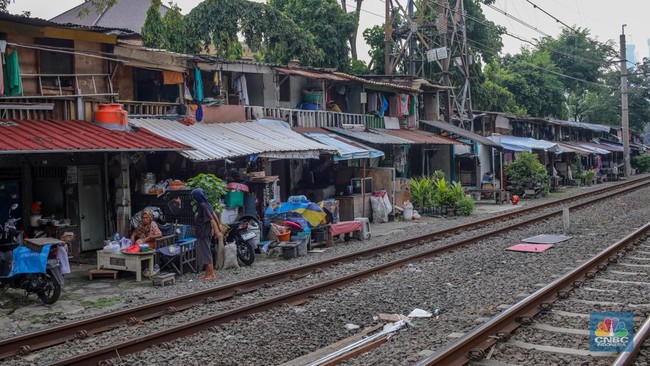
The Indonesian Central Statistics Agency (BPS) has provided an explanation regarding the striking difference between the poverty figures released by the Indonesian government and those from the World Bank, which had recently drawn public scrutiny.
On 5 August 2026, BPS released the national poverty rate for March 2026 at 8.07%. Conversely, based on the classification for upper-middle-income countries, the World Bank estimates that 64.1% of the Indonesian population lives below the poverty line, using a standard of US$8.30 PPP, or approximately Rp51,087 per person per day.
This vast discrepancy—8.07% versus 64.1%—has triggered public questioning. BPS has since clarified the situation.
BPS explained that both BPS and the World Bank utilise the National Socio-Economic Survey (Susenas) as their data source. However, both measure poverty differently because their measurement objectives differ.
BPS measures poverty based on the cost of living in Indonesia, calculating the minimum expenditure required for an individual to meet food needs and other basic necessities such as housing, clothing, and transport across 75 urban and rural areas in every province. This figure is updated twice a year to reflect price changes. In March 2026, the BPS poverty line was recorded at Rp669,235 per person per month, or approximately US$3.60 per day.
Meanwhile, the World Bank uses international poverty lines to compare living standards between countries, necessitating a uniform standard across all nations rather than a poverty line based on the specific prices and consumption patterns of each individual country.
The World Bank employs three international poverty benchmarks adjusted for a country’s income group, namely:
US$3.00 per day (equivalent to Rp18,465) for low-income countries
US$4.20 per day (equivalent to Rp25,851) for lower-middle-income countries
US$8.30 per day (equivalent to Rp51,087) for upper-middle-income countries
These benchmarks are based on the poverty lines commonly used by countries within each income group and are adjusted so that the same amount of money can purchase a comparable basket of goods across different nations.
The World Bank’s estimates also account for three price dynamics: changes over time (via the Consumer Price Index), regional differences between regencies/cities, and price differences between countries through Purchasing Power Parity (PPP) adjustments.
So, why the difference?
In a joint release with the World Bank, BPS emphasised that the primary cause of this large gap is the increase in the threshold used by the World Bank, rather than a deterioration in living conditions.
When Indonesia’s income status rose to upper-middle-income in 2023, the World Bank automatically raised the poverty threshold used—from US$4.20 to US$8.30 per person per day. With a higher threshold, naturally more people fall below it, which does not mean they have become poorer.
The US$8.30 figure reflects the living standards of the broader upper-middle-income group, which includes countries with per capita incomes up to nearly three times that of Indonesia. Therefore, this standard is significantly higher than the actual living standards applicable in Indonesia.
Both methods also treat price changes over time differently. BPS adjusts its poverty line to follow changes in domestic consumption patterns and living standards, whereas the World Bank applies a fixed international standard that is only adjusted for inflation. Consequently, these two measures can display different poverty reduction trends.
Which one serves as the policy reference?
BPS asserted that the national and international definitions of poverty are intentionally different because they serve different purposes, and both are appropriate for their respective uses.
The national poverty line is established by the government and is specific to the Indonesian context, serving as the basis for national policy and monitoring progress in domestic poverty alleviation. For this purpose, BPS emphasised that its measurement is the most relevant to be used as a policy reference.
Based on the BPS metric, the national poverty rate decreased from 8.47% in March 2025 to 8.07% in March 2026.
As a global comparison, the World Bank’s 2025 estimates show that 3.7% of the Indonesian population is in extreme poverty, 15.5% is below the poverty line for lower-middle-income countries, and 64.1% is below the poverty line for upper-middle-income countries.
BPS maintained that both poverty measures use the same underlying data but answer different questions—one for domestic monitoring and policy, and the other for international comparisons of living standards.
“One measure is not more ‘correct’ than the other; both have different purposes and provide complementary perspectives on poverty alleviation efforts in Indonesia,” BPS explained.