
BPS Explains Deciles in the National Socio-Economic Single Data
The term ‘decile’ is increasingly heard in discussions about various government policies and programmes. The use of the National Socio-Economic Single Data (DTSEN) as a shared database has also made the term more widely known to the public.
However, deciles cannot be treated as a direct reflection of a family’s economic condition. A decile essentially indicates a family’s welfare ranking compared with other families.
Because it is relative, families in the same decile do not necessarily have similar levels of income, asset ownership or expenditure. In other words, sharing a decile does not mean that economic conditions between families are also the same.
In DTSEN, families are placed in a ranking based on a number of social and economic characteristics. The ranking results are then divided into 10 groups, with each group covering approximately 10% of families.
Decile 1 represents the group with the relatively lowest level of welfare. Conversely, decile 10 is the group with the relatively highest welfare position. Thus, a family in decile 3 occupies the third group in a ranking consisting of 10 groups.
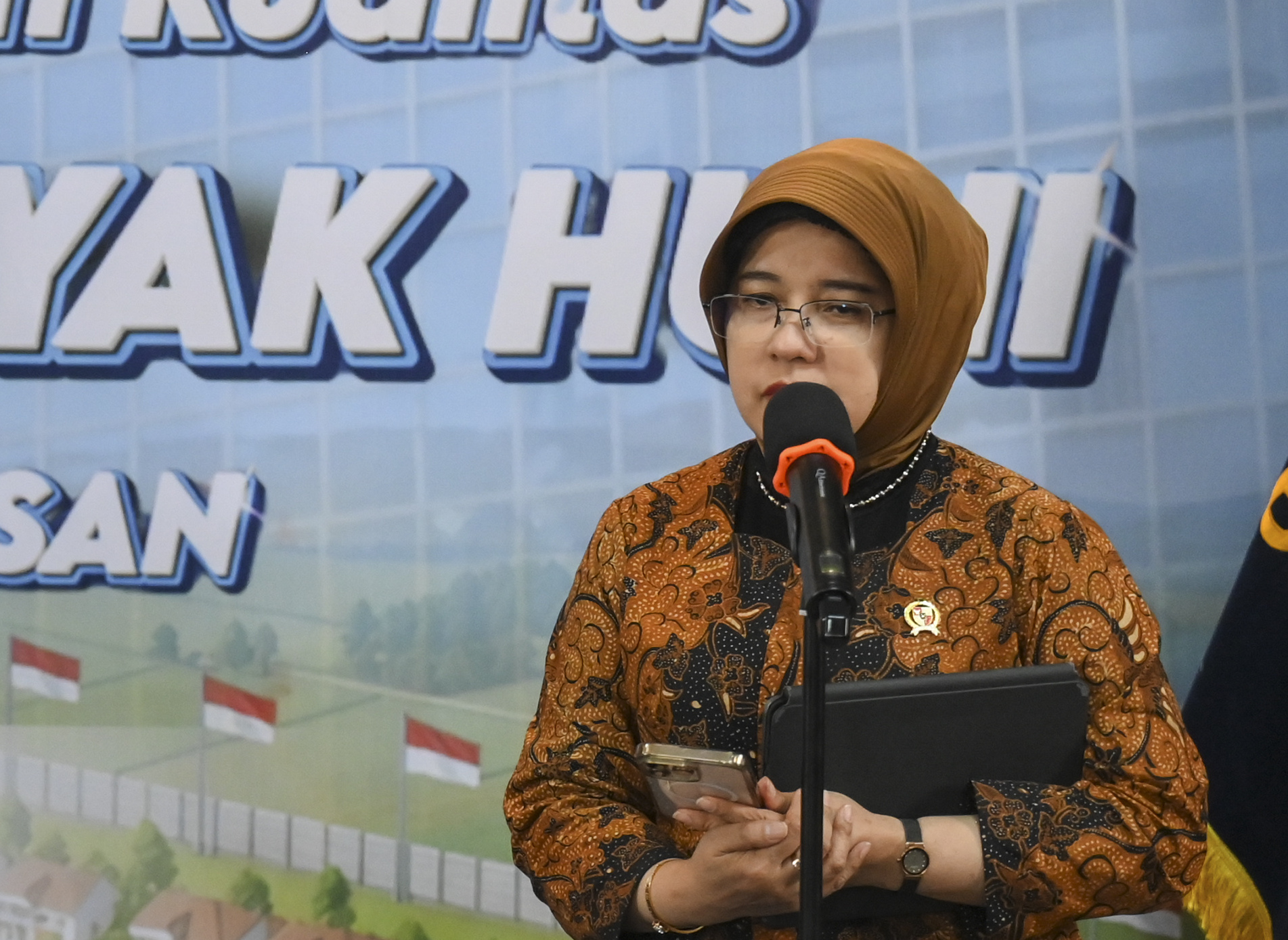
Head of Statistics Indonesia (BPS) Amalia Adininggar Widyasanti explained that decile figures should be understood as a family’s position in a ranking, not as a figure that directly describes its economic condition.
‘Deciles show the relative position of a family compared with other families based on various socio-economic characteristics. Therefore, decile figures need to be understood as a description of relative position in the welfare ranking, not as a single measure of a family’s economic condition,’ said Amalia, as reported on Sunday (23/8).
With this understanding, deciles cannot be equated with absolute measures of poverty, income or wealth. Their determination also does not refer solely to the amount of income a family receives.
A number of socio-economic aspects are assessed simultaneously, ranging from the condition of housing, water sources for daily needs, type of cooking fuel, asset ownership, electricity usage and capacity, family composition, education, employment, health, to disability conditions.
This means that no single indicator independently determines whether a family is in a particular decile. For example, owning a vehicle does not automatically place a family in a certain decile. The same applies to employment, electricity capacity, education or ownership of certain assets.
In determining welfare rankings, DTSEN applies the Proxy Means Test (PMT) statistical approach. This method is used to estimate welfare levels based on various observable socio-economic conditions.
PMT is also widely applied in various countries, particularly in situations where data on household income or consumption is difficult to obtain completely or verify thoroughly.
Through this approach, a number of family characteristics are analysed simultaneously to estimate relative welfare positions. Therefore, a change in only one aspect does not necessarily cause a family’s position to move from one decile to another.
Decile data can be used by ministries and agencies as one consideration in setting programme targets or priorities. However, a person’s or family’s presence in a particular decile does not automatically make them a recipient of certain assistance.
Each government programme has different requirements and mechanisms for determining recipients. Therefore, information about deciles needs to be used based on the objectives and rules of each programme.
A family’s decile ranking is not permanent. The position can change when its socio-economic conditions develop and its standing changes compared with other families.
However, a change in only one condition does not immediately change the decile. This is because the ranking determination still takes into account various characteristics simultaneously.
DTSEN is also updated periodically so that the resulting rankings continue to reflect the condition of society. Updates utilise various sources, including administrative data, censuses and surveys, the latest information from ministries/agencies and regional governments, direct field checks (ground checks), and public reports through available channels.
As of 10 July 2026, DTSEN Version 3 for 2026 was recorded as containing 290.13 million individual records and 95.98 million family records. The data continues to be refined so that information forming the basis of government policy can increasingly match the latest socio-economic conditions of society.
Members of the public who find discrepancies in information about themselves or their families also have the opportunity to propose corrections through the objection and appeal mechanism.
A number of facilities can be used to submit such updates, such as Cek Bansos through the website or application, SIKS-NG through village or sub-district operators, and Cek DTSEN. However, submitting a data change does not mean the decile ranking will immediately change.
Information submitted by the public will become material in the data updating and recalculation process. The final determination of decile position still follows the applicable data and methods.
‘BPS, together with ministries/agencies and regional governments, continues to carry out updates to maintain the quality of DTSEN so that it increasingly reflects the condition of society. Public participation in ensuring that information about themselves and their families matches actual conditions is also an important part of this,’ said Amalia.