
BPS: East Java Tops National Rice Production in 2026
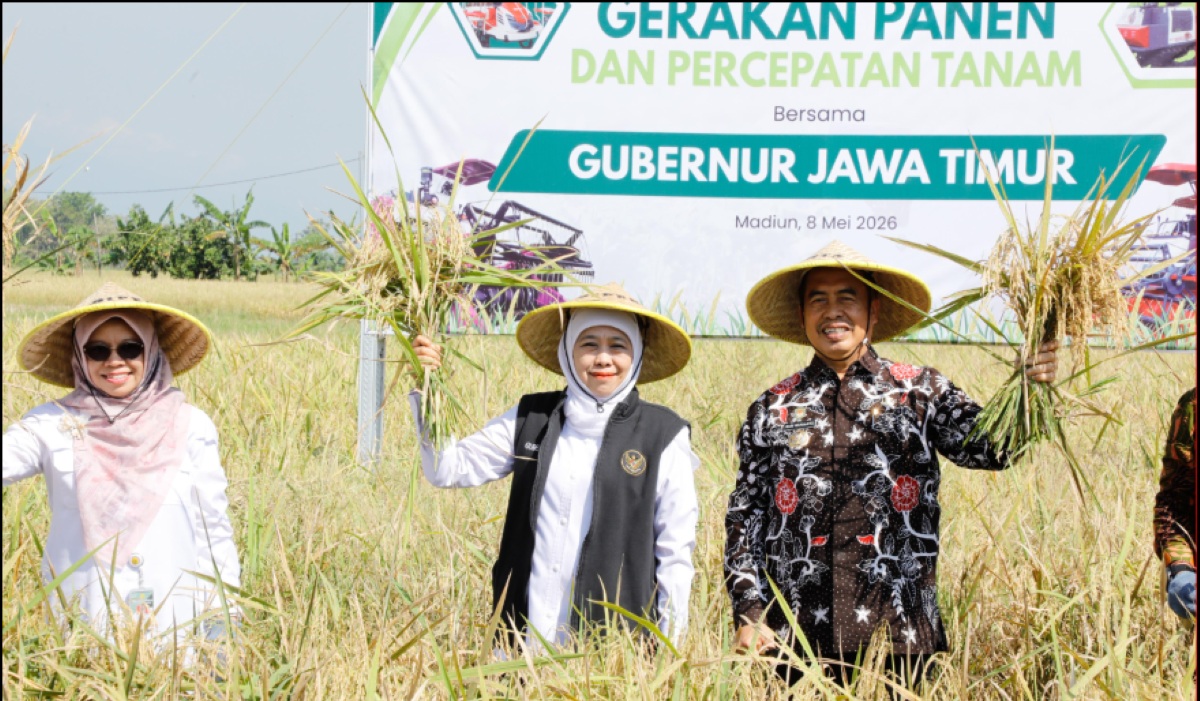
East Java has reaffirmed its position as Indonesia’s primary food barn. Based on the latest data from the Central Statistics Agency (BPS) released on 2 June 2026, East Java was recorded as the province with the largest potential rice production nationally for the January to July 2026 period.
East Java Governor Khofifah Indar Parawansa welcomed this achievement as the result of collective synergy between farmers and relevant stakeholders. She expressed high appreciation for the dedication of all parties in maintaining productivity amidst global challenges.
‘Alhamdulillah, this achievement shows that the hard work of farmers and all agricultural stakeholders in East Java has yielded real results. I express my highest appreciation to all parties who have strived to maintain agricultural productivity and food security,’ Khofifah said in Surabaya on Thursday (4/6).
BPS data projects East Java’s potential rice production at 7.71 million tonnes of dry unhusked grain (GKG). This figure shows an increase of 5.49% compared to the same period in 2025, which was recorded at 7.30 million tonnes of GKG. With this volume, East Java solidly occupies the top national position, surpassing other major producer provinces.
Khofifah emphasised that this positive growth is proof of the resilience of East Java’s agricultural sector as the main buffer of national food security, despite facing extreme global climate change challenges.
‘This is not just a statistical figure, but real evidence of the toughness of East Java’s farmers and the strong agricultural ecosystem that we continue to build together,’ she stated.
East Java’s success in topping national production was also driven by the expansion of the harvest area. BPS recorded the harvest area in East Java reaching 1.38 million hectares in the January-July 2026 period. This figure grew by 5.49% compared to the same period the previous year, which was 1.30 million hectares. According to the Governor, this increase in harvest area is the result of various strategic programmes. Khofifah is optimistic that through collaboration between the provincial government, districts/cities, the Indonesian National Armed Forces (TNI), extension workers, and farmer groups, East Java will continue to consistently maintain Indonesia’s food stability. ‘We are optimistic we can meet the community’s food needs while strengthening Indonesia’s food security,’ she concluded.