
BPS: DTSEN Data Must Be Up-to-Date to Ensure Targeted Distribution
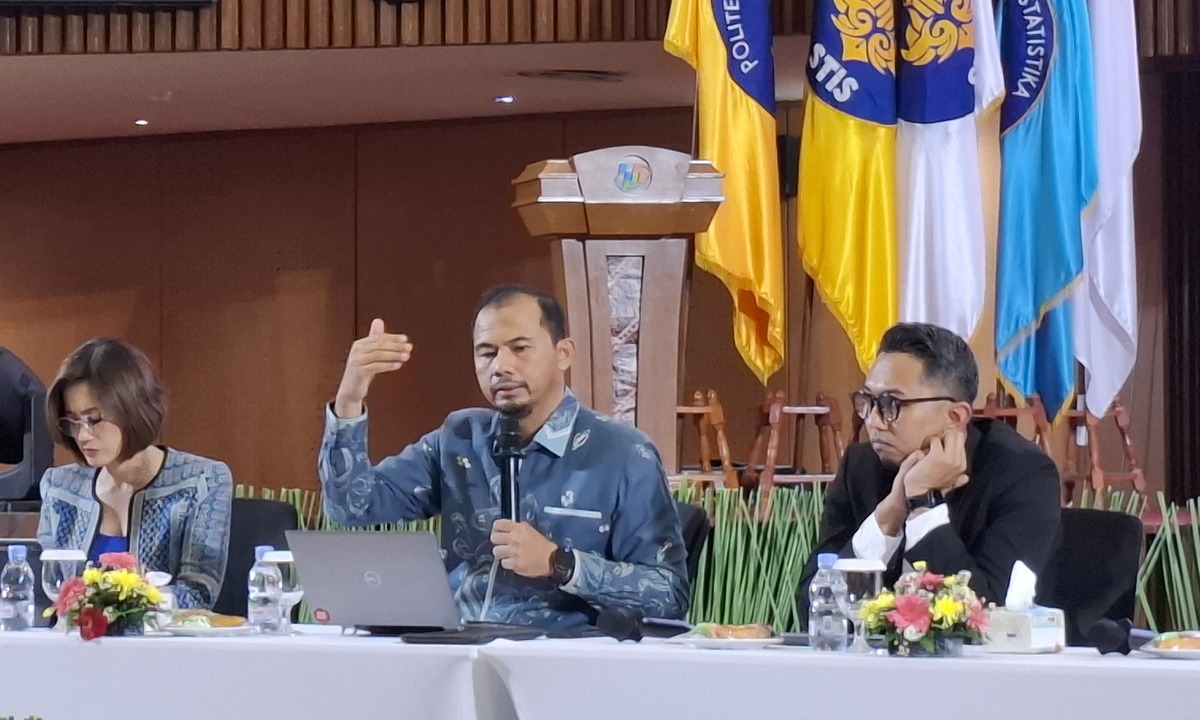
The Director of Statistical Methodology and Data Science at the Indonesian Central Statistics Agency (BPS), Setia Pramana, has emphasised the importance of updating the National Single Social and Economic Data (DTSEN) to ensure that government-used data remains accurate and reflects current societal conditions.
According to him, up-to-date data is key to ensuring that the ranking or decile distribution within the DTSEN accurately represents the state of the community. “It is not just about the ranking methodology, but the data being ranked must be current, accurate, and up-to-date,” Setia stated during a discussion on Decile Determination Methodology and Poverty Measurement in Indonesia, Jakarta, on Friday (11/9).
He explained that several decile discrepancies found in the field may occur because the data used does not yet reflect current societal conditions. Therefore, updating the data is more important than simply changing the ranking method. “It is not the deciles that need updating, but the data. The community’s condition must be updated to match current circumstances,” he said.
Setia asserted that the determination of deciles in the DTSEN is not based solely on community expenditure levels. The government utilises more than 40 variables to describe the social and economic conditions of households. These variables include housing conditions, asset ownership, household characteristics, and access to sanitation. These various indicators are used to estimate and rank the socio-economic conditions of the community more comprehensively.
“Therefore, there is no specific income limit that automatically determines whether someone falls into a certain decile,” said Setia. He noted that socio-economic conditions are dynamic; an individual previously in a disadvantaged position may experience an increase in welfare, and vice versa. Consequently, the DTSEN must be able to capture these changes through periodic data updates.
Setia stated that data updates are currently conducted periodically, including updates every three months as required. Moving forward, the government also needs to build a mechanism so that the public can report changes in their socio-economic status, allowing data to be updated more quickly and accurately. “If something has indeed changed, the community needs to report it,” he added.
In addition to updates, Setia opened the possibility for integrating DTSEN data with data from other ministries and agencies to improve accuracy. This integration could encompass various government data sources, provided it complies with personal data protection regulations. “When discussing data, it is very possible for us to collaborate with all ministries and agencies,” he said.
He added that the DTSEN involves 18 ministries and agencies. Therefore, the utilisation and updating of the DTSEN must be carried out collectively to support various government programmes.
Meanwhile, Social Affairs Ministry Expert Andy Kurniawan stated that the government is open to continuously refining the use of DTSEN, particularly in the distribution of social assistance (bansos). He noted that the use of DTSEN has enabled the government to identify 4.3 million new beneficiaries (KPM) who previously had not received social assistance.
“There are now 4.3 million new beneficiaries receiving social assistance because we are using the DTSEN,” Andy explained.
Andy stated that the government is also following up on various findings and feedback regarding data discrepancies in the field as part of the updating process. In the future, the government encourages the formation of a Dynamic Social Registry so that changes in the socio-economic conditions of the community can be recorded more rapidly. “The most important thing is how to build a dynamic social registry to capture highly dynamic socio-economic conditions,” he said.
He added that the government is also pushing for the digitalisation of social assistance distribution, which is planned to launch in October 2026 and be implemented by January 2027. One of the challenges is ensuring that those in need are not left behind due to not being registered in the data.
To this end, the government is promoting the National Movement for Caring for Neighbours through the involvement of social protection agents (perlinsos). These agents can assist community members who struggle to register themselves, including the elderly or those without digital devices. “Anyone can play the role of a social protection agent. The important thing is that no member of the community is left behind,” said Andy.
Member of Commission VIII of the DPR, Selly Andriany Gantina, emphasised the importance of strong complaint and supervision channels in the digital transformation of social assistance distribution. Meanwhile, CORE Indonesia economist Dipo Satria Ramli highlighted the challenges of implementing the government’s plan to create automatic accounts based on NIK (National Identity Number) for social assistance distribution.
The government aims to complete 80% of social assistance digitalisation by October 2026, using facial recognition technology to reduce mistargeting to below 10%. The government intends to ensure that the classification of community welfare aligns with actual conditions so that assistance is not misdirected.