
BPS Deputy Chief Launches 2026 Economic Census in West Java
West Java Province serves as a key driver of the national economy. Its contribution to the national Gross Domestic Product (GDP) in the first quarter of 2026 reached nearly 13 per cent, the third highest in Indonesia, with an economic growth rate of 5.79 per cent (y-on-y).
Amidst the need for accurate and up-to-date economic data, the 2026 Economic Census (SE2026) has been introduced to assist local governments in capturing a complete picture of the structures, characteristics, potential, and challenges faced. Local governments will obtain comprehensive data without having to utilise regional budgets (APBD), allowing it to serve as a basis for formulating more targeted policies and development programmes.
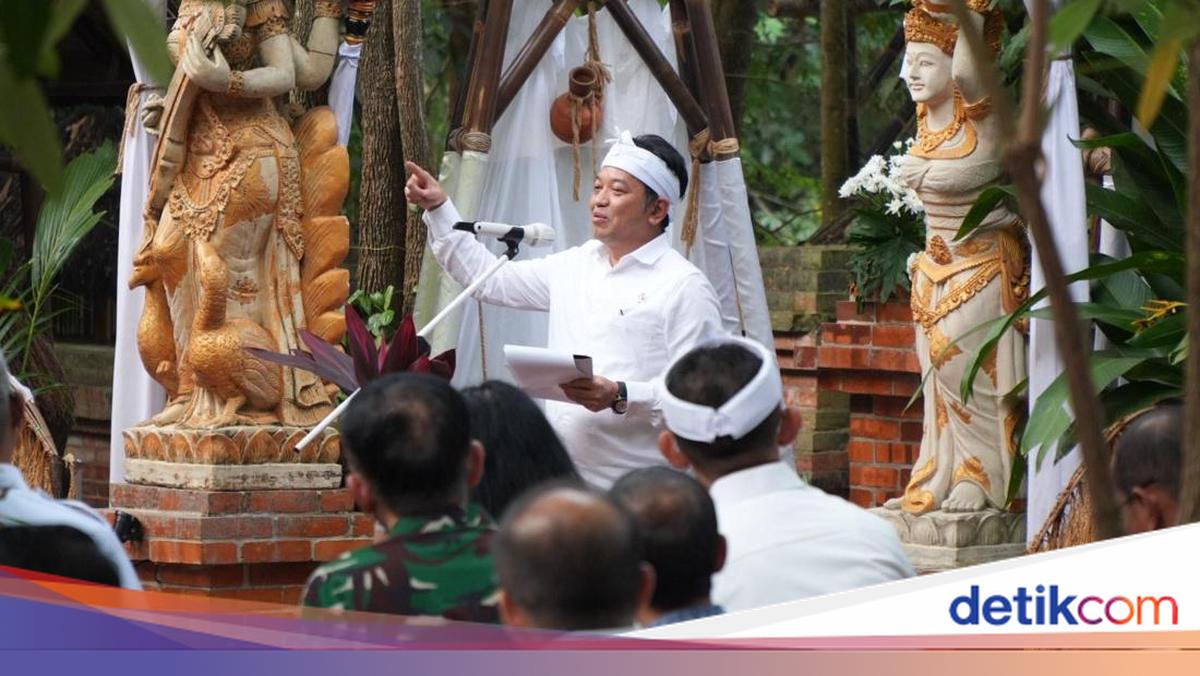
The door-to-door data collection for SE2026 officially commenced on 15 June across Indonesia. To mark the start of this process, the Deputy Head of the Indonesian Central Statistics Agency (BPS RI), Sonny Harry Budiutomo Harmadi, specifically launched the implementation of SE2026 in West Java on Sunday (21/6/2026). BPS has deployed more than 40,000 officers to record all business activities across 27 regencies and cities in West Java Province. Economic census officers will collect data from business owners and households until 31 August.
“We have deployed 40,573 officers in the field (West Java Province). 40,573 field enumerators is a very large number, Governor,” Sonny stated in a written statement on Monday (22/6/2026). “The total for all of Indonesia is 251,000, and West Java is one of the largest.”
On this occasion, Sonny invited the West Java Provincial Government, along with all regency and city governments, to continue providing support for the implementation of SE2026. This is particularly important as economic censuses are known to be more challenging than population or agricultural censuses.
Sonny highlighted four new features in SE2026. First, the data collection period has been extended from one month to two and a half months. Second, for the first time, the economic census will also record agricultural activities. Furthermore, not only business owners but also households will be surveyed door-to-door. Finally, SE2026 data collection will utilise gadgets and artificial intelligence (AI) to reduce errors.
“What is interesting is that for the first time, the economic census is surveying both businesses and households. Therefore, stickers will be placed on all houses and all businesses once they have been interviewed and recorded,” Sonny explained.
Sonny urged the public to adhere to the “TIR” principle during the SE2026 implementation, which stands for: Accept the arrival of officers, Fill in the data correctly, and Data confidentiality is guaranteed. He also reminded all field officers to ensure no units are missed so that the collected data is complete, accurate, and high-quality.
Meanwhile, the Governor of West Java, Dedi Mulyadi, emphasised the importance of complete and accurate data as a foundation for formulating targeted development policies.
“From that data, we can essentially diagnose ourselves. We can identify our problems, and from those problems, solutions will surely follow,” said Dedi. According to him, objective policy must be aligned with and based on data.
As a symbol of the SE2026 launch in West Java, a joint commitment was signed by the Deputy Head of BPS RI, the Governor of West Java, the Head of BPS West Java Province, and all Regents and Mayors across West Java. The signing symbolises the synergy and collaboration between stakeholders in supporting the delivery of a high-quality SE2026.
Following the launch, the Governor of West Java served as a respondent for the SE2026 data collection conducted by BPS officers from Subang Regency. The data collection was conducted through face-to-face interviews and witnessed directly by the Deputy Head of BPS RI and the Head of BPS West Java Province. This participation is significant, as the Governor’s willingness to act as a respondent is expected to encourage public awareness and participation.
Prior to the launch, Sonny also had the opportunity to personally inspect the SE2026 data collection at the Dewi Air Restaurant in Subang Regency. The inspection was carried out to ensure the data collection process adheres to operational standards to guarantee the quality of the data collected by field officers.
In addition to Sonny Harry Budiutomo Harmadi and Dedi Mulyadi, the event was attended by the Director General of Regional Resilience and International Industry Access (KPAII) of the Indonesian Ministry of Industry, Tri Supondy, members of the West Java Regional Leadership Coordination Forum (Forkopimda), Regents and Mayors of West Java, representatives from vertical agencies in West Java, and representatives from West Java Regional Apparatus Organisations (OPD). The launch was held at the residence of the Governor of West Java, Dedi Mulyadi, in the Lembur Pakuan Tourism Village, Subang Regency, an area known for its culture and agriculture-based tourism.