
BPS Clarifies Misconceptions About DTSEN Deciles
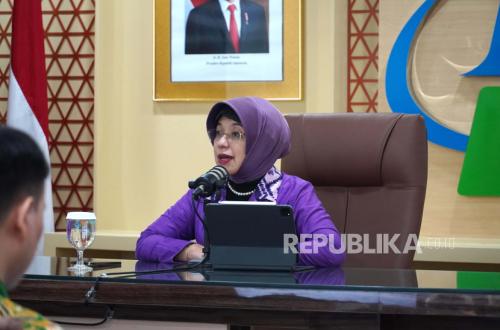
Statistics Indonesia (BPS) has corrected a misunderstanding circulating in the public regarding deciles in the National Single Socio-Economic Data (DTSEN). BPS emphasised that deciles are not an absolute measure of poverty, income, or family wealth, but rather a relative ranking based on various socio-economic characteristics.
Head of BPS Amalia Adininggar Widyasanti said that many people have mistakenly interpreted decile figures as a single benchmark for a person’s economic condition. In fact, deciles only indicate the relative position of a family compared to other families.
“Deciles show the relative position of a family compared to other families based on various socio-economic characteristics. Therefore, decile figures need to be understood as a description of relative position in welfare ranking, not as a single measure of a family’s economic condition,” Amalia said in a written statement in Jakarta, quoted on Saturday (22/8/2026).
In DTSEN, families are grouped into 10 deciles based on relative welfare levels. Decile 1 is the group with the lowest relative welfare level, while decile 10 is the highest.
BPS emphasised that another common misunderstanding is the assumption that deciles are calculated purely from income. In fact, the ranking considers housing conditions, drinking water sources, cooking energy, asset ownership, electricity, family composition, education, employment, health, and disability.
These various characteristics are calculated together using the Proxy Means Test (PMT) method to estimate the relative welfare position of families.
Therefore, BPS said, families in the same decile do not always have exactly the same income, expenditure, or socio-economic conditions. Decile positions can also change as family conditions and their relative position compared to other families change, rather than being a permanent figure.
As of 10 July 2026, DTSEN Version 3 covers 290.13 million individual records and 95.98 million family records. BPS ensures that this data is continuously updated through various sources, including administrative data, censuses and surveys, updates from ministries/agencies and local governments, field checks, and public input.
This BPS explanation was delivered amid government discussions on the use of deciles in policy. Coordinating Minister for Economic Affairs Airlangga Hartarto previously also emphasised that decile groupings remain within the range of 1 to 10.
“Deciles always go up to 10, just like 0-100 per cent. It is impossible to have 0-120 per cent; decile 12 would be 120 per cent,” Airlangga told reporters in Jakarta on Friday (21/8/2026).
The government is also reviewing restrictions on Pertalite purchases for people in deciles 9 and 10. Minister of Energy and Mineral Resources Bahlil Lahadalia said the restriction mechanism is still under review.
Source: jawawa.id (https://jawawa.id/newsitem/bps-clarifies-misconceptions-about-dtsen-deciles-1787385128)
Originally published by Republika (https://ekonomi.republika.co.id/berita/tk5g7w416/bps-luruskan-salah-kaprah-soal-desil-dtsen), translated from Indonesian