
BPS Chief: Decile Is Not a Single Measure of Indonesians' Economic Condition
The National Socio-Economic Single Data (DTSEN) has now become a shared government reference to support planning, target setting, and evaluation of various programmes. One of the key pieces of information within it is the decile, which describes the relative welfare position of families.
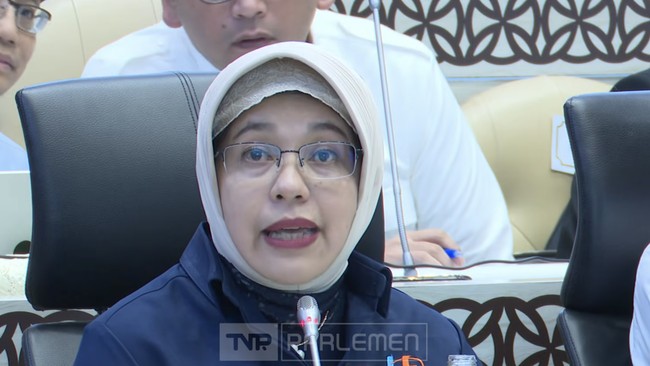
Head of Statistics Indonesia (BPS) Amalia Adininggar Widyasanti explained that deciles are a ranking of families based on various socio-economic characteristics. “Deciles show the relative position of a family compared to other families based on various socio-economic characteristics,” Amalia said in a written statement in Jakarta, quoted on Sunday (23/8/2026).
According to her, deciles cannot be understood as a single measure of a family’s economic condition. “The decile figure needs to be understood as a picture of relative position in welfare ranking, not as a single measure of a family’s economic condition,” she said.
In simple terms, families are divided into 10 groups, each covering around 10% of families. Decile 1 indicates the group with the lowest relative welfare level, while decile 10 is the group with the highest relative welfare level.
Thus, a family in decile 3 means it is in the third group out of 10 in the relative welfare ranking. However, families in the same decile do not necessarily have identical income, expenditure, assets, or socio-economic conditions.
Determining deciles is also not based solely on income, occupation, electricity capacity, or ownership of certain goods. BPS considers various characteristics simultaneously, such as housing conditions, drinking water sources, cooking energy, asset ownership, electricity consumption, family composition, education, occupation, health, and disability.
All these characteristics are calculated using the Proxy Means Test (PMT) statistical method to estimate a family’s welfare level based on observable conditions. Because it uses many indicators at once, a change in one condition does not automatically change a family’s decile position.
DTSEN itself was built by integrating DTKS, P3KE, and Regsosek, then enriched with administrative data and periodically synchronised with population data. Its use is regulated in Presidential Instruction Number 4 of 2025, with BPS tasked with compiling and managing DTSEN.
Deciles function as a tool for the government to identify community groups based on relative welfare positions, not as an automatic list of aid recipients. “Its use always needs to be read in the context of the relevant programme,” Amalia said.
As of 10 July 2026, DTSEN Version 3 of 2026 covers 290.13 million individual records and 95.98 million family records. BPS stated that updating continues through administrative data, censuses and surveys, updates from ministries/agencies and regional governments, field checks, and public participation.
“Public participation in ensuring that information about themselves and their families matches actual conditions is also an important part of the process,” Amalia said.