
BPS calls for comprehensive view of labour market data
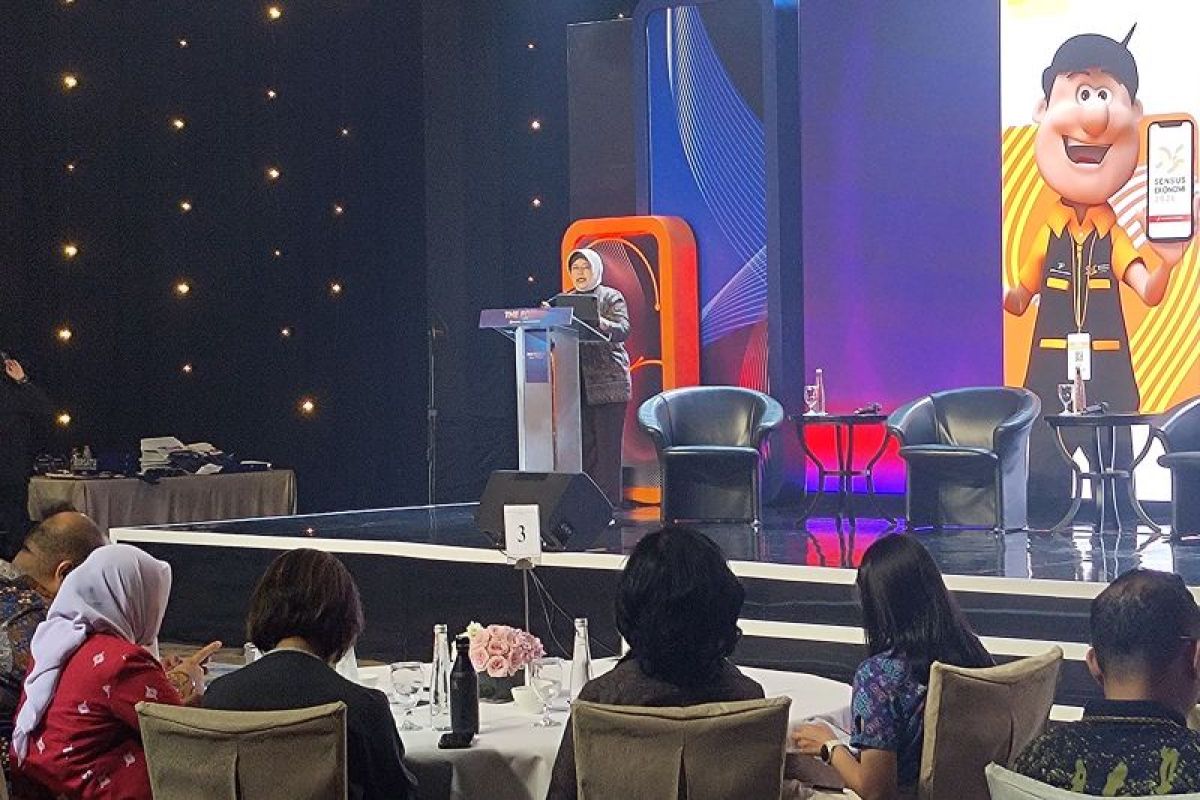
When assessing the labour market, do not focus solely on job loss data. Jakarta (ANTARA) - Head of the Central Statistics Agency (BPS) Amalia Adininggar Widyasanti has called for a comprehensive view of the national labour market, not just focusing on layoffs (PHK), but also on new labour absorption. “When looking at the labour market, do not focus solely on job loss data. Because the labour market consists of employed people, the unemployed, those laid off, and those absorbed into jobs,” Amalia said in Jakarta on Tuesday. BPS recorded Indonesia’s labour force at 154.91 million as of February 2026. Of these, 147.67 million were employed, an increase of approximately 1.9 million compared to the same period last year’s 145.77 million. Amalia explained that new entrants to the labour market come from secondary and tertiary education graduates entering the workforce. “The number absorbed into jobs is 1.9 million,” she said. Meanwhile, open unemployment fell from 7.28 million to 7.24 million, a reduction of 34,700 people year-on-year. According to Amalia, this indicates the labour market continues to absorb new entrants despite global economic challenges and slowdowns. “I want to stress that when assessing the labour market, do not look only at job loss data,” she added. However, she noted that some workers lost jobs in the past year, including through PHK in various business sectors. BPS recorded around 196,000 job losses over the past year. Of these, 113,000 found new employment, while 14,000 left the labour force due to further education or family reasons. “Again, some are absorbed into jobs, some remain unemployed, some are laid off, but others are reabsorbed,” she explained. BPS also noted Indonesia’s open unemployment rate dropped to 4.68% in February 2026 from 4.76% in February 2025. Previous BPS data showed Indonesia’s economy grew 5.61% year-on-year in Q1 2026, supported by household consumption, investment, and accelerated government spending early in the year. In terms of economic sectors, transport and warehousing grew 8.04%, trade 6.26%, manufacturing 5.04%, and agriculture 4.97% in Q1 2026, all contributing to labour absorption across various sectors. Amalia stressed the need for a holistic view of labour market dynamics to avoid misperceptions based solely on PHK figures. She said labour market data is crucial for assessing domestic economic conditions and the effectiveness of national labour absorption. On the government side, the Ministry of Manpower continues expanding job creation and workforce upskilling programmes throughout 2026, including the National Vocational Training Programme targeting over 70,000 participants nationwide this year. Minister of Manpower Yassierli previously stated that vocational training is a government priority to enhance human capital quality and accelerate labour absorption through schemes aligned with industry needs. Besides vocational training, the government is also implementing labour-intensive public works, self-employment programmes, and strengthening worker protection through the Job Loss Insurance (JKP) programme to maintain labour market resilience amid global economic dynamics.