
BPS Bali states community decile status is updated every three months
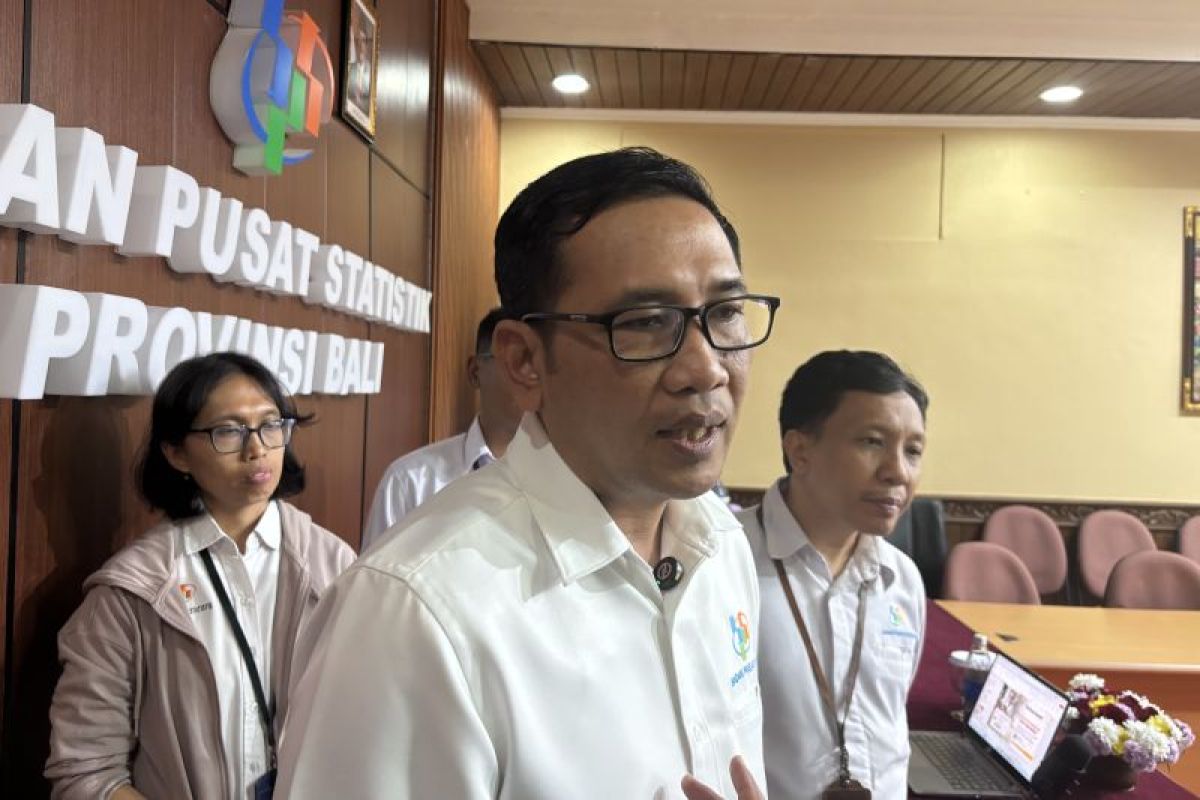
The Bali Central Statistics Agency (BPS) has stated that the decile levels used for grouping community welfare are relative and dynamic, subject to changes or updates every three months.
“Updates regarding the Integrated Social Welfare Data (DTKS) are conducted every three months, and the updates are not performed by BPS alone, but involve various data sources,” said the Head of BPS Bali, Agus Gede Hendrayana Hermawan, in Denpasar on Tuesday.
Agus Gede stated that this clarification aims to address public concerns regarding those placed in high-decile groups despite feeling that their economic condition is not absolutely prosperous. He explained that decile calculations differ from absolute poverty figures.
Decile determination is performed by dividing the population’s welfare levels into ten equal groups, meaning a person’s position depends heavily on the comparison of economic conditions between residents.
“Bali’s current poverty rate is 3.4 percent. When our economy is strong, poverty could theoretically reach zero because that 3.4 percent might no longer be considered poor; however, in terms of deciles, there will always be a decile 1,” he said.
“For example, if my income is Rp1 billion, but someone else in Bali earns Rp2 billion, I will be placed in a lower decile even though my income is high,” he added, while explaining the concept.
The DTKS data updates are processed every three months using various integrated sources, including the Basic Education Data (Dapendik) for student status, PLN data for electricity usage, BPS National Socio-Economic Surveys, and periodic data from Family Hope Program (PKH) facilitators.
Regarding assessment indicators, BPS emphasised that decile assignment does not rely solely on a single aspect, such as electricity usage or physical housing conditions, but is measured comprehensively through 41 weighting indicators.
“The indicators are very comprehensive, covering everything from asset ownership to housing conditions. People often look at only one indicator and compare it with their neighbours, whereas other indicators may show different results,” said Agus Gede.
Currently, the decile structure of the Balinese population generally tends to cluster within groups 1 to 5, with very thin differences between individuals. Conversely, for those in decile 10 (the top group), the range of income and expenditure inequality between individuals is very wide.
Regarding the concern that residents in decile 5 and above may be ineligible for social assistance, BPS Bali noted that this is not within their authority, but rather a decision made by the social assistance providing institutions.
With the specific calculations used in decile determination, Agus Gede also dismissed public concerns regarding the impact of price increases or inflation on the deciles in general. Inflation in specific commodities, such as airline tickets, is unlikely to significantly alter the lower deciles as they rarely consume such services, unless price increases occur in food, beverages, or tobacco.
Furthermore, he assured that the economic census currently being conducted by BPS Bali is not related to the community’s decile status.
“Many people fear the economic census. We have repeatedly stated that the economic census does not automatically change deciles because the census is happening now, while deciles can change tomorrow. This census is intended to ensure the government has accurate data regarding the economic condition of both the population and the region,” concluded Agus Gede.