
BPS Assures Economic Census Data Secure and Not for Tax Purposes
The Head of the West Jakarta Central Bureau of Statistics (BPS), Muhammad Noval, has ensured that the public data collected during the 2026 Economic Census is secure and will not be used for taxation purposes.
Noval emphasised that the collection of Economic Census data is intended to map the economic conditions and potential of the community. “Our data collection actually has no connection to taxes. That is why every time we conduct any form of data collection, we always convey that this process is unrelated to taxation,” Noval stated in Jakarta on Monday.
This clarification follows public concerns regarding data collection being linked to taxes, following narratives circulating on social media. He noted that the Economic Census is conducted to understand the evolving economic structure within society, including types of businesses and employment sectors over recent years.
He stressed that BPS has no relationship whatsoever with the Directorate General of Taxes in the data collection process. “We purely want to know what the economic potential is, what the structure or business sectors developing in the community are, which business sectors are dominant, and which sectors represent the most common occupations,” he said.
Furthermore, Noval ensured the security of the public data collected during the process. According to him, data protection is guaranteed under Law Number 16 of 1997 concerning Statistics, as well as other applicable regulations. To maintain data security, BPS is also collaborating with the National Cyber and Crypto Agency (BSSN) to secure the systems and storage of public data.
“At BPS, we are certainly not alone in handling data. For instance, the BSSN is working alongside BPS to secure the data,” said Noval.
All census officers are also equipped with integrity to ensure they do not leak the public data obtained during the process. Noval noted that the digital data collection system currently in use is designed so that data is stored directly on BPS servers and not on the officers’ devices.
“Currently, for data collection via mobile phones or applications, the data goes directly into the BPS server. Therefore, officers cannot view it because the data is stored on the BPS server,” he explained. After the data collection process, the applications used by officers will be deleted through official procedures to ensure no data remains on the devices. The public need not worry about their personal data being leaked.
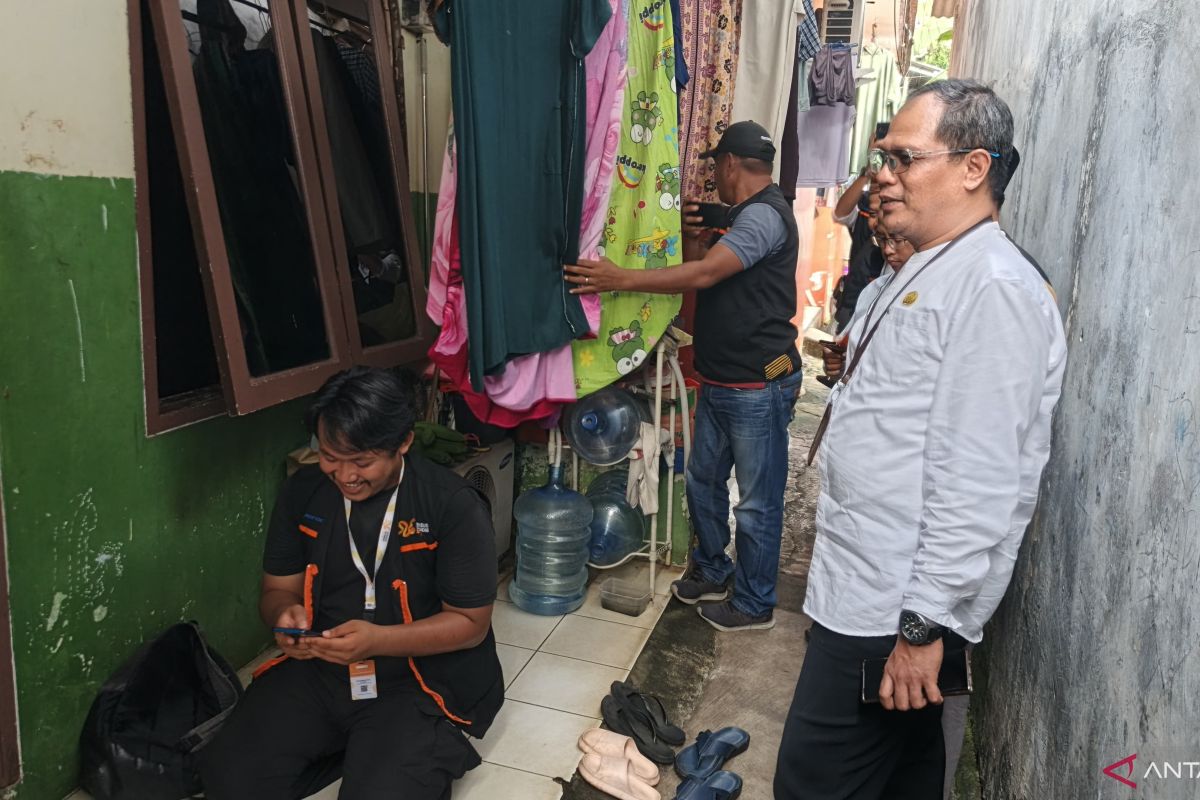
On the ground, several 2026 Economic Census officers in the West Jakarta area admitted they are frequently rejected by residents who suspect them of being scammers or tax collectors masquerading as economic census takers. Ahmad Munajat (43), a field inspector in the Srengseng area of Kembangan, West Jakarta, revealed that the lack of public trust is the greatest challenge during the process.
“The challenge is that many people are suspicious when officers arrive, especially since questions regarding economics can be sensitive,” Munajat said during the census in Srengseng on Friday.
Munajat revealed that the most common rejections come from MSME (Micro, Small, and Medium Enterprises) owners who fear their businesses will be subject to higher taxes after being recorded. He noted that widespread hoaxes on social media have further exacerbated public fear regarding the implementation of the Economic Census. Nevertheless, Munajat stated he continues to use persuasive approaches, noting that he sometimes has to visit a business up to four times before the owner agrees to be surveyed. “Some people only agree after 3 or 4 visits; it turns out many of them were simply misunderstanding the situation,” Munajat added.