
BPS Assures 2026 Economic Census Data Will Not Be Used for Tax or Audit Purposes
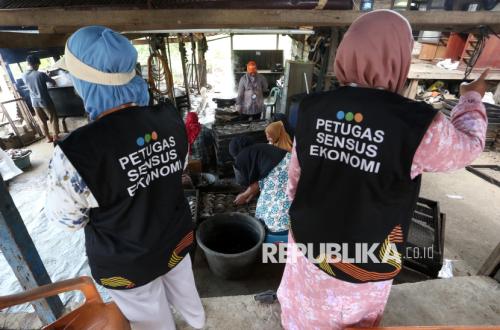
Statistics Indonesia (BPS) has assured that data collected in the 2026 Economic Census will not be used for tax assessment, business inspections, audits, or law enforcement purposes. The agency stressed that all information provided by respondents is solely for statistical use.
Windhiarso Ponco Adi, Daily Chair of the 2026 Economic Census at BPS, stated that this guarantee is enshrined in Law Number 16 of 1997 concerning Statistics. Consequently, BPS is obligated to maintain the confidentiality of all data obtained during the census.
“The data collected in the census is only used for statistical purposes, not for tax assessment, business inspections, audits, or other purposes outside of statistics. We want to provide assurance to all respondents that the data provided will be kept confidential,” Windhiarso said in Jakarta, cited on Monday (6/7/2026).
Windhiarso explained that individual or business entity data will not be published on a personal basis. The results of the 2026 Economic Census will only be presented in aggregate form to depict the condition of the business world and serve as a basis for government policy formulation.
According to him, BPS also implements a layered data security system. Data collected by officers through the FASIH application is directly stored on BPS servers, which meet the ISO 27001 information security standards and are reinforced by a joint cyber security system with the National Cyber and Crypto Agency (BSSN).
Meanwhile, BPS Head Amalia Adininggar Widyasanti said that her institution continues to educate the public on the importance of the 2026 Economic Census while ensuring the confidentiality of respondent data.
“We have monitored the situation. Proportionally, there are still more people who accept than those who refuse. It is just that those who voice their opinions on social media are the ones who refuse; those who accept the census officers well rarely speak up. This is our collective task to tirelessly educate the public so they understand the importance of being recorded,” Amalia said.
Amalia stated that public education needs to be continuously strengthened so that incorrect information regarding the census implementation does not cause concern. With increased public understanding, BPS hopes that people will be willing to provide data correctly, honestly, and completely so that the results of the 2026 Economic Census can serve as a more accurate basis for development policy formulation.