
BPS and Jasa Marga Integrate Data, with 70% of Toll Road Traffic Now Reflected in Statistics
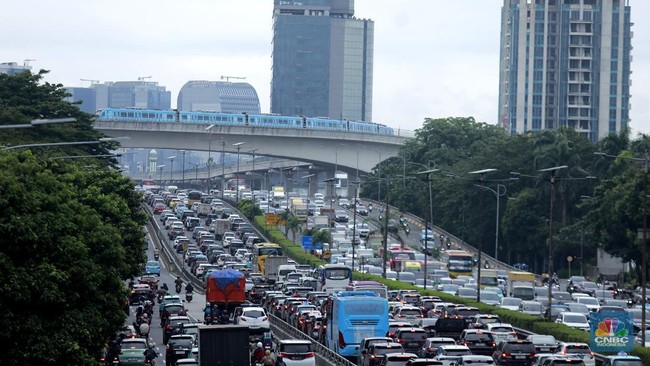
Jakarta, CNBC Indonesia – PT Jasa Marga (Persero) Tbk and Statistics Indonesia (BPS) have signed a memorandum of understanding (MoU) on integrating and exchanging statistical data on toll road traffic.
Jasa Marga President Director Rivan A. Purwantono said the collaboration would strengthen the use of statistical data to analyse economic and transport trends, including their links to logistics activity and public mobility.
“Accurate and integrated statistical information can help us understand regional economic developments, movements in the transport sector, and their links to logistics activity and toll road operations,” Rivan said in a press release on Sunday (8 November 2026).
Under the MoU, the two institutions will develop mechanisms to integrate and exchange data and information through an Application Programming Interface (API), using each party’s platforms.
The cooperation also covers the development of a data integration system, as well as regular joint monitoring and evaluation to ensure that data exchange is structured and sustainable.
Rivan added that using BPS statistics was expected to enrich traffic data analysis and strengthen data intelligence capabilities at the Jasa Marga Tollroad Command Centre (JMTC).
BPS chief Amalia Adininggar Widyasanti said the large volume of toll road traffic data collected by Jasa Marga every day had significant potential to improve the quality of statistics, particularly in measuring transport-sector activity and its contribution to the economy.
Toll road traffic data can also be used to track economic activity between regions.
“Toll roads play an important role in driving economic activity, which we measure every quarter. We measure this activity across all regions, and it ultimately feeds into economic growth. Given that toll roads drive connectivity and economic growth, the data we collect is, of course, critical and urgent,” Amalia said.
She said the collaboration with Jasa Marga would give BPS access to more accurate and detailed data for capturing and measuring economic activity.
This means measurement would not always have to wait for survey results. Amalia said the available data already covered around 70% of toll road traffic.
Amalia added that toll traffic data from Jasa Marga and the JMTC could capture the pulse of economic activity. During the COVID-19 pandemic, for example, a decline in economic activity was accompanied by a drop in toll traffic.
According to Amalia, integrating BPS and Jasa Marga data could also improve the accuracy of statistics produced by BPS. Through joint analysis, Jasa Marga traffic data could be combined with data on people’s movements around toll roads to provide a more comprehensive picture of national economic activity.
BPS is also encouraging the development of models, forecasts and projections of public mobility through the integration of the two institutions’ statistical data and big data.
Source: jawawa.id (https://jawawa.id/newsitem/bps-and-jasa-marga-integrate-data-with-70-of-toll-road-traffic-now-reflected-in-statistics-1794145845)
Originally published by CNBC Indonesia (https://www.cnbcindonesia.com/market/20261108115534-17-783275/bps-jasa-marga-integrasi-data-70-arus-tol-kini-tercatat-statistik), translated from Indonesian