
BPOM Tests 19 Culinary Samples at Bali Arts Festival 2026, All Declared Safe
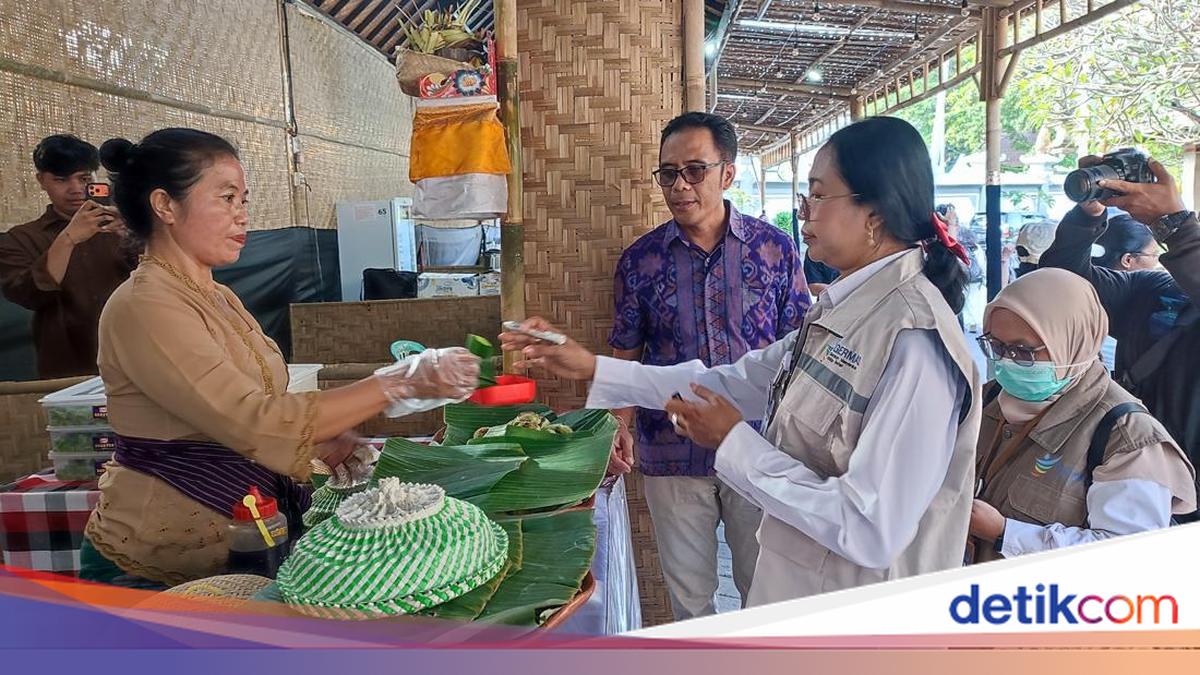
The Centre for Food and Drug Monitoring (BBPOM) in Denpasar carried out supervision of food and beverages sold in the culinary area of the 2026 Bali Arts Festival (PKB) at the Taman Werdhi Budaya Art Centre, Denpasar, on Saturday (13/6/2026).
Head of the Information and Communication Team at BBPOM Denpasar, Ni Putu Ekayani, stated that the activity is a routine agenda conducted during every PKB to ensure the food in circulation is safe for visitors to consume.
‘As usual, every year we conduct sampling and lab tests on the food sold in the culinary area at this PKB,’ said Putu Ekayani when met at the Art Centre location in Denpasar.
A total of 19 food samples were taken for direct testing. The samples consisted of various types of cuisine, such as fish satay lilit, pepes, meatballs, crackers, and Balinese-style es mutiara.
‘In principle, of the 19 food samples we sampled and tested, they are safe from hazardous substances,’ she explained.
According to Ekayani, officers initially suspected one sample contained Rhodamine B, a synthetic dye prohibited for use in food. However, after laboratory testing, the result was negative.
Additionally, several other samples that were initially suspected of containing hazardous materials were also confirmed safe after the inspection process.
‘Astungkara, the results showed no hazardous content. Safe. We also tested shrimp paste, and it turned out after 3-4 times the result was negative, containing no Rhodamine B,’ she clarified.
Nevertheless, BBPOM continues to remind business operators to maintain product quality, ensure label completeness, and comply with distribution licensing requirements, particularly regarding the use of food additives.
Hygiene aspects during the processing and serving of food are also a concern. Vendors are urged to maintain cleanliness to prevent contamination, including from insects such as flies. The use of plastic also needs to be reduced.
Ekayani also encouraged the use of personal protective equipment (PPE) when handling food, such as aprons, head coverings, and masks.
‘Perhaps later, monitoring must be carried out every day. So that food vendors wear aprons, head coverings, and masks when they cook. Their PPE must be complete so the food is not contaminated,’ she added.
On another note, BBPOM invites micro, small, and medium enterprise (MSME) operators who do not yet have distribution permits to register their products immediately. According to her, the registration process can be done free of charge and is an important step to enhance business competitiveness.
‘Actually, a Home Industry Food (PIRT) permit is already allowed, even for coffee. But if they want to move up a class, we support them from BPOM, collaborating with the Cooperatives and MSMEs Agency, with the aim of helping economically vulnerable groups improve their situation,’ she concluded.