
BPOM Strengthens Strategic Cooperation on Indonesia-India Food and Drug Security
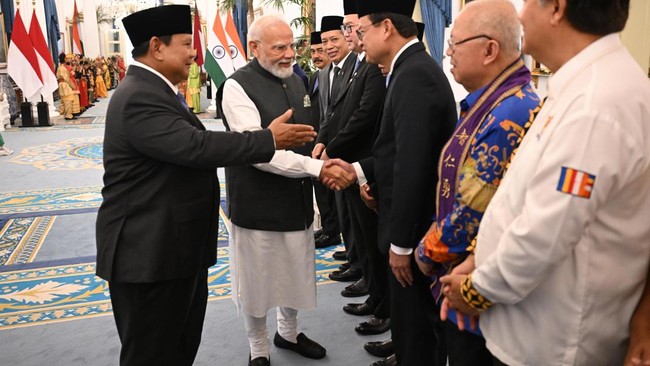
Jakarta, CNBC Indonesia — Indonesia and India are strengthening a new chapter of strategic partnership in the health sector and medical product regulation. Head of the Food and Drug Supervisory Agency (BPOM) Taruna Ikrar accompanied President Prabowo Subianto during Indian Prime Minister Narendra Modi’s state visit to Jakarta.
The high-level meeting marked an important milestone for both countries to advance concrete cooperation, including strengthening regulatory systems for medicines, pharmaceutical products, pharmaceutical raw materials, biological products and cosmetics, drug safety, and the institutional capacity of regulators.
Prabowo emphasised that Prime Minister Narendra Modi’s visit reflects the strong commitment of Indonesia and India to advancing their Comprehensive Strategic Partnership through concrete and mutually beneficial cooperation.
“This visit is a reflection of both countries’ commitment to continually advancing the Comprehensive Strategic Partnership through concrete and mutually beneficial cooperation,” Prabowo said in an official statement on Friday (10/7/2026).
On that occasion, Prabowo and Narendra Modi sealed 16 agreements within the framework of the Indonesia-India Comprehensive Strategic Partnership. One of the strategic documents included in the seal was the “Memorandum of Understanding on Cooperation in the Field of Medical Products Regulation”, which reinforces the foundation of cooperation between the two countries in medical product regulation.
BPOM head Taruna Ikrar was present to witness the sealing of the agreements at the State Palace. The attendance of BPOM’s leadership reaffirms the strategic position of the food and drug regulator in Indonesian health diplomacy, particularly amid the world’s growing need for pharmaceutical resilience, supply chain security, biotechnology innovation, and public access to safe, high-quality and efficacious health products.
Taruna Ikrar considers the strengthening of Indonesia-India cooperation strategically significant because India is one of the world’s major powers in the pharmaceutical industry, drug development, pharmaceutical raw materials, and the broader health ecosystem. For Indonesia, the partnership must be directed not merely at trade, but also at strengthening regulatory capacity, knowledge transfer, improving human resource competence, and building self-reliance in the national health sector.
“President Prabowo’s direction is very clear: international cooperation must deliver concrete benefits for the nation and the public. In the health sector, we want to build collaboration that strengthens the regulatory system, guarantees the safety of medical products, enhances national capacity, and supports Indonesia’s self-reliance in pharmaceuticals and health,” Taruna said.
According to Taruna, Indonesia must not remain merely a market for global health products. The strategic partnership must be a pathway to expanding national capacity, strengthening domestic industry, improving the quality of oversight, and opening wider space for research, innovation, and health technology development.
“Indonesia must move from being a market to becoming an important part of the global health innovation and production ecosystem. Cooperation with India must generate added value, strengthen pharmaceutical resilience, and ultimately improve public health protection,” Taruna asserted.
Beyond the State Palace agenda, Taruna Ikrar also attended the Indian Community Reception at the Jakarta International Convention Center (JICC). The event demonstrated that Indonesia-India relations are built not only through formal intergovernmental diplomacy, but are also reinforced by people-to-people ties, professional networks, the business community, science, and the cultural closeness of the two nations.
This heads-of-state cooperation has a technical foundation that BPOM had already prepared. Earlier, on 30 June 2026, BPOM renewed its cooperation commitment with India’s drug regulatory authority, the Central Drugs Standard Control Organisation (CDSCO). The move continued collaboration from the 2018-2023 period while strengthening the oversight system for medical products and bilateral Indonesia-India relations in the health sector.
The document signing was carried out desk to desk by BPOM head Taruna Ikrar and the Ambassador of India to Indonesia, Sandeep Chakravorty, representing the CDSCO and India’s Ministry of Health.
The memorandum is designed to facilitate constructive dialogue on medical product regulation. Its scope covers pharmaceutical products, including pharmaceutical raw materials, biological products, and cosmetics. This cooperation is increasingly relevant amid Indonesia’s need to strengthen national health resilience and ensure that the medical product supply chain meets safety, quality and efficacy standards.
There are five main areas of focus for the collaboration. First, improving understanding of each country’s regulatory systems, including national pharmacopoeias and regulatory frameworks. Second, exchanging information and best practices relating to international standards such as good laboratory practices (GLP), good clinical practices (GCP), and good manufacturing practices (GMP).
Third, strengthening drug safety systems through the exchange of safety information, pharmacovigilance, and the handling of adverse events. Fourth, increasing participation in scientific forums such as conferences, symposiums and seminars. Fifth, strengthening coordination and the capacity of both institutions in various international forums.
The bilateral cooperation is planned to run for five years, equipped with an automatic renewal mechanism for a further five years. Under this long-term framework, Indonesia and India have greater scope to build regulatory collaboration that is sustainable and adaptive to developments in science and health technology.
For BPOM, this synergy is also important for strengthening the oversight of pharmaceutical raw materials, both imported and produced domestically. Strengthening regulatory systems and inter-agency information exchange is expected to improve risk detection, consolidate pharmacovigilance, and ensure that products used by the public meet the required standards.
The meeting between Prabowo and Narendra Modi also positions the health sector as one of the important pillars of Indonesia-India relations. Under the strengthening of the two countries’ strategic diplomacy, BPOM is pushing for the cooperation to produce tangible results: stronger regulation, better access to innovation, a more competitive national industry, and more robust protection for the public.
Source: jawawa.id (https://jawawa.id/newsitem/bpom-strengthens-strategic-cooperation-on-indonesia-india-food-and-drug-security-1783666343)
Originally published by CNBC Indonesia (https://www.cnbcindonesia.com/news/20260710125629-4-749799/bpom-perkuat-kerja-sama-strategis-ketahanan-pangan-obat-ri-india), translated from Indonesian