
BPOM Strengthens Downstreaming to Position Indonesia as Asia-Pacific ATMP Hub
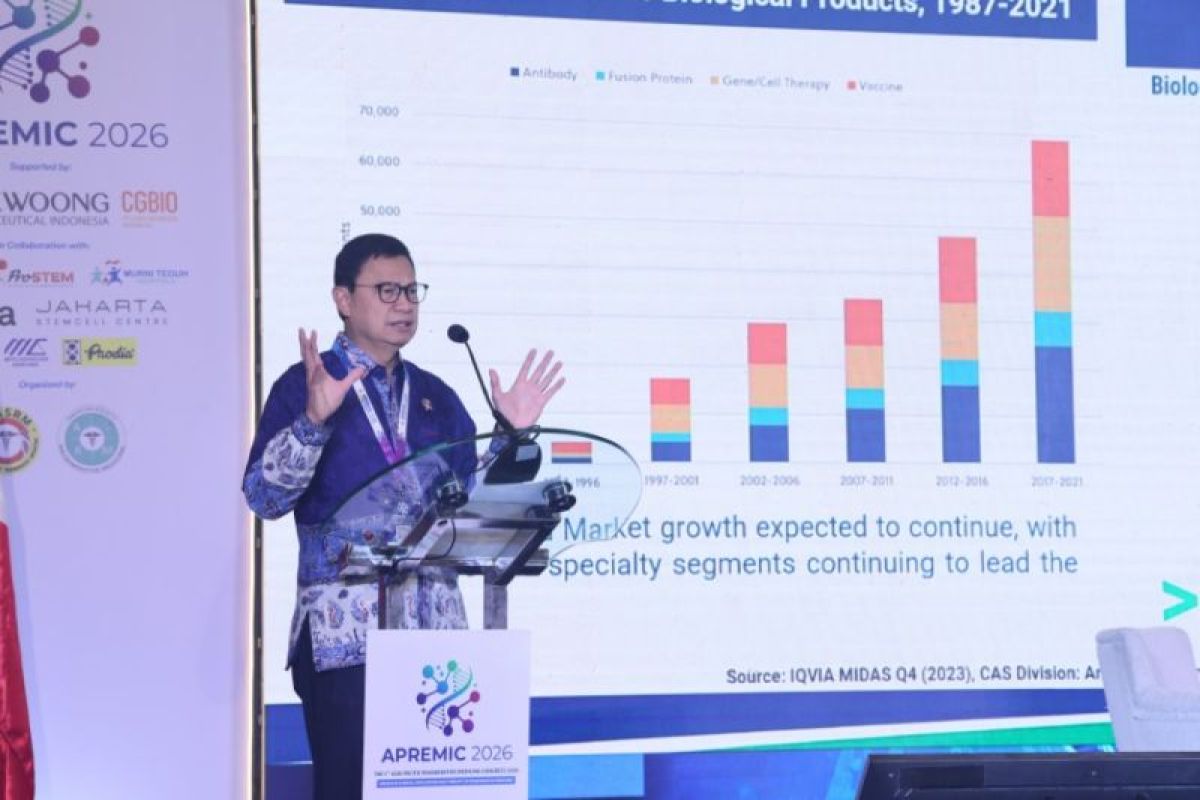
The Food and Drug Authority (BPOM) is strengthening the downstreaming of stem cell therapy from the laboratory to clinical application through the implementation of good manufacturing practice (GMP) as an effort to make Indonesia a centre for the development of Advanced Therapy Medicinal Products (ATMP) in the Asia-Pacific. BPOM Head Taruna Ikrar stated that globally, gene therapy, cell therapy, and ribonucleic acid (RNA)-based therapy are developing rapidly, with 4,164 products under development and 148 products having received approval in various countries. The market value of the ATMP industry is even projected to more than double from USD 41.46 billion (Rp697.73 trillion) in 2026 to USD 86.76 billion (Rp1,460 trillion) in 2031. “This development shows that regenerative medicine is the future of healthcare. Indonesia must be ready to become part of this development through an adaptive regulatory system while still ensuring patient safety,” he said in Jakarta on Saturday. He stated that Indonesia has a significant opportunity to become a centre for ATMP and regenerative medicine development in the Asia-Pacific region. For this, a strong ecosystem is needed, ranging from research, regulation, and industry to international collaboration. However, he noted that the biggest challenge in developing regenerative therapies is not only scientific innovation but also ensuring that every product has strong evidence of safety, efficacy, and quality. “Many innovative therapies still face limitations in scientific evidence, dose standardisation, consistency of the production process, and long-term safety monitoring after use by the public,” he said. Taruna explained that to date, Indonesia has five GMP-certified stem cell processing facilities developing new medicinal products. In addition, BPOM has provided GMP regulatory assistance to 43 stem cell facilities throughout Indonesia as part of accelerating national innovation development. To speed up the birth of national health innovations, BPOM is developing an Academia-Business-Government (ABG) collaboration model. Through this approach, universities play a role in producing research, industry is tasked with downstreaming and production, while the government ensures the entire process meets safety, efficacy, and quality standards. Currently, BPOM has collaborated with 186 universities in Indonesia and is supported by 270 GMP-certified pharmaceutical facilities in strengthening the national innovation ecosystem. The agency is also opening up investment opportunities and international cooperation in the development of regenerative therapies. Taruna conveyed three main messages for the development of regenerative therapy in Indonesia. First, scientific discovery creates hope, but the application of GMP standards guarantees that products can be produced consistently. Second, clinical evidence and pharmacovigilance are the foundation of long-term trust in innovative therapies. Third, the future of regenerative medicine depends on the ability to transform research results into products that are safe, consistent, and accessible to the public. Executive Board of the American Board of Regenerative Medicine (ABRM) Chris Paulus highlighted that the future of regenerative medicine is not only determined by scientific progress. More than that, he said, it is also determined by the ability of all parties to build an integrated innovation ecosystem. According to him, there are six main foundations for building this ecosystem: strengthening education and training, standards and certification, centres of excellence, research and clinical translation, global collaboration, and biotechnology industry development. He stated that the biggest investment is in human resource education and training. “We need to have an educated workforce. If you only develop products in biotechnology, you will lack the educated workforce to understand how to use these products safely and effectively,” said Chris.