
BPOM Seizes IDR 27.6 Billion Worth of Illegal Chinese Cosmetics Sold on E-commerce Platforms
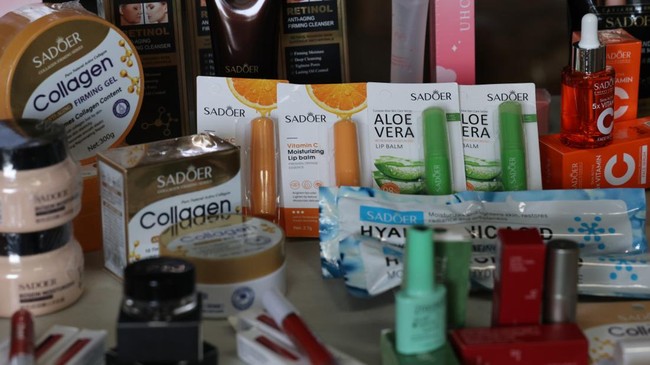
The Indonesian Food and Drug Monitoring Agency (BPOM) has discovered the storage and distribution of products that do not comply with regulations, specifically illegal cosmetics without marketing authorisation, in the Bojong Nangka area of Kelapa Dua, Tangerang Regency, Banten, at the end of May 2026. Based on the inspection results, BPOM found 890 items (1,818,245 pieces) of illegal cosmetics with an estimated economic value of IDR 22.1 billion. In addition, officers also found 66 items (263,794 pieces) of illegal imported cosmetics, with an economic value of IDR 5.5 billion. The total findings amounted to 956 items (2,082,039 pieces) with an estimated economic value of IDR 27.6 billion.
The findings were dominated by imported cosmetics from China in the decorative or facial makeup category. These products were imported into Indonesia through general forwarders suspected of engaging in practices that do not comply with regulations. The products were subsequently marketed through various electronic trading platforms (e-commerce). Some of the illegal imported product brands found in the warehouse included Lameila, SVMY, Sadoer, Kiyomi, Charzieg, Rueiofian, Hymeys, ZYZC, Cwinter, Yayashi, Luodais, and Kekemood. The Lameila and SVMY brands have been discovered in previous BPOM operations and destroyed, yet they have been found circulating in the market again.
“These illegal imported cosmetic products entered Indonesia without complete importation documents, so they are suspected of entering through unofficial channels. Products without marketing authorisation and imported cosmetics that enter Indonesia without meeting applicable requirements cannot be guaranteed for their safety or quality. Their use certainly has the potential to harm consumer health,” said BPOM Head Taruna Ikrar. As a follow-up, BPOM has temporarily suspended activities at the facility and secured all the illegal imported cosmetic products found. This measure was taken to protect the public by preventing further distribution of the products.
BPOM has also taken samples of the illegal products found, which are currently undergoing laboratory testing. The testing is being conducted to determine whether the cosmetics contain hazardous ingredients, so that legal action taken corresponds to the violations committed by the perpetrators. This discovery originated from an intelligence operation based on public complaint reports and online surveillance conducted by BPOM. From further investigation, storage and distribution activities of illegal imported cosmetics were found at the warehouse. The case is still in the development and further investigation stage to uncover the parties involved and the modus operandi of the violations.
In accordance with Law Number 17 of 2023 concerning Health, this violation may be subject to administrative sanctions up to the destruction of the products found. If sufficient evidence of suspected criminal activity is found during the investigation, BPOM can take law enforcement steps through a pro-justitia process in accordance with applicable regulations. Taruna stated that this finding is part of BPOM’s commitment to continuously strengthen consumer protection amidst the massive sale of imported cosmetics on e-commerce platforms. As public access to products from within and outside the country becomes increasingly easy, effective supervision is crucial to ensure the safety, benefits, and quality of circulating cosmetics.
As a regulator, BPOM is committed to ensuring that every cosmetic product in circulation meets safety, efficacy, and quality requirements. BPOM appreciates the role of the public in uncovering this case, demonstrating that collaboration between the community and BPOM is key to protecting the public from non-compliant products. He reiterated his call for the public to always apply the “Cek KLIK” principle—checking the packaging, label, marketing authorisation, and expiry date—before purchasing or using cosmetics. The public can utilise the marketing authorisation checking feature through the website or the BPOM Mobile application to verify the authorisation number listed on product packaging. The public is also encouraged to report to BPOM through local offices or law enforcement officials if they know of or suspect any illegal production, storage, or distribution of cosmetics in their area.