
BPOM Says MBG Food Poisoning Cases Surge Because Meals Are Served More Than Four Hours After Cooking
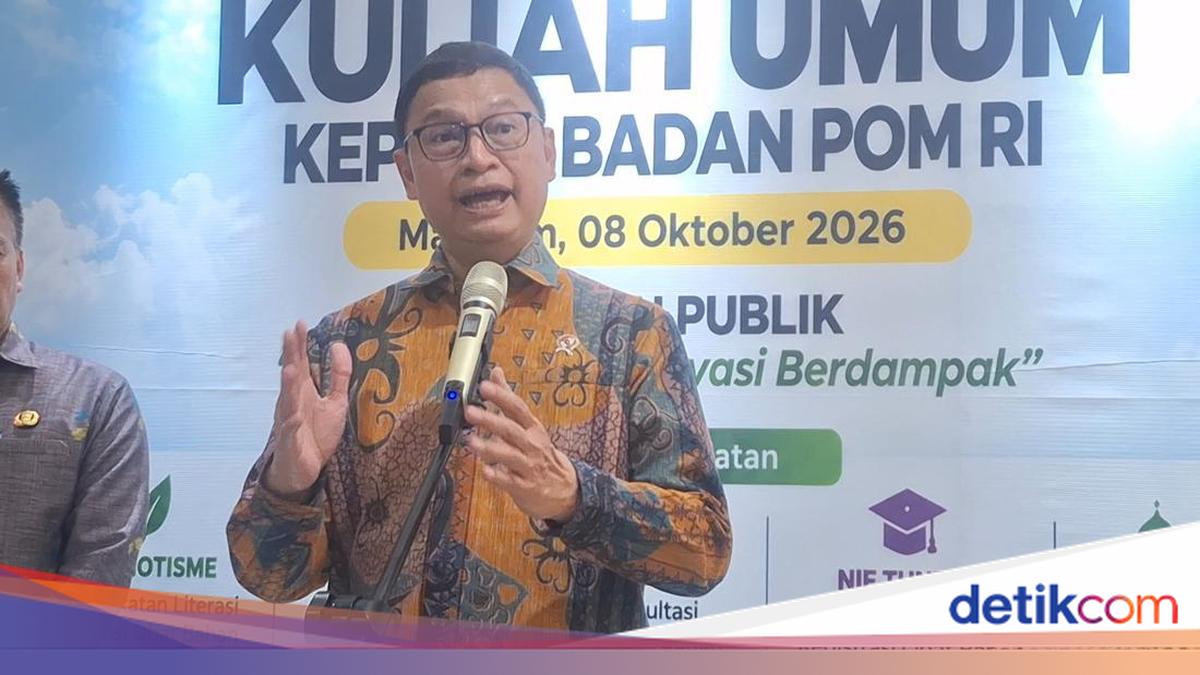
The head of Indonesia’s Food and Drug Monitoring Agency (BPOM), Taruna Ikrar, has identified food preparation and serving practices that do not meet standards as the main cause of the surge in food-poisoning cases involving Free Nutritious Meals (MBG). He said meals are, on average, being served more than four hours after preparation.
Taruna said BPOM has established standard operating procedures (SOPs) for food preparation. Under the rules, food must not be served more than four hours after it has been cooked.
“Strictly speaking, the limit is four and a half hours. But we want to be safe, so it is four hours,” Taruna said in an interview at Mataram University (Unram), West Nusa Tenggara, on Thursday (8 October 2026).
Taruna said some Nutrition Fulfilment Service Units (SPPGs) were still breaching the time limit. BPOM findings showed that some MBG kitchens began preparing food at midnight, then served it at 11am or noon.
Given that interval, Taruna said food prepared and served nearly 12 hours later posed a serious risk if consumed. “If it is kept longer than [four hours] and does not meet the standards, it will undergo denaturation and new microorganisms such as Salmonella can emerge,” he added.
Taruna stressed that BPOM has the authority to recommend firm action against SPPGs found to have disregarded food safety SOPs. This includes recommending that non-compliant units suspend operations.
“One of BPOM’s duties is that, if an SPPG fails to follow the standards, we as the supervisory authority have the right to make a recommendation. That could be a temporary suspension or a permanent closure,” he said.
BPOM urged all SPPGs to rigorously follow SOPs when preparing and distributing MBG meals to recipients, in order to reduce food-poisoning cases linked to the programme.
“The continuing cases of food poisoning are not simply because of problems with the SPPG’s organisation; they also stem from preparation and serving processes where SOPs have not been properly followed. We urge everyone to ensure that incidents like these do not happen again,” he said.