
BPOM: RI-China mRNA Dengue Vaccine a Step Towards Pharmaceutical Independence
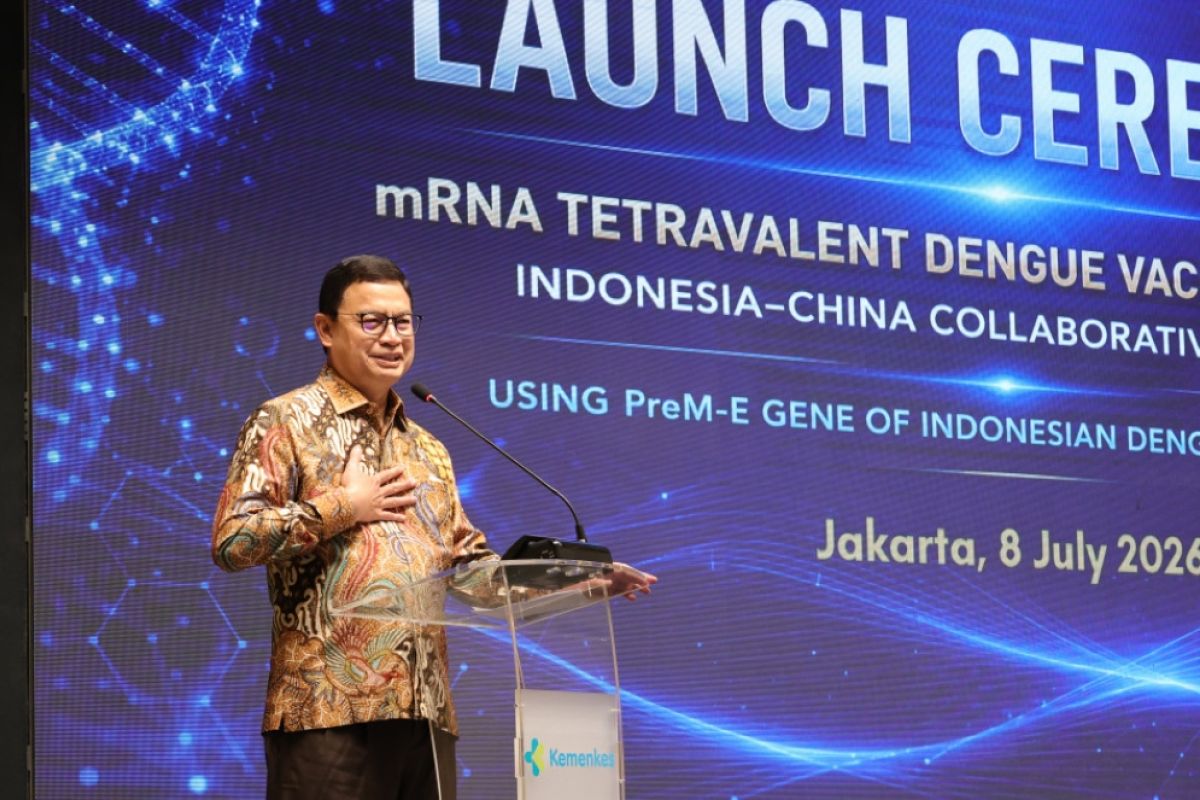
The Food and Drug Monitoring Agency (BPOM) has stated that the launch of a prototype mRNA-based dengue vaccine proves Indonesia’s capability to address infectious disease challenges while strengthening national independence in the pharmaceutical and biotechnology sectors. The prototype is the result of a collaboration between the University of Indonesia, Tsinghua University, and PT Etana, with funding support from the Indonesia Endowment Fund for Education (LPDP), the Ministry of Health, China’s Ministry of Science and Technology, the National Research and Innovation Agency (BRIN), and regulatory assistance from BPOM. BPOM Head Taruna Ikrar said dengue remains a serious health threat, both globally and nationally, demanding faster, adaptive, and science-based innovations such as the development of an mRNA dengue vaccine. He described the prototype’s launch as a significant milestone in strengthening the national health research and innovation ecosystem, as well as the implementation of strategic cooperation between Indonesia and China in vaccines, genomics, and health biotechnology. Ikrar stressed the need to change the paradigm that BPOM only plays a role at the final stage by issuing distribution permits. He insisted BPOM must be involved from the beginning because it understands the required standards, methods, and product characteristics. He noted that some previous products could not proceed because BPOM was only involved at the final stage, whereas the agency’s standards, which refer to global regulations, can help improve product quality. He affirmed BPOM’s commitment to fully support the development, as it represents an effort to make history by developing the world’s first mRNA vaccine for dengue fever. As mandated by Law Number 17 of 2023 on Health, BPOM conducts comprehensive oversight from research, development, and clinical trials to production and post-market surveillance. This approach is implemented through a new drug development assistance mechanism, positioning the regulator as a strategic partner for researchers and industry.