
BPOM Pursues Innovation and Vaccine Self-Sufficiency to Address the Vaccine Gap
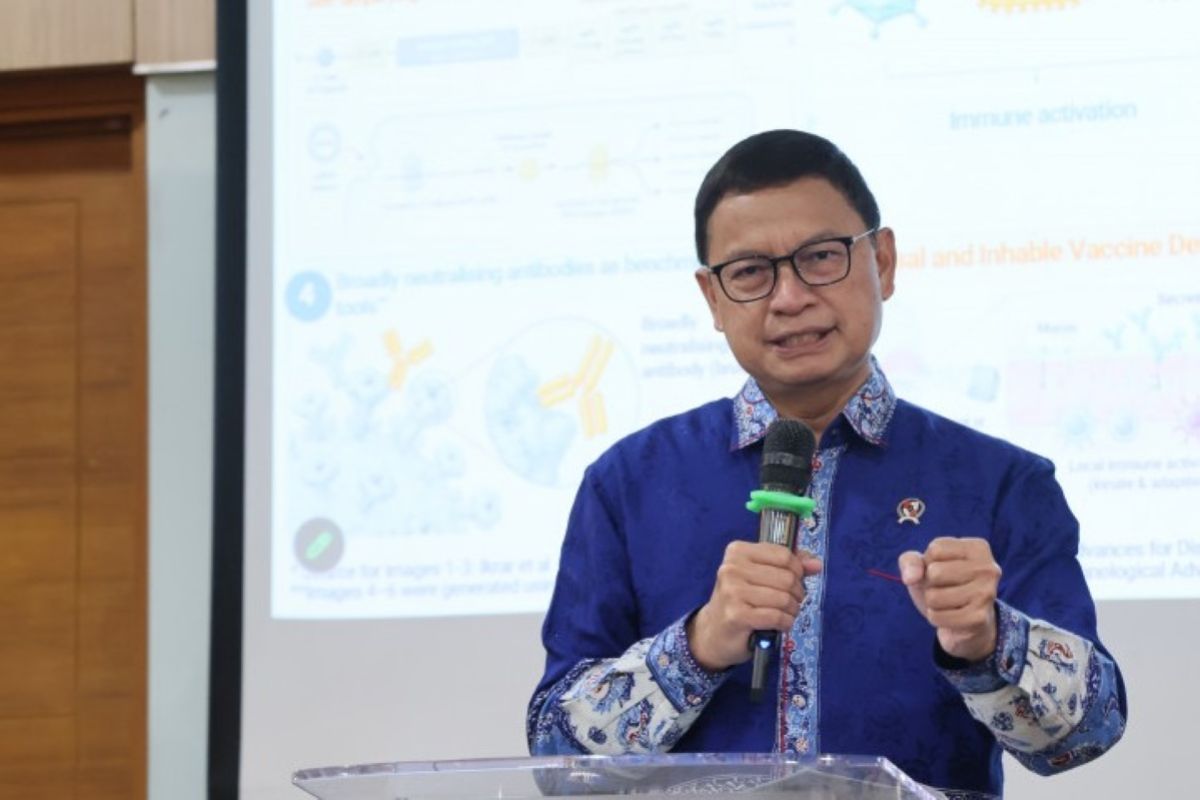
Jakarta (ANTARA) – Indonesia’s Food and Drug Authority (BPOM) is seeking to strengthen health preparedness and collaboration by widening access to vaccines and accelerating innovation in Indonesia, in response to disparities in vaccination coverage between high- and low-income countries.
BPOM Head Taruna Ikrar said in Jakarta on Wednesday that the vaccine gap refers to a situation in which many dangerous diseases, including tuberculosis (TB), acquired immunodeficiency syndrome (AIDS), hepatitis C and malaria, still lack effective vaccines or vaccines that are fairly and widely accessible.
“The disparity in access was clear during the COVID-19 pandemic. High-income countries managed to vaccinate more than 80 per cent of their populations within 12 months, while low-income countries remained below 15 per cent. The whole world needs vaccines, but some countries have them and others do not,” he said.
He said a vaccine’s success should not be measured solely by its discovery in a laboratory, but also by whether it is affordable, can be mass-produced and can be distributed equitably using modern technologies such as mRNA platforms, artificial intelligence (AI) and mucosal vaccines.
To ensure research does not remain confined to laboratories, BPOM is committed to bridging the process of bringing research to market, through to the development of ready-to-use medicines. It actively assists researchers and pharmaceutical companies from early testing and clinical trials to preparing production facilities that meet current good manufacturing practice (cGMP) standards and securing marketing authorisation.
BPOM is currently working on new rules for conditional approval, a regulatory innovation intended to speed access to new vaccines and medicines without compromising safety, efficacy or quality standards. Previously, product registration in Indonesia generally followed one of three routes.
These were the special access scheme (SAS); emergency use authorisation (EUA), used during a pandemic or endemic outbreak; and the standard evaluation route, which can take a considerable amount of time.
“Given the length of the standard process, innovative products such as medicines for rare diseases—which require substantial investment and staged clinical trials (phases 1, 2 and multicentre phase 3)—could take a very long time to reach the public,” Taruna said.
Conditional approval is being developed to address this obstacle, drawing on practices in Europe. The regulation is at the draft stage and has been prepared in coordination with various institutions and with public input.
The BPOM chief stressed that issuing a product authorisation is not merely an administrative act, but a concrete way to serve the public and save lives.
“This acceleration policy will not lower safety, efficacy or quality standards. BPOM’s oversight will remain strict, and the conditional approval rules will not breach those principles. This will allow certain medicines or vaccines that are urgently needed by the public to become accessible more quickly,” he said.
Alongside cooperation to speed up marketing authorisations through mutual agreements, reliance and reference mechanisms, conditional approval is one of BPOM’s progressive measures to meet public health needs and ensure medical innovation delivers tangible benefits quickly, safely and effectively.
In line with these efforts, BPOM hopes universities such as i3L and domestic pharmaceutical companies will strengthen strategic collaboration. The partnerships are expected to accelerate technology transfer and local production, enabling Indonesia to manufacture safe, effective and affordable vaccines independently, without relying on imports.
Source: jawawa.id (https://jawawa.id/newsitem/bpom-pursues-innovation-and-vaccine-self-sufficiency-to-address-the-vaccine-gap-1793796829)
Originally published by Antara (Indonesian) (https://www.antaranews.com/berita/5832047/bpom-kejar-inovasi-kemandirian-vaksin-ri-respons-kesenjangan-vaksin), translated from Indonesian