
BPOM: Pharmaceutical Innovation Can Be Advanced, but Patient Safety Comes First
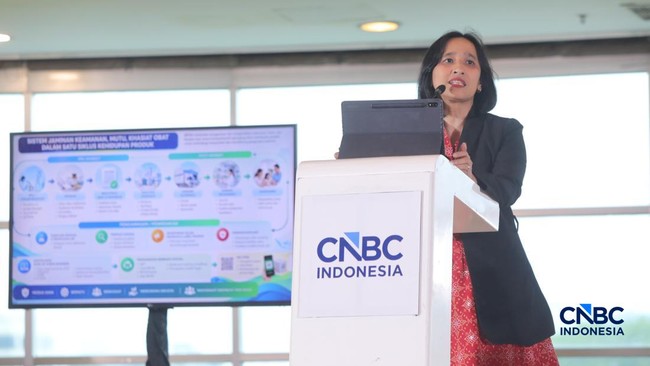
Jakarta, CNBC Indonesia — Innovation in the pharmaceutical sector should not simply produce new products or improve companies’ competitiveness. It must also have a tangible impact on public health and strengthen national pharmaceutical resilience.
“From the regulator’s perspective, our role is to encourage innovation while ensuring that safety and health remain the most important foundations. So, once again, the message is that innovation must ultimately benefit public health,” said Shanti Marlina Sibuea, Acting Director of Drug, Narcotics, Psychotropics and Precursor Production Supervision at the National Agency of Drug and Food Control (BPOM), at the Health Summit 2026 at the Bank Mega Tower auditorium in South Jakarta on Thursday (8 October 2026).
She said four priorities must be pursued together in developing Indonesia’s pharmaceutical industry: strengthening national pharmaceutical resilience; supporting innovation without lowering standards; improving the competitiveness of the Indonesian pharmaceutical industry; and balancing innovation, quality, affordability and access.
The four priorities are interconnected and ultimately underpin the industry’s sustainability while delivering greater benefits to the public, she said.
Quality must be built in from the outset
Shanti stressed that the quality of medicines cannot be ensured only at the final stage, after production is complete. Quality must be embedded throughout a product’s lifecycle, from research and development to use by the public. BPOM’s role therefore goes beyond approving products.
“BPOM’s role is not only to grant approval, but also to ensure that safety, quality and efficacy are maintained throughout a product’s lifecycle,” Shanti said.
This approach is important as the pharmaceutical ecosystem becomes more complex. Technological advances, the emergence of biological products and innovative therapies, and changes to global supply chains mean that regulation must also be able to adapt.
Digitalisation enables faster, risk-based oversight
Digitalisation is an important tool for strengthening the medicines oversight system in response to these developments. Shanti said digital technology can make oversight faster, more transparent, risk-based and data-driven.
Digitalisation can be applied at various stages, from registration and pre-clinical processes to inspections of manufacturing facilities, post-market surveillance, or pharmacovigilance, and product traceability.
“We are not only encouraging digitalisation, but also making regulation smarter,” she said.
Shanti said innovation also depends on trust. Public and industry confidence in innovation, in turn, requires a credible regulatory system that provides certainty. Strengthening regulation is therefore an important part of building a national pharmaceutical ecosystem capable of competing globally.
Pharmaceutical resilience amid global supply-chain risks
Shanti also highlighted the challenges posed by dependence on global supply chains. Disruptions to the supply of raw materials could affect the continuity of domestic medicine production. At the same time, the pharmaceutical industry faces increasingly complex technologies, including biological products and advanced therapies.
Addressing these conditions requires risk-based oversight, diversified sources of raw materials, collaboration between industry and regulators, and regulatory flexibility where necessary. These steps are important because pharmaceutical resilience depends not only on production capacity, but also on the readiness of the wider ecosystem.
Regulation must keep pace with innovation
A key challenge in developing innovative products is ensuring that regulation keeps up with technological progress without compromising safety standards.
“Can regulation move as quickly as innovation? It can, but with one condition: standards must not be lowered,” Shanti said.
Regulators can provide opportunities for early engagement and scientific advice, including with clinical stakeholders, as well as clearer regulatory pathways for innovative products. These include biological products, biosimilars, advanced therapies and new technologies such as point-of-care manufacturing.
With clearer and more predictable regulatory pathways, the industry is expected to develop innovation more quickly without neglecting patient safety.
Innovation must ultimately benefit patients
Shanti stressed that regulatory excellence must ultimately translate into industrial competitiveness. Indonesia should not focus solely on the size of its domestic market, but should also seek to become an important part of global pharmaceutical value and supply chains. All these efforts, however, must ultimately benefit patients.
“Innovation only has meaning when it can improve people’s quality of life,” she said.
Shanti said three things must work together to bridge innovation and public needs: clear and predictable regulatory pathways, policies that maintain balance, and consideration of benefits and risks.
“What we have to think about is how to assess the benefit-risk balance, which is something we consider every day at BPOM. We want industry to move faster and with greater predictability, but never at the expense of quality and patient safety,” she said.
With this approach, pharmaceutical innovation is expected to extend beyond creating new technologies or products and help strengthen the national industry. It should also improve public access to quality healthcare products and make a tangible contribution to improving people’s quality of life.
Source: jawawa.id (https://jawawa.id/newsitem/bpom-pharmaceutical-innovation-can-be-advanced-but-patient-safety-comes-first-1791460282)
Originally published by CNBC Indonesia (https://www.cnbcindonesia.com/lifestyle/20261008152128-33-774465/bpom-inovasi-farmasi-boleh-canggih-tapi-keselamatan-pasien-nomor-1), translated from Indonesian