
BPOM Opens the Door to Indonesia–India Collaboration, with Health Regulation Key to Investment
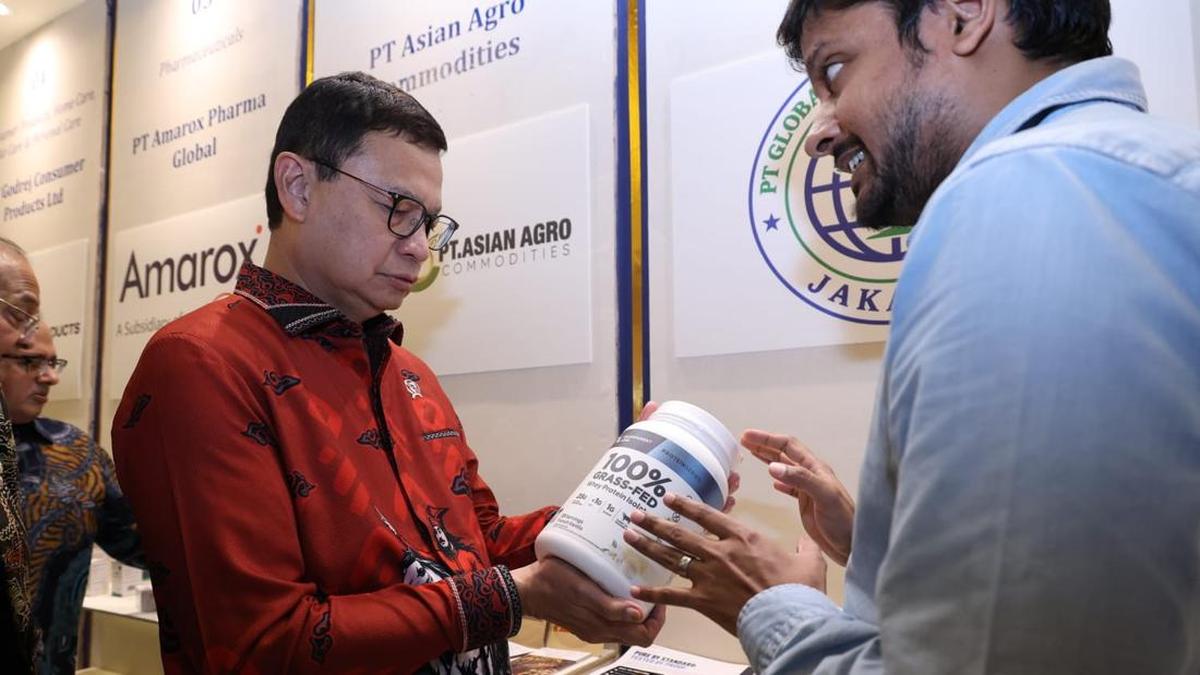
BPOM chief Taruna Ikrar said cooperation between Indonesia and India in the pharmaceutical sector could expand beyond trade in medicines. Behind the two countries’ business ties lies a strategic agenda to build a regulatory system that attracts investment, encourages innovation and keeps public safety a priority.
At a forum bringing together Indonesian regulators and Indian businesses, Taruna outlined the direction of Indonesia’s transformation in drug and food oversight. The effort is focused on developing a regulatory ecosystem that can adapt to scientific advances, provide certainty for businesses, and maintain the safety and quality standards of products available to the public.
“This agenda is strategically important. The large domestic market and growing healthcare needs create investment opportunities for the international pharmaceutical industry,” Taruna said at an exclusive India Indonesia Chamber of Commerce (IndCham) forum, titled Indonesia’s Regulatory Direction for Pharmaceuticals, Food & Healthcare, at the Ritz-Carlton Hotel in Mega Kuningan.
He stressed, however, that this potential needs to be supported by certainty in licensing processes, regulators’ ability to keep pace with technological developments, and a credible oversight system.
In this context, regulation is not merely an administrative instrument for determining whether a product can be marketed. It is also part of an ecosystem linking innovation, investment and the public interest.
Taruna emphasised that the development of the healthcare industry must go hand in hand with a responsibility to protect human life. Faster business processes should be delivered through efficient, science-based systems without compromising safety standards.
This approach is relevant to India, whose pharmaceutical industry and healthcare manufacturing capacity could support stronger economic ties between the two countries.
The IndCham meeting also provided a forum for aligning Indonesia’s needs in developing its healthcare industry with opportunities for international partnerships. Existing cooperation could be expanded through trade, investment, knowledge exchange and stronger collaboration between regulatory agencies.
Major opportunities for Indonesia–India pharmaceutical industry
The meeting between regulators and businesses also offered an opportunity to discuss industry needs and explore potential areas of future cooperation.
“According to BPOM data, from 1 January 2022 to 30 September 2026, Indonesia issued 13,740 import certificates for pharmaceutical products from India. In cosmetics, there were 1,481 import certificates and 122 export certificates. In the food sector, there were 14,739 import certificates and 5,573 export certificates,” Taruna said.
He said the figures reflect established trade activity and underscore the importance of coordinated oversight to ensure the safety of products circulating amid cross-border trade.
In terms of registrations, BPOM recorded 511 pharmaceutical products from India registered in Indonesia, involving 41 manufacturers and 60 importers.
In cosmetics, 1,032 products were registered, involving 58 manufacturers and 21 importers. The food sector recorded 1,736 products, involving 206 manufacturers and 83 importers.
“These figures show that Indonesia–India economic relations in the health sector already have a tangible foundation. The next challenge is to develop those ties so that they generate greater added value for both countries,” Taruna said.
For Indonesia, opportunities for cooperation include increasing investment, strengthening production capacity, developing human resources and widening access to compliant healthcare products.
Taruna nevertheless stressed that a large market does not automatically guarantee successful investment. Businesses need regulatory certainty, while the public needs assurance that products on the market meet safety and quality standards.
“This is where BPOM’s transformation becomes an important factor in building trust,” Taruna said.
Regulatory transformation, from licensing to global cooperation
Taruna said BPOM was continuing to transform regulation through the digitalisation of processes, streamlined bureaucracy, greater transparency and stronger international cooperation.
“Digitalisation is expected to make the application and licensing-monitoring processes more integrated, giving businesses clarity on administrative stages and the progress of their applications,” Taruna said.
He added that BPOM had also introduced accelerated pathways for certain product categories. These include emergency use authorisation within 20 working days; a pathway for new drug development and pharmaceutical investment in Indonesia within 50 working days; a reliance pathway within 90 working days; and a priority pathway within 100 working days.
“Regulatory acceleration does not mean removing scientific evaluation. It means creating a more efficient process while maintaining the principle of protecting public health,” Taruna said.
He said certainty in regulatory processes was essential to the pharmaceutical industry. Product development requires investment, skilled personnel, production facilities and long-term business planning. A clear regulatory framework can help businesses plan each stage of development through to market access.
At the same time, the public needs access to innovative medicines that meet the required standards. Regulatory efficiency must therefore be matched by the regulator’s capacity to adequately assess products’ safety, quality and efficacy.
Taruna stressed that protecting people remains the primary objective throughout the process.
BPOM as a WHO Listed Authority
Taruna also highlighted BPOM’s status as a WHO Listed Authority, which strengthens international recognition of Indonesia’s regulatory system. The status provides a basis for expanding cooperation with regulators in other countries and increasing confidence in products overseen by BPOM.
One example of such cooperation is the relationship between Indonesia and India. In June 2026, BPOM and India’s Central Drugs Standard Control Organization (CDSCO) signed a memorandum of understanding on regulatory cooperation for medical products, covering pharmaceutical products, biological products and cosmetics.
“This cooperation provides a basis for regulatory dialogue, information exchange, capacity-building and the sharing of best practices between the two authorities,” Taruna said.
BPOM and the Food Safety and Standards Authority of India (FSSAI) are also continuing discussions to finalise a memorandum of understanding on regulatory cooperation for processed food products.
According to Taruna, stronger relations between regulators are important for facilitating international trade, given that each country has standards, procedures and requirements that businesses need to understand.
“Regulatory strengthening alone is not enough to build a competitive pharmaceutical industry. Indonesia also needs an innovation ecosystem that brings together universities, businesses and government,” Taruna said.
He emphasised the importance of the Academia–Business–Government (ABG) approach as a framework for fostering innovation. Taruna said 190 institutions had established partnerships with universities in education, research and community service.
“Such collaboration can provide a foundation for developing research capacity, improving the quality of human resources and strengthening the national industry’s ability to produce competitive products,” he said.
In the context of the Indonesia–India partnership, Taruna said cooperation could extend beyond trade in finished products. It could include investment, stronger production capacity, knowledge exchange and research development in line with applicable needs and regulations.
For Indonesia, the ultimate goal is to strengthen the healthcare industry while extending the benefits of innovation to the public. For international partners, including India, regulatory certainty and the scale of demand in Indonesia create opportunities to develop long-term partnerships.
“The success of such partnerships cannot be measured solely by the value of trade or the number of products entering the market. A more fundamental measure is the extent to which cooperation strengthens industrial capacity, improves access to quality products and sustains public trust,” Taruna concluded.
Source: jawawa.id (https://jawawa.id/newsitem/bpom-opens-the-door-to-indonesia-india-collaboration-with-health-regulation-key-to-investment-1792068629)
Originally published by health.detik.com (https://health.detik.com/berita-detikhealth/d-8708382/bpom-buka-pintu-kolaborasi-indonesia-india-regulasi-kesehatan-jadi-kunci-investasi), translated from Indonesian