
BPOM Leads MBG Oversight in NTB to Protect 1.86 Million Beneficiaries
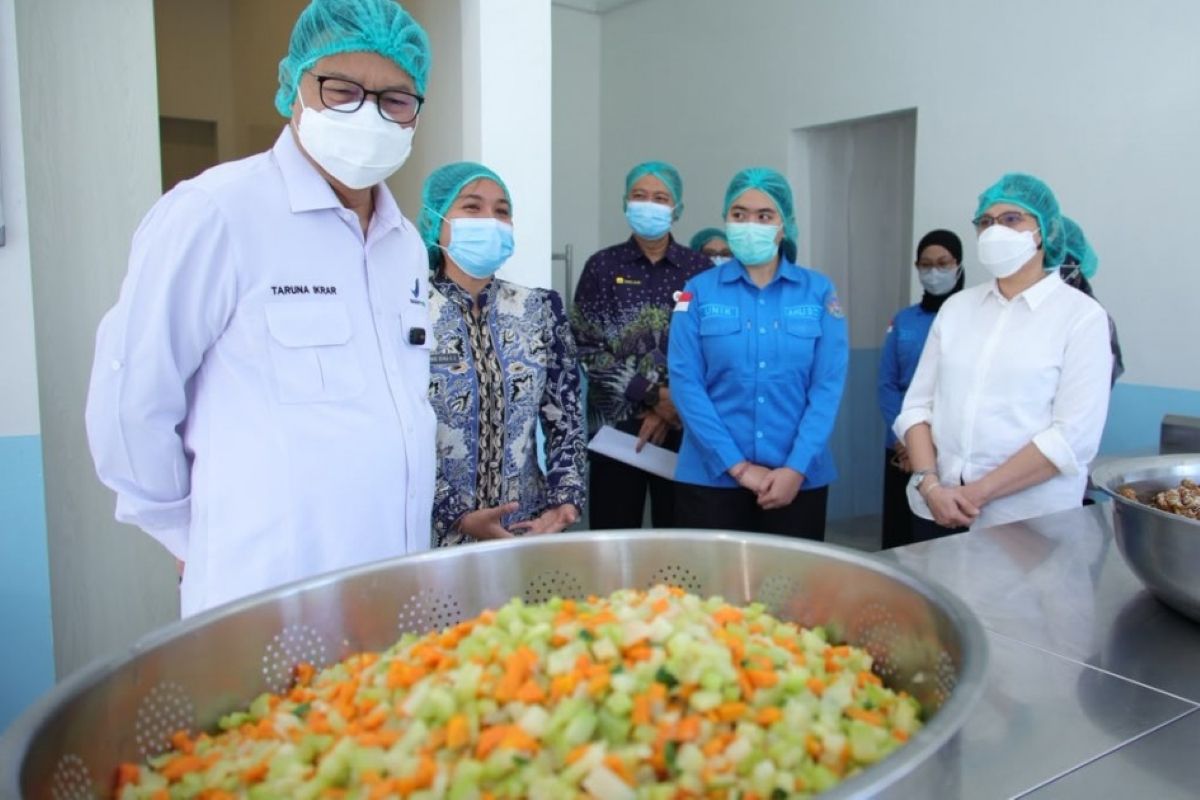
Jakarta (ANTARA) — Indonesia’s Food and Drug Monitoring Agency (BPOM) has led simultaneous inspections of several Free Nutritious Meals (MBG) kitchens in West Nusa Tenggara (NTB) to ensure food safety for 1.86 million beneficiaries.
BPOM head Taruna Ikrar said in a statement in Jakarta on Monday that, as of September 2026, 859 Nutrition Fulfilment Service Units (SPPG) in NTB were operating and serving millions of beneficiaries. He said the programme had a broader purpose.
“The MBG programme is not an ordinary meal-provision programme, but a major strategy to reduce stunting and develop the quality of Indonesia’s human resources. In the context of food safety, there is one global principle that we must always uphold together: if it is not safe, it is not food,” he said.
He also said that the practice of using antibiotics without a doctor’s prescription remained widespread, directly driving antimicrobial resistance (AMR) in the community. Both issues were discussed during the BPOM head’s visit to the Mataram Centre for Drug and Food Control.
During the visit, Taruna provided guidance and expressed his appreciation to the Mataram centre’s staff.
He praised several of the centre’s achievements, including its strong performance, reflected in its 2026 Clean and Serving Bureaucratic Zone (WBBM) designation.
With 76 civil servants and budget realisation of Rp12.25 billion (80.29 per cent) as at 5 October 2026, the Mataram centre oversees five regencies and municipalities on Lombok Island.
Meanwhile, the Bima Drug and Food Control Office oversees Sumbawa Island, supported by 24 civil servants and budget realisation of Rp2.64 billion (73.97 per cent). The area faces significant challenges, from the breadth of its inspection coverage to the widespread circulation of illegal cosmetics on social media.
By the third quarter of 2026, the Mataram centre reported positive performance, with inspections of food production facilities reaching 96.49 per cent of the target. Taruna said he hoped that stronger staff capacity and meritocracy within BPOM would continue to improve public protection from unsafe medicines and food.
Taruna reminded employees that they needed to understand the organisation’s development priorities as part of efforts to expand BPOM’s contribution to the public. He highlighted three guiding priorities: achievement, accessible public service, and the ability to build public trust.
“The institution’s functions, duties and services must have a tangible presence in the community. More importantly, those working within it must be able not only to demonstrate creativity and competence, but also to apply those abilities,” Taruna said.
Taruna stressed that BPOM’s growing responsibilities should be viewed as a form of service to the state. He urged BPOM civil servants across Indonesia not to base their work solely on the availability of funding, but instead to act in accordance with their mandate and the needs of the public.
“We are employees, civil servants, servants of the state. Our duty is to serve. We must not get things backwards and think that the budget has to be available before we can work. We carry out the state’s duties as a form of service,” Taruna said.
Source: jawawa.id (https://jawawa.id/newsitem/bpom-leads-mbg-oversight-in-ntb-to-protect-1-86-million-beneficiaries-1791823866)
Originally published by Antara (Indonesian) (https://www.antaranews.com/berita/5782746/bpom-pimpin-pengawasan-mbg-di-ntb-lindungi-186-juta-penerima-manfaat), translated from Indonesian