
BPOM Issues Rules on Minimarket Management of Medicines, Pharmacists Speak Out
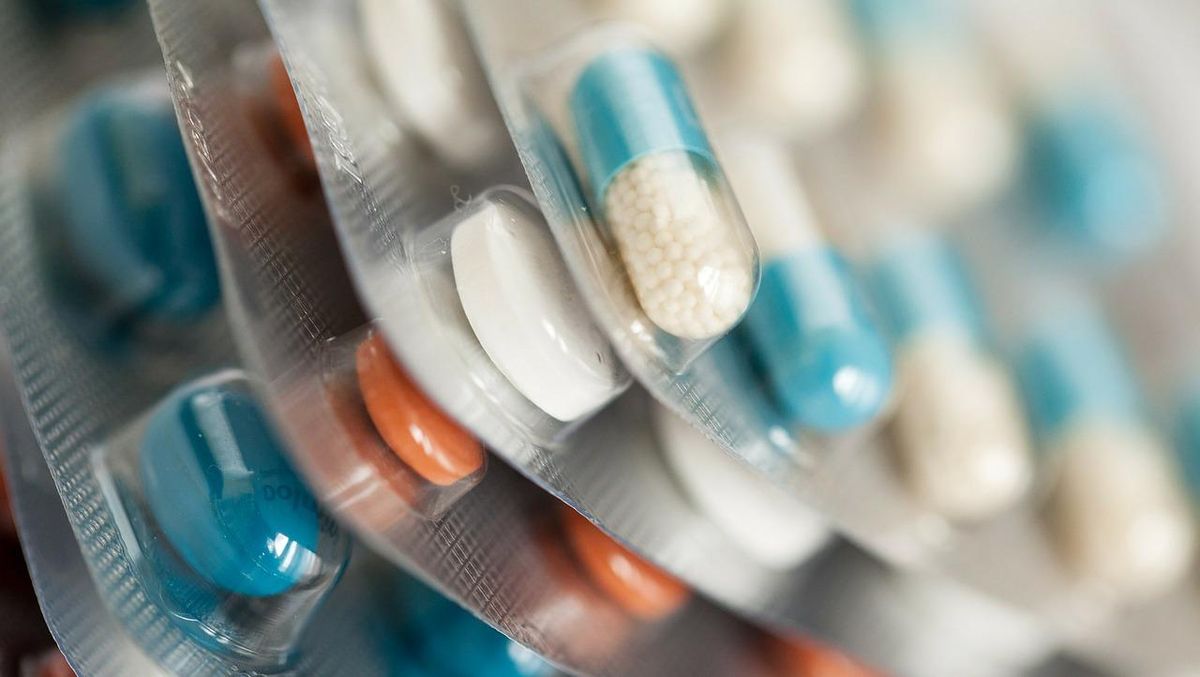
Head of the Indonesian Food and Drug Supervisory Agency (BPOM), Taruna Ikrar, has signed BPOM Regulation No. 5/2026, which outlines a new scheme for the sale of medicines in hypermarkets, supermarkets, and minimarkets (HSM). Through this regulation, the BPOM Head permits supermarket and minimarket employees to participate in managing and supervising certain medicines, provided they receive special training. According to the BPOM website, the regulation was signed by Taruna on 13 March. In response, several pharmacy professionals have protested, deeming the regulation contrary to Law No. 17 of 2023 on Health, and potentially diminishing the professional authority of pharmacists. Previously, during a press conference at his office on Monday (4/5), Taruna Ikrar explained that BPOM Regulation 5/2026 is intended to address the regulatory vacuum that has existed in non-pharmaceutical facilities. “Essentially, BPOM is regulating something that was previously unregulated. That’s why we created the regulation, to ensure that the medicines reaching the public are guaranteed in terms of efficacy, identity, and quality,” Taruna stated, as quoted from the BPOM website. He explained that previously, supervision focused only on pharmaceutical service facilities, such as pharmacies, while other facilities lacked clear regulations. Therefore, his agency issued the regulation to eliminate this grey area. “In reality, in drug stores, hypermarkets, supermarkets, and even minimarkets, these medicines are already being sold. The state must be present to ensure supervision,” Taruna said. Contrary to the circulating protests, he claimed the regulation is mandated by Law 17/2023 and Presidential Regulation 80/2017. He added that with this regulation, legal consequences become clear for all parties involved in the drug distribution chain. Retail Employees to Manage Medicine Sales In its implementation, Taruna said his agency is also providing technical guidelines for modern retail business operators. One key point in the regulation is the requirement for trained personnel at medicine sales facilities. Although not required to be pharmacists by profession, these personnel must first undergo special training. Additionally, in carrying out medicine management tasks, they must be under the supervision of a pharmacist at the distribution centre of hypermarkets, supermarkets, and minimarkets, or under the supervision of vocational pharmacy personnel at drug stores. “These special personnel do not have to be pharmacists, but they must be trained. They must understand the proper way to store medicines, placement on shelves, and checking packaging, marketing authorisation, labels, and expiry dates,” he clarified. BPOM also emphasises that only free medicines and limited free medicines may be sold at such facilities. However, supervision will be tightened for certain medicines with potential for misuse. Voices from Pharmacy Professionals The issuance of the regulation has provoked strong protests from pharmacy professionals, including from the Farmasis Indonesia Bersatu (FIB) alliance or association. Quoting from its Instagram post, FIB stated it rejected the invitation to a BPOM dissemination event regarding BPOM Regulation 5/2026 on 4 May. “This rejection is based on the assessment that the regulation contradicts Law No. 17 of 2023 and potentially reduces the professional authority of pharmacists,” they stated in their Instagram post. In its official statement, FIB emphasised that their absence is a form of rejection of the policy substance, deemed to deviate from applicable legal norms. “FIB also stresses that participation in the dissemination forum risks being interpreted as legitimising or supporting a regulation considered to lack strong legal foundation and potentially harming pharmacy practice,” it continued. In a subsequent post, FIB revealed alleged philosophical disorientation in the regulation concerning the management of Limited Free Medicines. “This regulation has a strong nuance of liberalisation but is very weak in protecting the safety of Limited Free Medicine use. Allowing vending machines is the peak of neglecting rational medicine use standards,” it stated. “Permitting machines and non-professionals to handle Hard Medicines (even if limited) is a form of negligence towards the risk of therapy failure and medical incidents prohibited under Article 140 of Law 17/2023,” the statement continued. Quoting from an online discussion broadcast on the YouTube channel of the Indonesian Pharmacists Association (IAI) on Wednesday (13/5), the issue of the new regulation was also discussed. The online discussion titled socialisation of KMK No. HK.01.07/MENKES/972/2025 and BPOM Regulation No. 5 of 2026 featured Director of Pharmaceutical Management and Services of the Ministry of Health Agusdini Banun Saptaningsih and Director of Drug and Narcotics Standardisation of BPOM Ria Christine Siagian. However, audience questions were only read in writing by the moderator and answered by the speakers. One written question was, “Who is responsible if a patient experiences side effects, allergic reactions, drug interactions, or worsening illness after buying medicine at a minimarket?” “We have self-medication, and the public is certainly more intelligent in choosing medicines for their complaints. The brochure or medicine labelling also states the maximum number of days. We also have BPOM supervision; in supermarkets, hypermarkets, and minimarkets, they can only provide for three days,” Christine answered in the discussion. “If the public needs a health examination, they should certainly go to health personnel. The brochure or labelling also clearly states that for limited free medicines, they must see a doctor or health personnel for ongoing complaints. This is the self-medication mechanism currently practised by the public, and BPOM limits it by providing limitations in provision.”