
BPOM invites pharmaceutical industry to join forces in strengthening clinical trial ecosystem
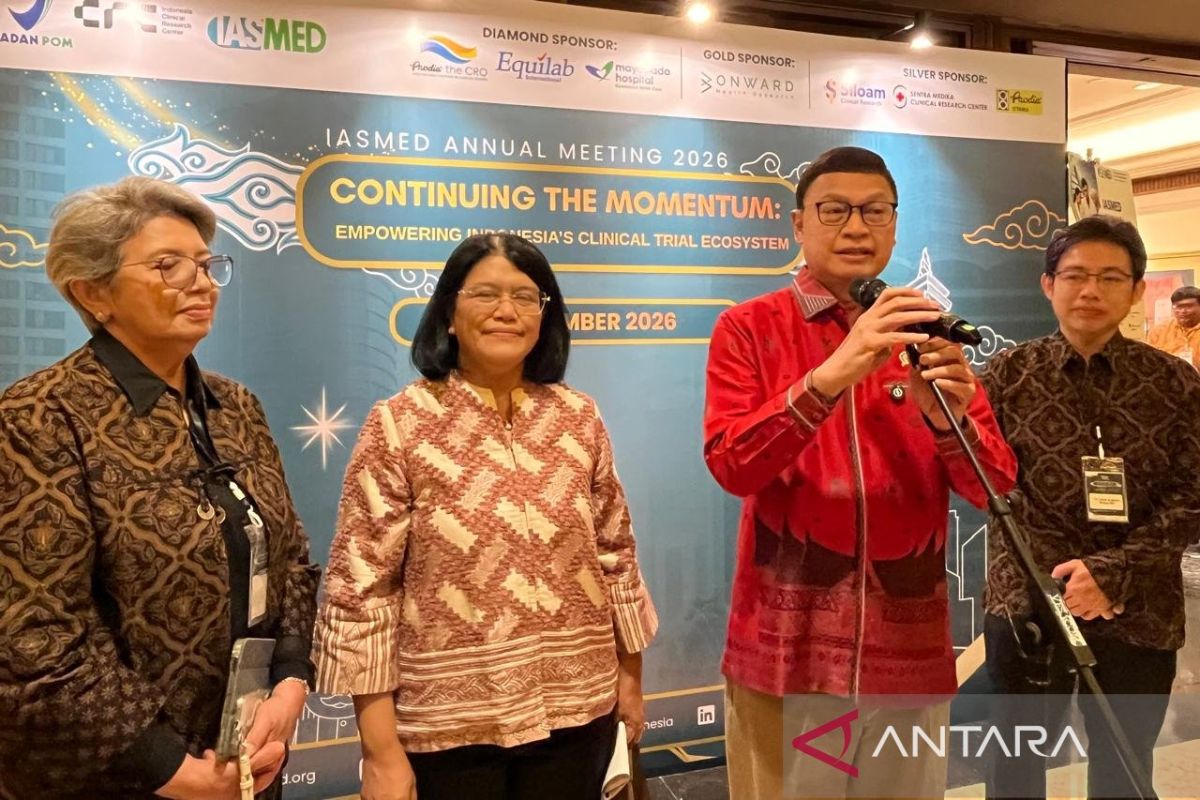
The Indonesian Food and Drug Authority (BPOM) has invited the pharmaceutical industry, both domestic and international, to participate in the development of a clinical trial ecosystem to strengthen the independence of medicines and medical devices in Indonesia.
“Clinical trials are not cheap; they are expensive. Therefore, we are also facilitating pharmaceutical industries, both from within the country and from abroad, to join in developing themselves in Indonesia,” said the Head of BPOG, Taruna Ikrar, while attending the IASMED 2026 Annual Meeting in Jakarta on Saturday.
Taruna stated that Indonesia possesses various resources required to support the implementation of clinical trials, ranging from facilities to diverse patient cases that can serve as research subjects.
He noted that clinical trials are a crucial stage in the development of various health products, including medicines and medical devices, whether chemical or biological in nature, before they are utilised in patient treatment.
According to him, the hosting of the IASMED 2026 Annual Meeting serves as a strategic forum for regulators, academics, hospitals, the pharmaceutical industry, Contract Research Organisations (CROs), and clinical trial professionals to strengthen collaboration in driving the progress of Indonesia’s clinical trial ecosystem.
He identified three key areas that need strengthening to encourage clinical trial development in Indonesia. First, the construction of an ecosystem involving BPOM, the Ministry of Health, hospitals, as well as various health and research facilities in Indonesia.
“We are building that ecosystem. Furthermore, we are also establishing regulations to provide an environment that can revitalise clinical trials,” he said.
Taruna stated that BPOM, alongside the Ministry of Health, is committed to supporting the improvement of these aspects to ensure that the implementation of clinical trials in Indonesia becomes increasingly robust.
Thirdly, there is a need to strengthen industrial support, given that conducting clinical trials requires significant expenditure. Therefore, the involvement of the pharmaceutical industry is essential to expand the capacity and sustainability of clinical research in Indonesia.
Meanwhile, the President of The Indonesian Association for the Study of Medicinals (IASMED), Endang Hoyaranda, expressed his commitment to maintaining the positive momentum built through cross-sector collaboration and the enhancement of human resource competence to strengthen the clinical trial ecosystem in Indonesia.
“The progress we see today is the result of cooperation among all stakeholders. IASMED will continue to play an active role in maintaining this momentum and supporting the creation of a high-quality, competitive clinical trial ecosystem centred on patient safety,” said Endang.