
BPOM: Integration of Safe Food Districts and Cities Strengthens Protection for Residents
Jakarta (ANTARA) – The National Agency for Drug and Food Control (BPOM) has highlighted the importance of integrating food surveillance at regional levels through the Safe Food Districts and Cities Programme (KKPA), which relates to food safety and contributes to inflation control and the protection of public health.
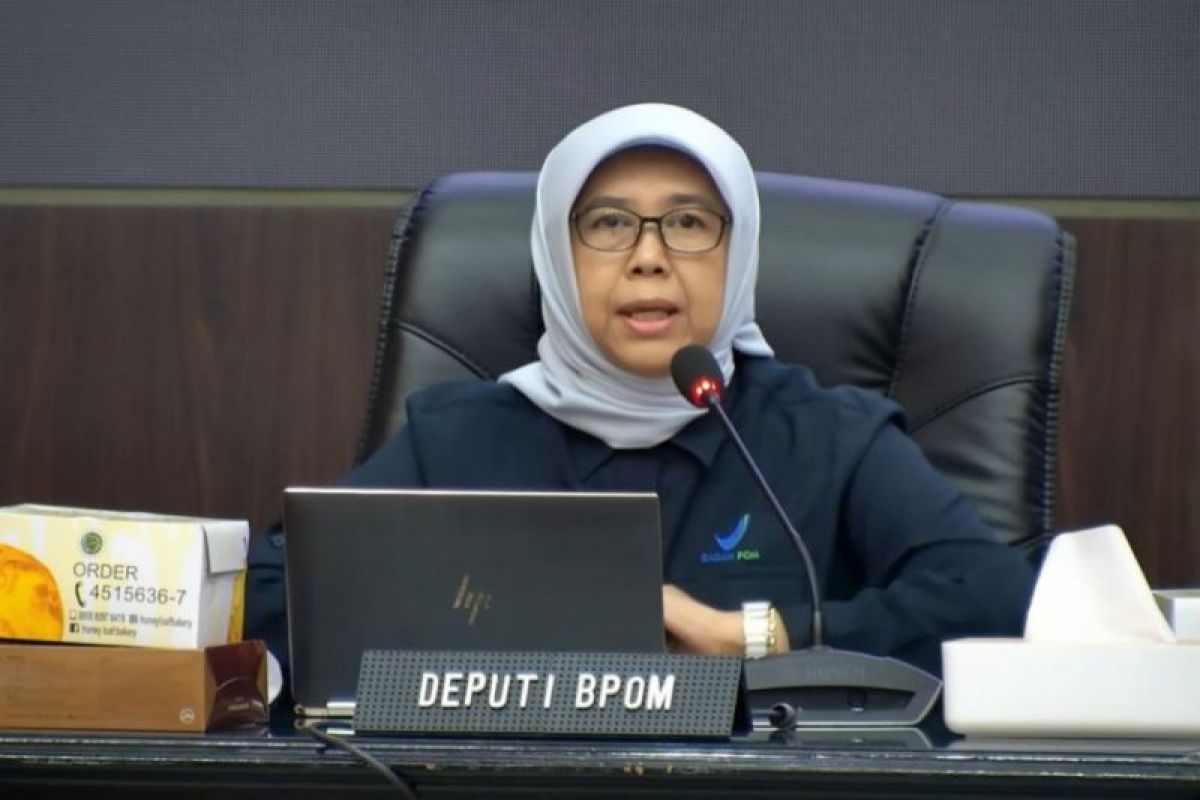
BPOM Deputy for Processed Food Surveillance Elin Herlina, speaking in Jakarta on Tuesday, said local governments play a key role as orchestrators of food safety in their respective areas. Through KKPA, local governments are expected to be able to integrate supervision across the entire food chain to ensure food safety standards while supporting stunting prevention.
KKPA has strategic impacts for regions, she said, particularly in maintaining the stability of supply and the quality of local foods as part of regional inflation control. In addition, good food surveillance can prevent economic losses due to foods that fail to meet requirements and strengthen public trust in food safety.
‘The ultimate aim is to realise cross-sectoral integrated oversight,’ Elin said.
She explained that the scope of food surveillance under KKPA covers all food commodities, from fresh plant-based foods (PSAT), fresh animal-based foods (PSAH), fresh fish-based foods (PSAI), ready-to-eat processed foods, to household-scale foods (PIRT).
Elin added that the implementation of the Non-Physical Special Allocation Funds (DAK-NF) for the supervision of medicines and foods is expected to be further optimised so that its benefits can be felt by people across Indonesia. Some of the utilisation of DAK-NF is also directed to support KKPA’s implementation.
She noted that the 2026 Regional Inflation Control Coordination Meeting serves as a platform for local governments to raise food issues and to encourage them to actively participate in KKPA implementation in their areas.
‘The target for Safe Food Districts and Cities has been included in the National Medium-Term Development Plan (RPJMN) 2025–2029 with a target of 78 percent of districts/cities achieving safe status by 2029. For 2026, the target is set at 28 percent,’ she said.
In the national KKPA 2025 assessment, Semarang earned the national champion title with a score of 96.31. Other regional champions include Surakarta, Jakarta Pusat, Ternate, and Kolaka.
Elin also praised the support of the Ministry of Home Affairs, which has asked all regional governments to promptly complete the KKPA 2026 self-assessment.
‘The KKPA evaluation is not merely an administrative competition; it is the foundation for protecting public health from upstream to downstream,’ she added.
Source: jawawa.id (https://jawawa.id/newsitem/bpom-integration-of-safe-food-districts-and-cities-strengthens-protection-for-residents-1779546214)
Originally published by Antara (Indonesian) (https://www.antaranews.com/berita/5573133/bpom-integrasi-kabupaten-kota-pangan-aman-kuatkan-perlindungan-warga), translated from Indonesian