
BPOM: Global Lab Interconnection Key to Tackling Microplastic Health Threats
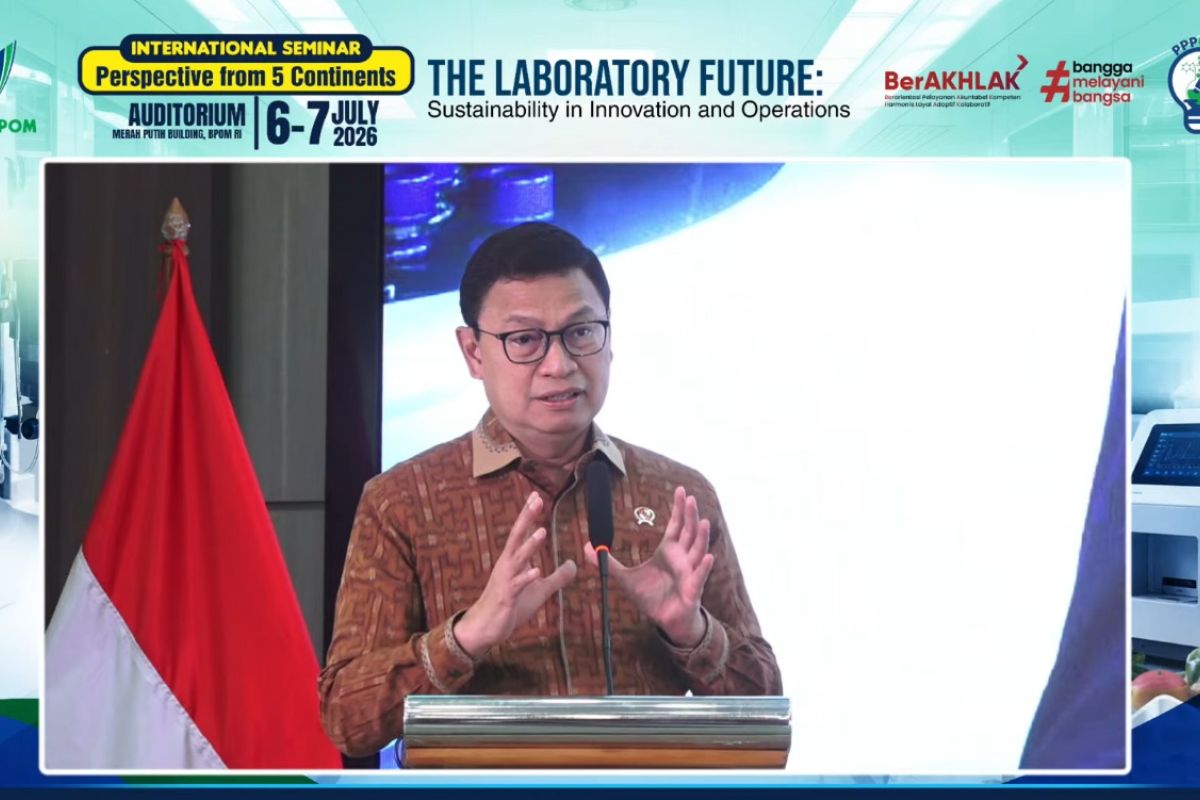
The Indonesian Food and Drug Authority (BPOM) has stated that global interconnection of high-quality laboratories and continuous innovation are vital to addressing contemporary health challenges and the supervision of food and drugs, such as the threat of microplastics.
Speaking in Jakarta on Monday, the Head of BPOM, Taruna Ikrar, noted that microplastics, and even nanoplastics, are impacting the environment. He added that while plastic usage is currently massive, it is not sufficiently regulated or prepared, leading to significant health issues.
Citing a study published in The New England Journal of Medicine, he noted that atherosclerosis—the narrowing or hardening of arteries due to plaque buildup—has been triggered by microplastics.
“The problem is how these microplastics enter our vascular system. We do not know for certain at this time, but it is possible that nanoparticles from microplastics enter the bloodstream and become lodged, damaging the endothelial system within our vasculature,” he said during the “The Laboratory Future: Sustainability in Innovation and Operations” event.
Consequently, he argued that innovation, high-quality laboratory standards, and intercontinental connectivity are essential to advancing supervision and scientific development, ensuring that the government can protect the public.
He further raised concerns regarding pharmaceuticals, particularly narcotic particles. He noted that in many instances in Indonesia, there is a high prevalence of illegal medicines. To combat this, high-standard laboratories are required to develop drug safety parameters.
“It is not just in Indonesia. On any continent, we need specific tools, specific facilities, and specific laboratories to test many things rapidly,” said Taruna.
He added that by developing global laboratory interconnection, patient safety worldwide can also be enhanced.
To this end, BPOM is collaborating with partners such as the World Health Organization (WHO) and the Asian Development Bank (ADB) to develop laboratories in Indonesia, ensuring they are prepared for future challenges.