
BPOM Finds Retailers Struggle to Identify Illegal Cigarette Characteristics
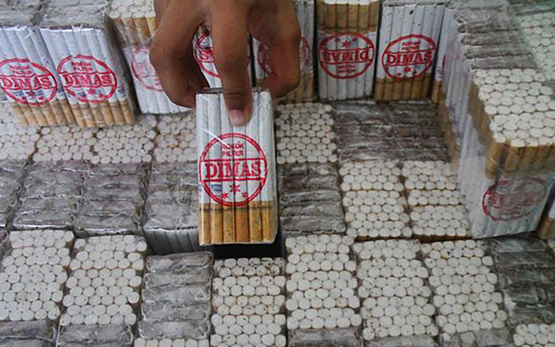
The Food and Drug Monitoring Agency (BPOM) has revealed a startling fact regarding the circulation of illegal cigarettes at the grassroots level. Based on monitoring results in various regions, the majority of retail traders apparently do not yet understand the characteristics of illegal tobacco products circulating in the market.
Head of BPOM, Taruna Ikrar, explained that these findings were obtained when officers conducted supervision on the inclusion of pictorial health warnings (PHW) and label information on cigarette products in shops, stalls, and minimarkets. “BPOM supervisory officers often find illegal cigarettes at the retailer level while performing their supervisory functions. Socialisation and education need to be continuously carried out so that they only sell legal products,” said Taruna in an official statement on Thursday (4/6/2026).
BPOM identified various modes of excise violations found in the field, ranging from the use of counterfeit excise stamps to misuse. A specific case was found in Padang, where cigarettes with PHWs still used fake excise stamps. Meanwhile in Serang, Banten, a discrepancy was found between the type of excise stamp and the product as well as the number of sticks listed.
BPOM’s findings have emerged amidst the polemic over the Ministry of Health’s plan to enforce plain packaging regulations without brands. Although Taruna Ikrar stated there is no direct evidence linking plain packaging to an increase in illegal cigarettes, business players expressed deep concerns.
The General Chairperson of the Indonesian Street Vendors Association (APKLI), Ali Mahsun, stressed that standardising packaging with Pantone 448C colour would eliminate the differentiating identity of products. This is considered to make it easier for illegal cigarette producers to infiltrate the retail market. “Traders are greatly disadvantaged when there is no product differentiation. Imposing plain cigarette packaging will erode legal cigarette sales amid the surge of illegal cigarettes,” Ali asserted. He also regretted the lack of trader involvement in the discussion of the draft Minister of Health Regulation (RPMK).
This concern is reinforced by data from the Ministry of Finance. Finance Minister Purbaya Yudhi Sadewa noted that by April 2026, enforcement actions against illegal cigarettes had reached 5,451 times, soaring 23.3 percent year-on-year (yoy). In the first four months of 2026, the number of illegal cigarettes seized reached 684 million sticks, rocketing 125.8 percent compared to the same period last year. For small traders, the circulation of illegal cigarettes is not just a legal issue but a serious economic threat, considering that cigarette sales contribute more than 50 percent of the turnover of grocery stalls.