
BPOM Establishes New Regulation to Boost Effectiveness of Regional Supervision
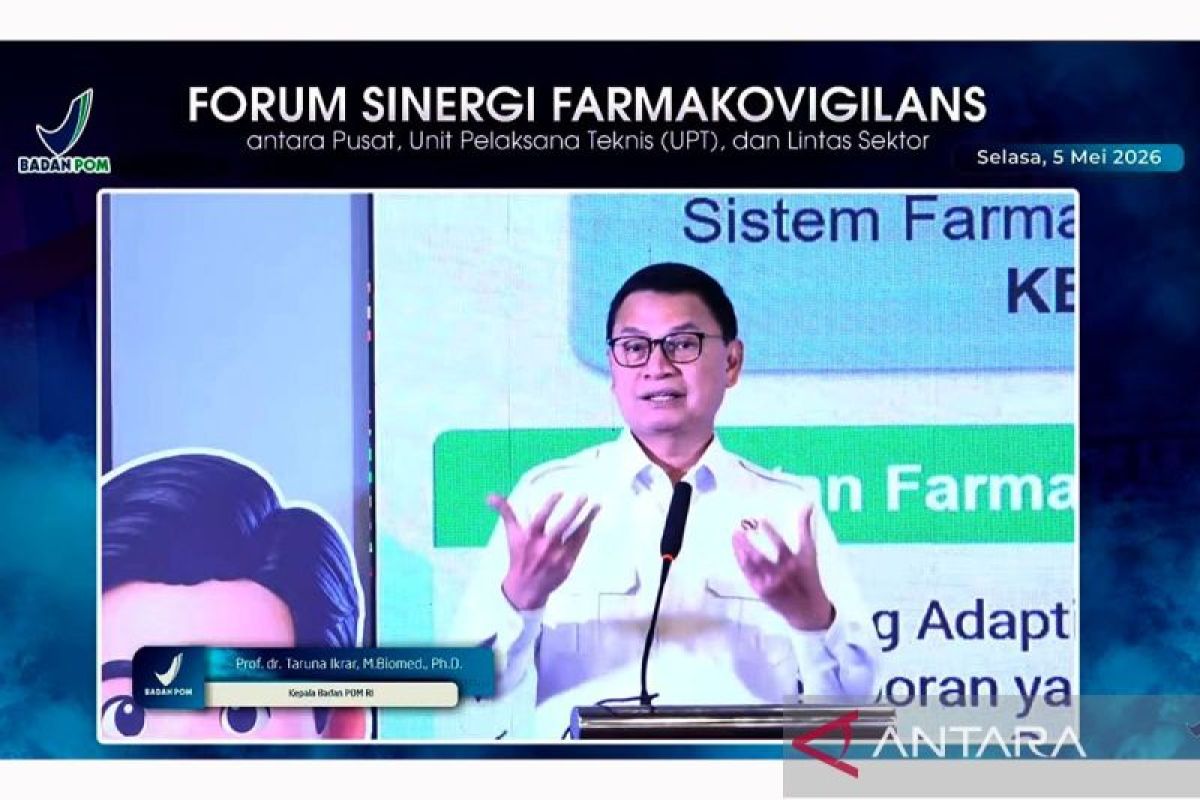
Jakarta (ANTARA) - The National Agency of Drug and Food Control (BPOM) has established BPOM Regulation No. 2 of 2026 on Technical Guidelines for Managing Operational Support Funds for Drug and Food Supervision (BOK POM) to strengthen the effectiveness of supervision at the regional level.
BPOM Head Taruna Ikrar stated that this regulation serves as the foundation for managing fund transfers to regions to ensure they are more targeted, transparent, and accountable. The BOK POM funds provide operational support for priority drug and food supervision programmes at the regional level, channelled through non-physical Special Allocation Funds (DAK).
“During the 2021–2026 period, the realisation of the non-physical DAK budget has shown an increasingly efficient trend, rising from 69.18 per cent in 2021 to stabilising at around 79–81 per cent in 2023–2025, with coverage maintained across 405 districts/cities,” he said in Jakarta on Wednesday.
Amid relatively stagnant budget allocations over the past four years at around Rp150 billion per year, this consistent performance reflects improvements in planning quality, activity implementation accuracy, and strengthened coordination between central and regional levels.
“On the other hand, BOK POM funds also encourage UMKM products to be safer, legal, and competitive. Products meeting standards can more easily enter modern retail and e-commerce, even opening export opportunities,” he said.
This situation is seen to maintain market confidence, smooth distribution, strengthen domestic production, and support supply stability and prices, thereby helping to control inflation more effectively.
He emphasised that this regulation is drafted as a step to strengthen oversight. “BPOM Regulation No. 2 of 2026 is issued to replace BPOM Regulation No. 1 of 2025, following an evaluation of the implementation of BOK POM funds in the 2025 fiscal year and adjustments to national policy dynamics,” he asserted.
The BPOM Head stressed that this regulatory refinement is not merely an administrative update but a strategic step to ensure operational funds truly impact the quality of regional supervision. BOK POM funds are a crucial instrument for protecting the public from risks associated with substandard drugs and food.
“Through stronger, data-based technical guidelines, we ensure that every rupiah allocated delivers measurable and tangible results. Collaboration between central and regional levels is the main foundation for the success of this policy,” he stated.
The allocation of non-physical DAK is carried out based on priorities, in line with regional needs in addressing strategic issues in an integrated and aligned manner, so it is not allocated to all districts/cities every year.
This year, the non-physical DAK budget for BOK POM covers 391 districts/cities. In Stage I of the fund disbursement period in 2026, BOK POM funds have been received by 190 districts/cities, while 201 districts/cities are in the process of receiving the funds.
In its implementation, BPOM will continue to conduct outreach to regional heads, health agencies, business actors, and the public. BPOM will also strengthen supervision and evaluation mechanisms to ensure fund management runs according to provisions and delivers real benefits.